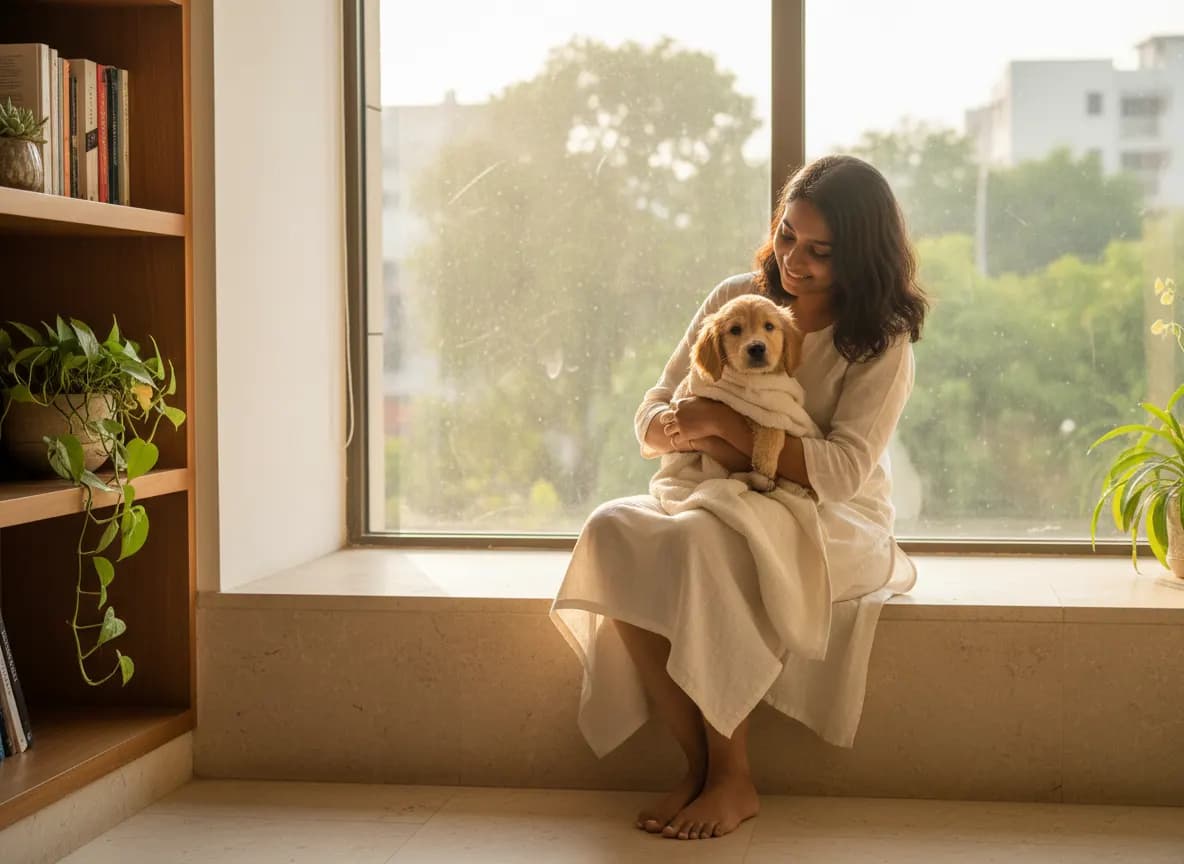
A new puppy brings muddy paws, accidents and a smell all their own. It is tempting to plunge them into the tub on day one. Wait a little, and use the time to build the habits that make every future bath easy.
When can puppies take a bath?
There is no single date that suits every puppy, so ask your vet at the first check-up. As a general guide:
- Very young puppies cannot regulate their body temperature well, and a wet puppy chills fast. Most vets suggest waiting until a puppy is at least about eight weeks old before a full bath.
- Many owners bring a puppy home at eight to ten weeks. Give them a few days to settle in before the first bath; a new home is stressful enough.
- If your puppy has just had vaccinations or is unwell, check with your vet about timing.
Until then, clean only what needs it.
Keeping a puppy clean before the first bath
- Spot-clean with a soft cloth dipped in warm water, then dry the area well.
- Paws and bottom get the most mess: wipe them gently and dry between the toes.
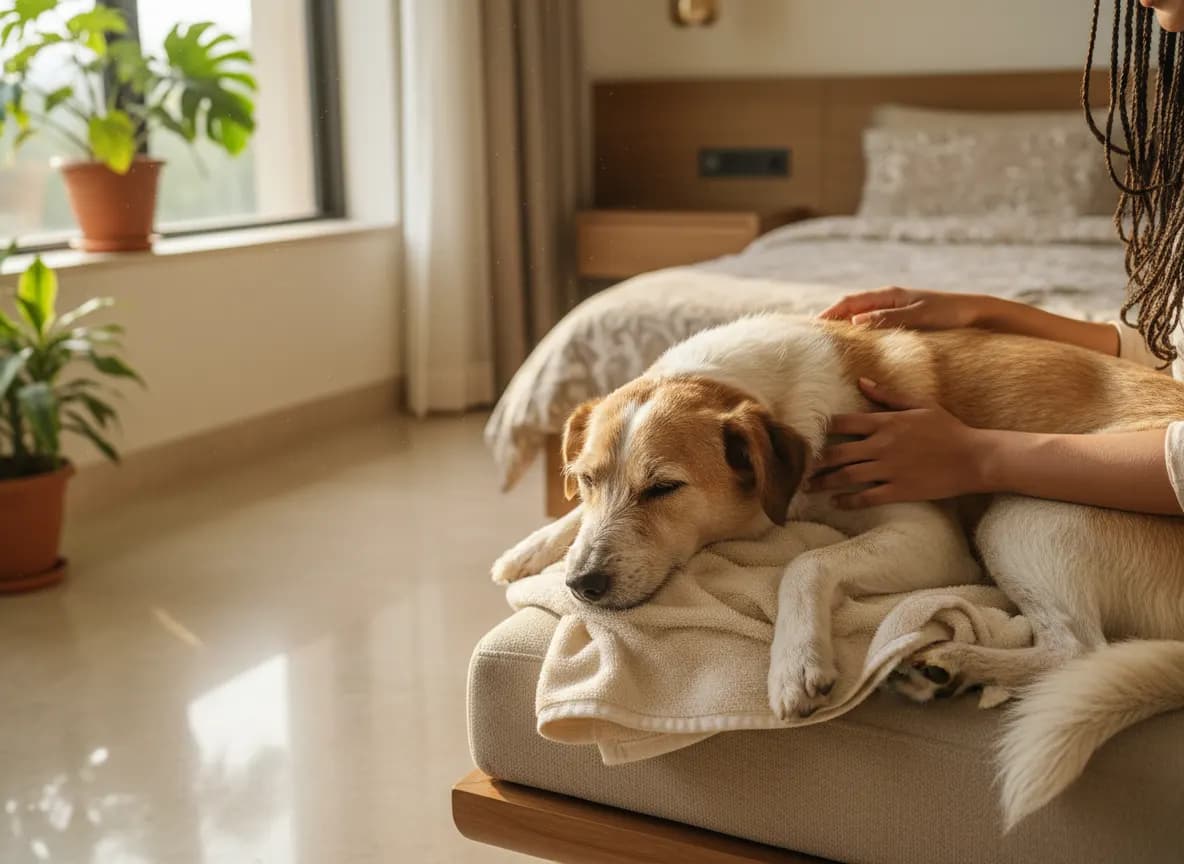
- Brush daily with a soft brush. It removes dust and loose hair, and teaches your puppy that being handled is pleasant.
- For a puppy who smells a little doggy, a waterless foam is gentler than a full bath. Ask your vet before using any product on a very young puppy.
Start grooming habits now
The best time to teach a dog to enjoy grooming is when they are small enough to lift. A few minutes a day:
- Touch the paws, one at a time, and reward. Future nail trims depend on this.
- Lift the ears and look inside.
- Open the mouth gently and touch the teeth.
- Stand them on a towel on the bathroom floor, with treats, before water is ever involved.
- Run the tap while they eat a treat nearby, so the sound becomes ordinary.
How to bathe a puppy for the first time
Get ready first. You cannot leave a wet puppy to fetch a towel. Lay out two towels, the shampoo, a jug, a non-slip mat and treats. Warm the room, and close the door.
- Brush the coat before it gets wet.
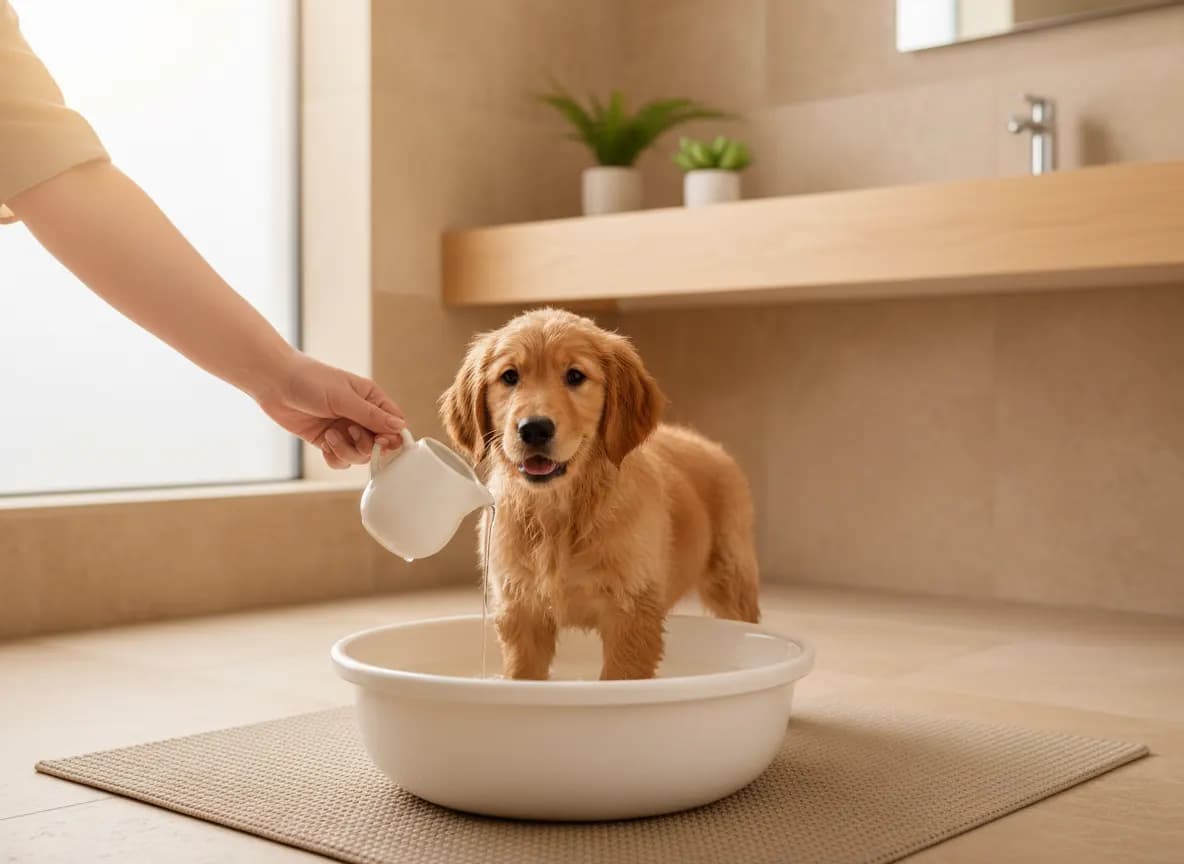
- Use shallow, lukewarm water – a basin or sink with a few centimetres of water is less frightening than a big tub. Test the temperature on your wrist.
- Wet slowly with a jug or cupped hand, from the neck back. Avoid the head; you will wipe the face separately with a damp cloth.
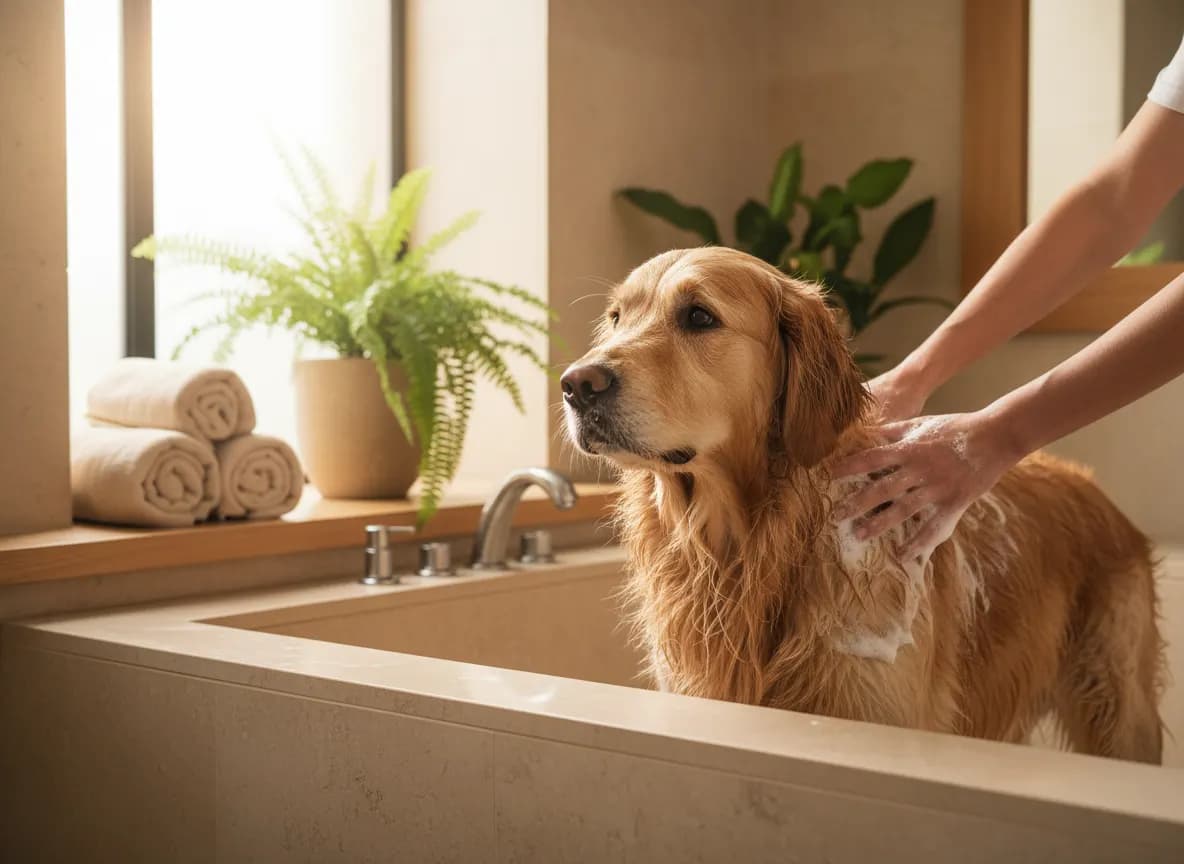
- Use a small amount of a gentle shampoo. Never use human or baby shampoo; a dog’s skin has a different pH from ours. Our guide to human shampoo on dogs explains why. A mild, sulphate-free, pH-balanced shampoo such as our Gentle Daily Shampoo is made for sensitive skin – check with your vet before using any shampoo on a young puppy. Lather gently and keep it away from the eyes. Compare options in the best puppy shampoo in India.
- Rinse thoroughly, until the water runs clean. Leftover shampoo is a common cause of itchy skin.
- Talk calmly and treat often. Keep the whole bath to a few minutes.
Drying is the most important part
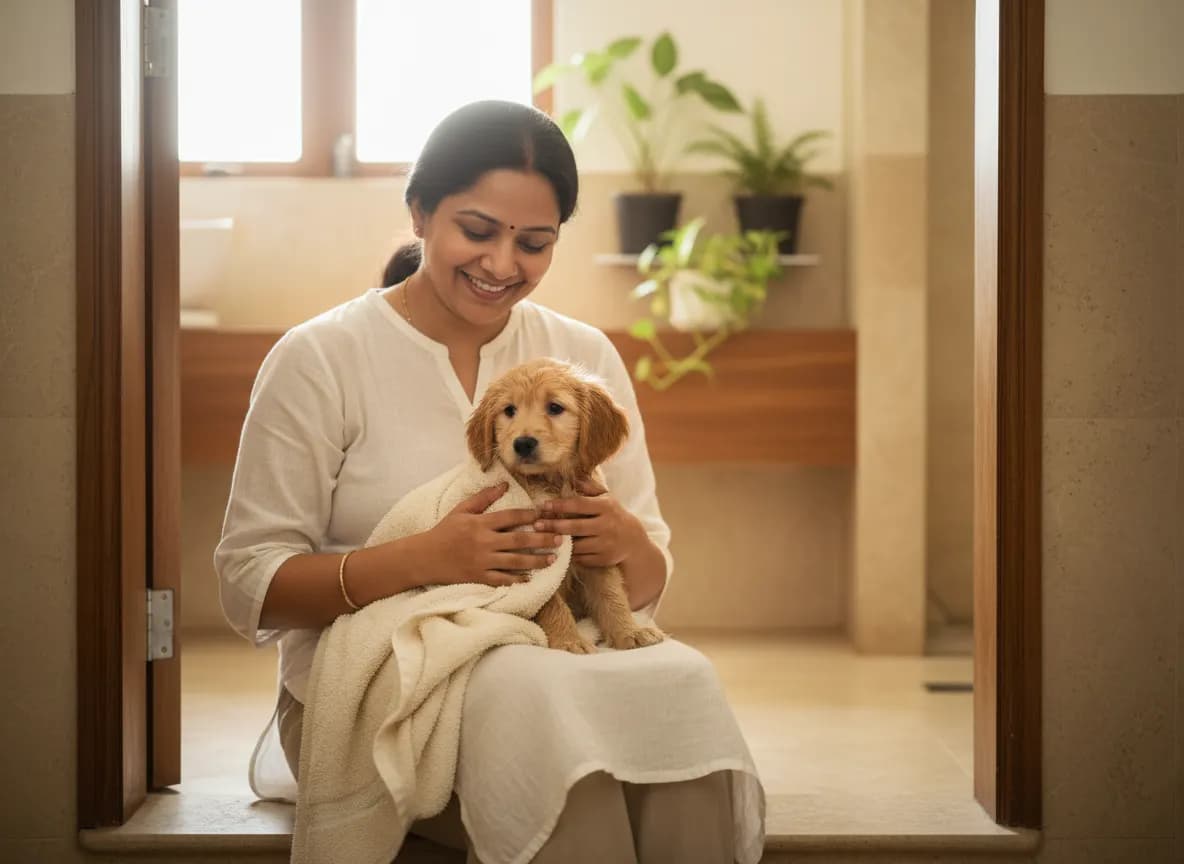
Puppies lose heat fast. Wrap your puppy straight away and press the water out of the coat. Use a second dry towel, then keep them in a warm, draught-free room until they are completely dry – right down to the skin. If you use a dryer, choose a low, cool or warm setting, keep it moving and well away from the skin, and stop if your puppy is frightened. Our drying guide has more.
How often should you bathe a puppy?
Not often. Bathe when your puppy is genuinely dirty or smelly – for most puppies, roughly once a month is plenty. Too many baths strip the natural oils from a puppy’s skin. Between baths, brushing and spot-cleaning do most of the work. Our article on how often to bathe a dog explains the balance.
When to call the vet
Dry, flaky or red skin, scratching, a rash, a smell from the ears, or a puppy who seems cold, lethargic or unwell after a bath all need your vet.