Search for “calming products for dogs” and you will find sprays, collars, chews and shampoos promising a relaxed pet. It is worth being clear about what grooming products can and cannot do. No shampoo or mist treats anxiety. But the way you groom – the scent you choose, how you handle your pet, the pace of the routine – can make bath day noticeably calmer for both of you.
Why grooming stresses so many pets
For a dog or cat, a bath can mean a lot of unfamiliar things at once: slippery surfaces, running water, being held still, water in the ears, a loud dryer, and a strong new smell on their own coat. Pets who were not handled much when young, rescues, older animals and noise-sensitive dogs often find it hardest.
Signs your pet is stressed include:
- lip licking, yawning or turning the head away
- ears pinned back, tail tucked, whites of the eyes showing
- panting, trembling or drooling
- trying to escape, freezing, growling or hissing
If you see these, slow down. A calm bath is one your pet can tolerate without fear, even if it takes several short sessions to get there.
Scent matters more than you think
Dogs and cats experience the world through their noses, and their sense of smell is far stronger than ours. A heavily perfumed shampoo that smells pleasant to you can be overwhelming on an animal who has to wear it for days. That is one of the most overlooked reasons a pet rubs against the carpet, rolls on the floor or seems unsettled after a bath.
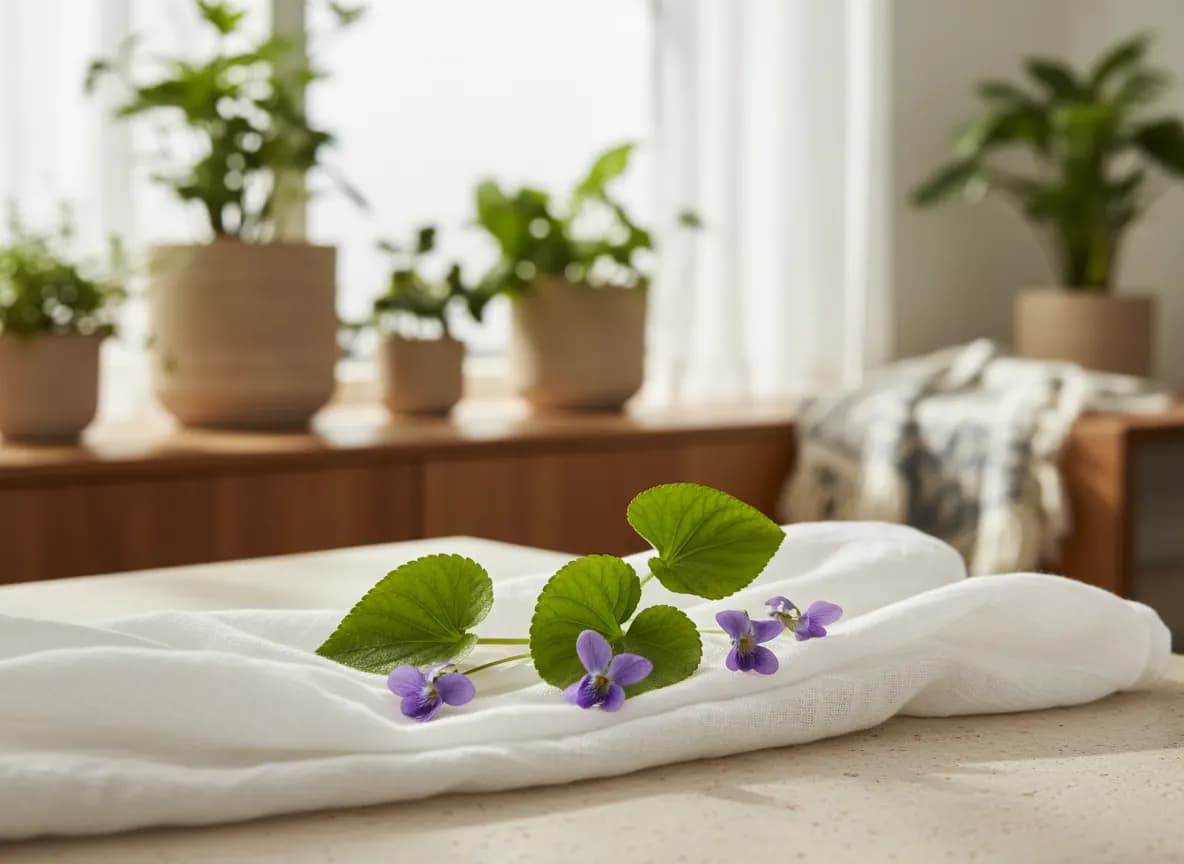
What helps is a mild, skin-close fragrance. Our Gentle Daily Shampoos are IFRA-compliant with no synthetic fragrance, and the scent stays close to the coat rather than filling the room. Of the three, Violet Leaf & Muslin is the softest – green and clean-cotton – and the one we suggest for scent-sensitive pets and quiet homes. Santal & White Tea is warm and woody, the scent we describe as leaving the coat “softer and calmer” to the touch.
To be precise about that: the scents are chosen to be gentle, not to sedate or treat stress.
A step-by-step calmer bath
- Pick your moment. Bathe after a walk and a meal, when your pet is tired and content – not when they are already wound up.
- Prepare everything first. Towels, shampoo, a jug and treats within reach, so you never leave your pet or rush.
- Brush before you wet. Tangles pull when wet. A calm brushing session is also a good warm-up.
- Make the floor grippy. A non-slip mat or a folded towel in the tub stops the scrabbling that frightens many dogs.
- Use lukewarm water and a jug. A spray of water is louder and scarier than a gentle pour. Start at the paws and work up.
- Keep water out of the face and ears. Wipe the face with a damp cloth instead.
- Lather slowly. Low-lather, sulphate-free shampoos are quieter and rinse faster.
- Talk softly and reward often. Small treats and a calm voice throughout.
- Dry gently. Towel with pressure rather than vigorous rubbing. If the dryer frightens your pet, use more towels and a warm room instead – see how to dry a dog after a bath.
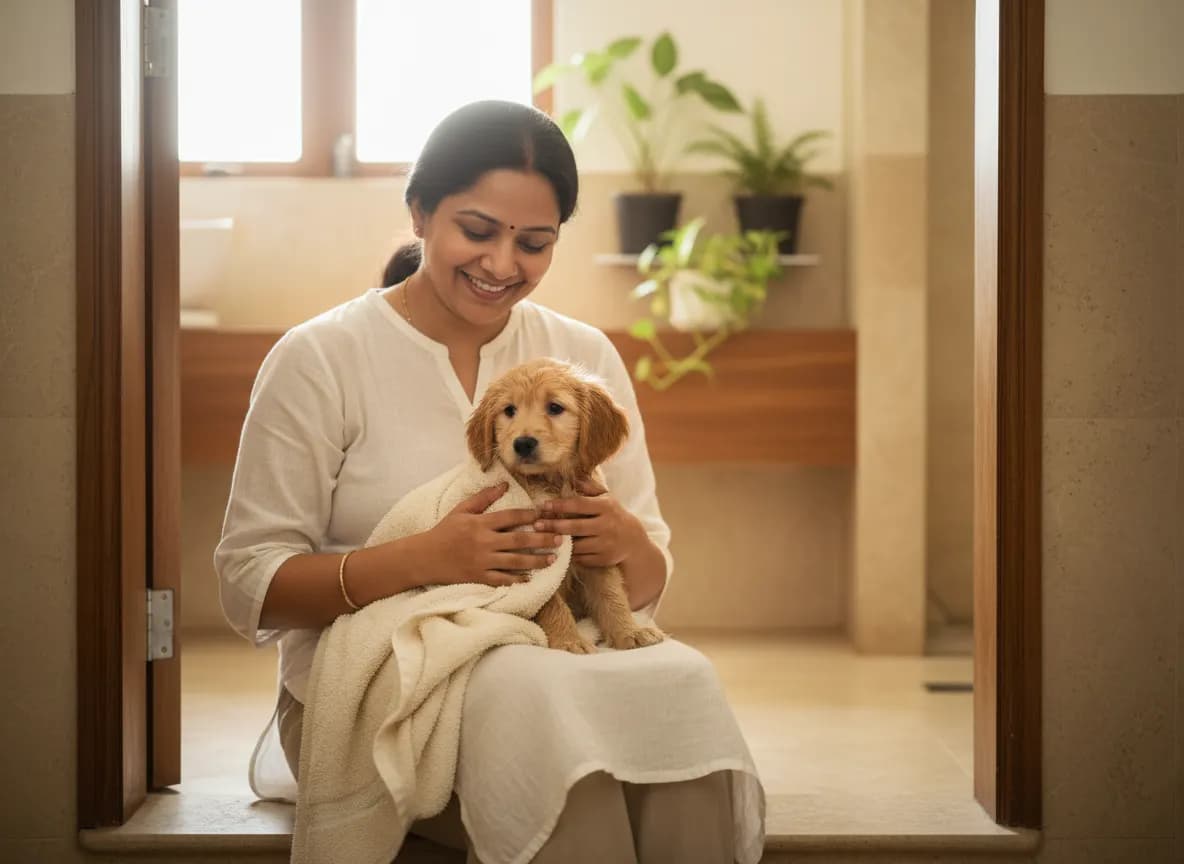
Start puppies and kittens early, with short, happy sessions; your puppy’s first bath explains how.

For pets who can’t face a bath at all
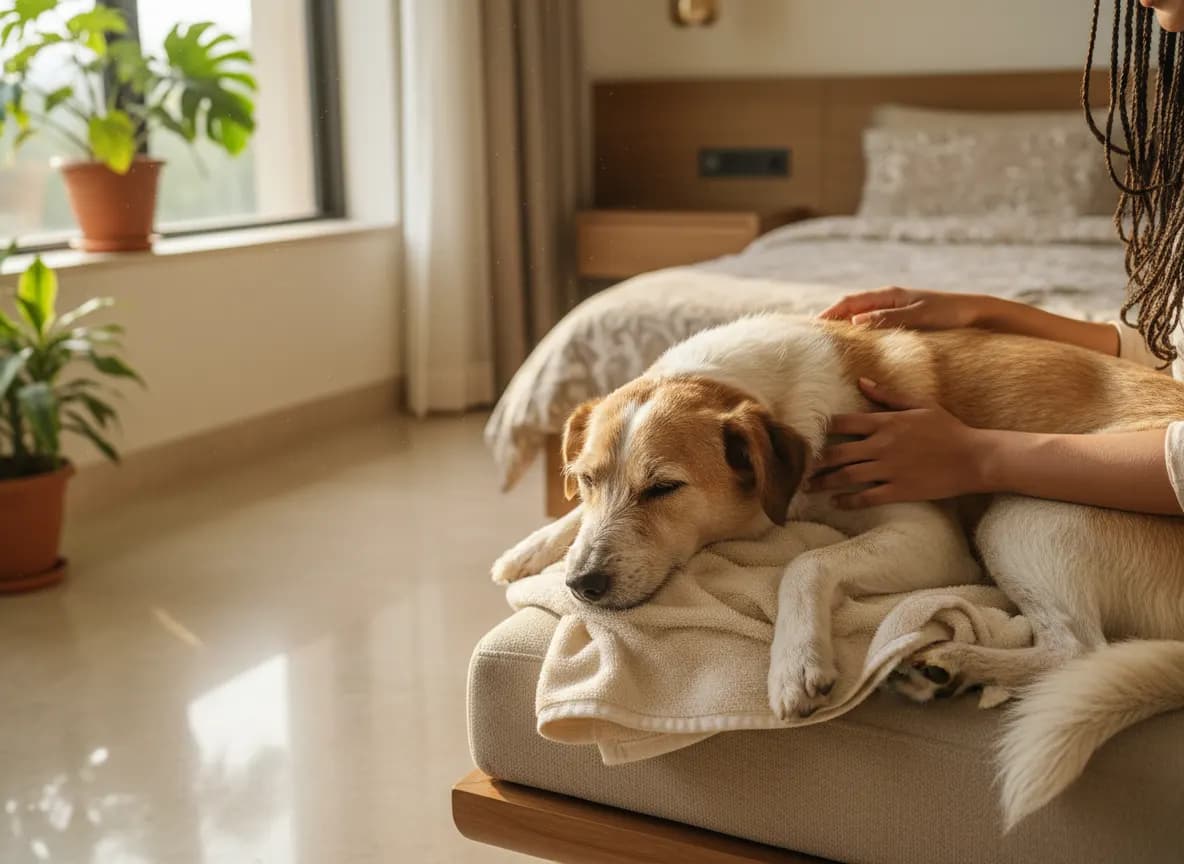
Some pets, especially cats and very anxious dogs, may never enjoy a full bath. You don’t always need one. A waterless Dry Foam Shampoo cleans the coat with your hands, with no tub, no running water and no dryer. It is made for dogs and cats, is leave-on safe and has a quiet hinoki and bamboo scent. For many nervous pets, a few minutes of massage with a dry foam is a far calmer experience than the bathroom.
After the bath: keep it quiet
Let your pet settle somewhere warm and familiar. If you like a light scent for the close moments afterwards, our Refreshing Mist is a soft, water-based dog fragrance; use a few sprays from 25 cm, never near the face, and skip it on days your dog seems unsettled. It is for dogs only. Is dog perfume safe? explains how to use one gently.
When anxiety needs more than a gentle routine
Grooming can be calmer; it cannot treat anxiety. See your vet if your pet:
- panics, shakes or hides for long periods
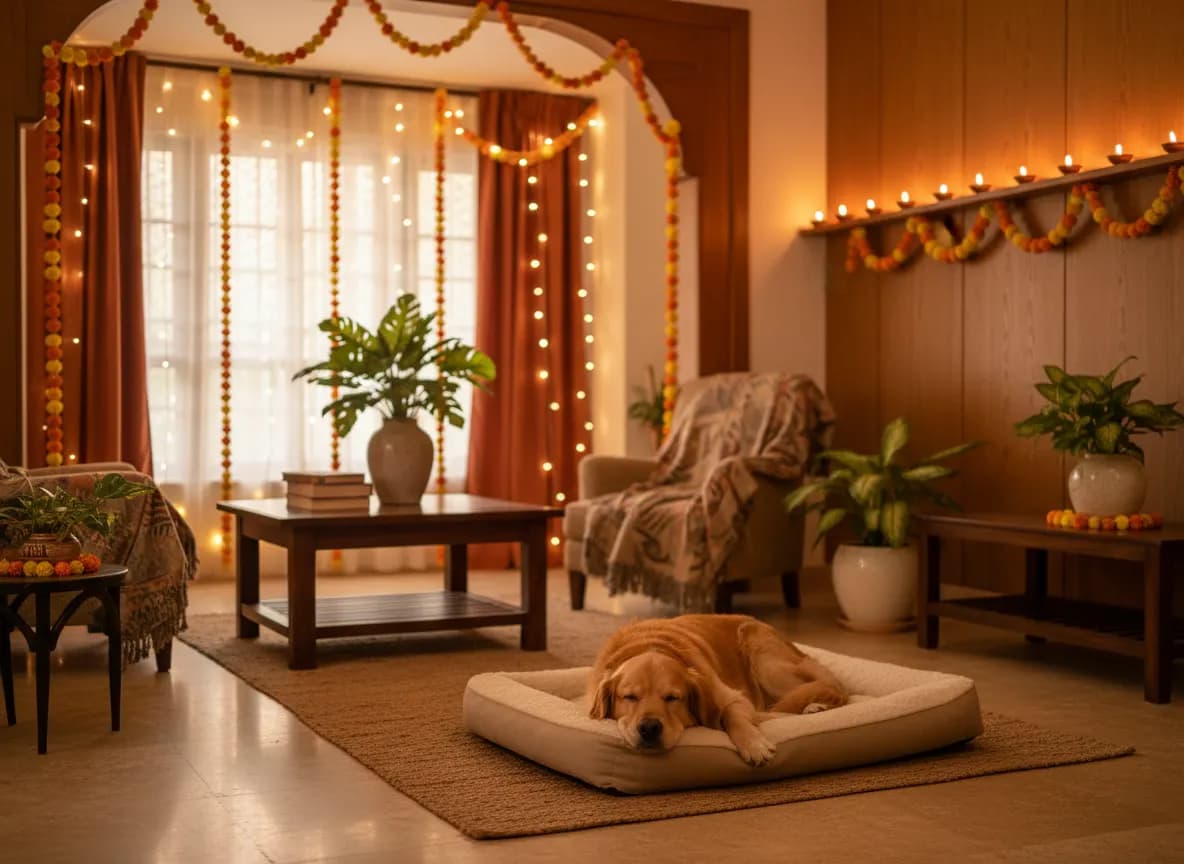
- is anxious when left alone, or around noise such as Diwali crackers
- becomes aggressive when handled
- shows a sudden change in behaviour
Your vet can rule out pain – a common hidden cause of grooming fear – and suggest a plan, sometimes with a qualified behaviourist. Never give your pet human calming medicines. Our Diwali pet safety guide covers noise anxiety.