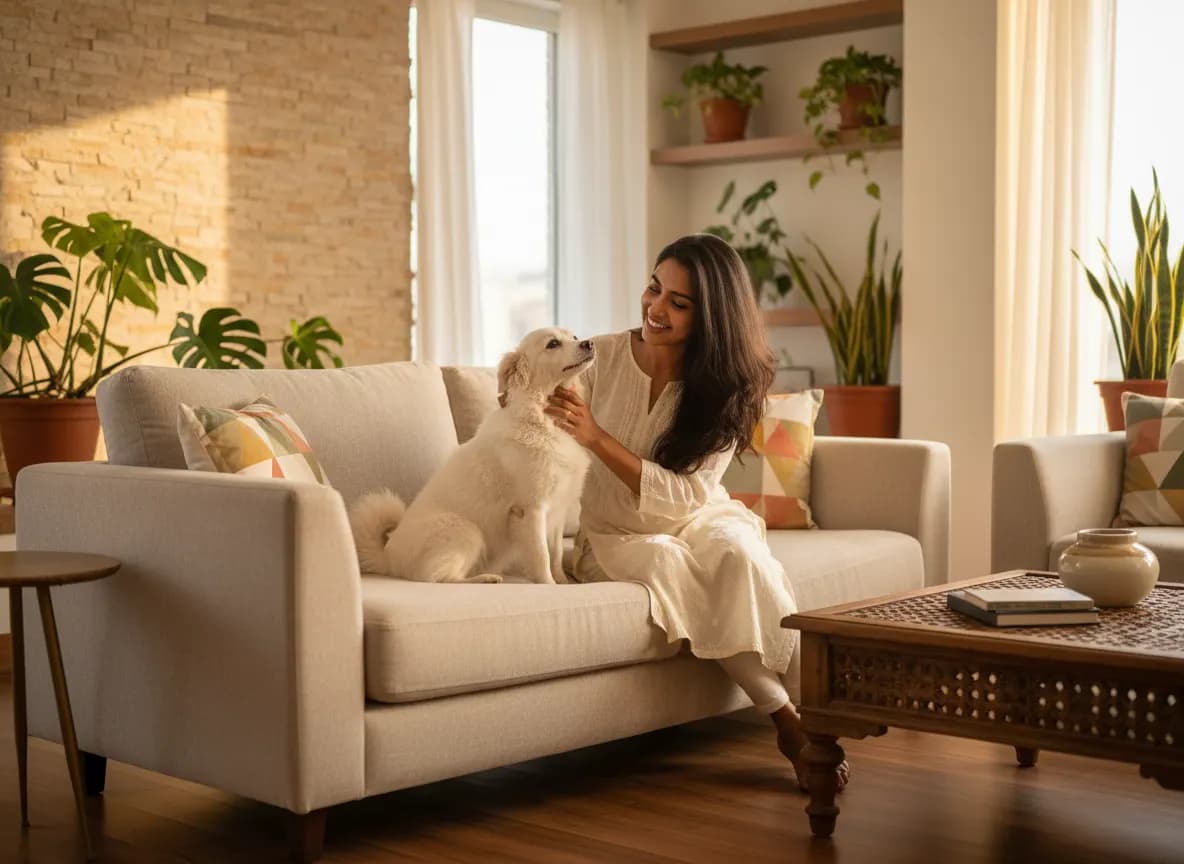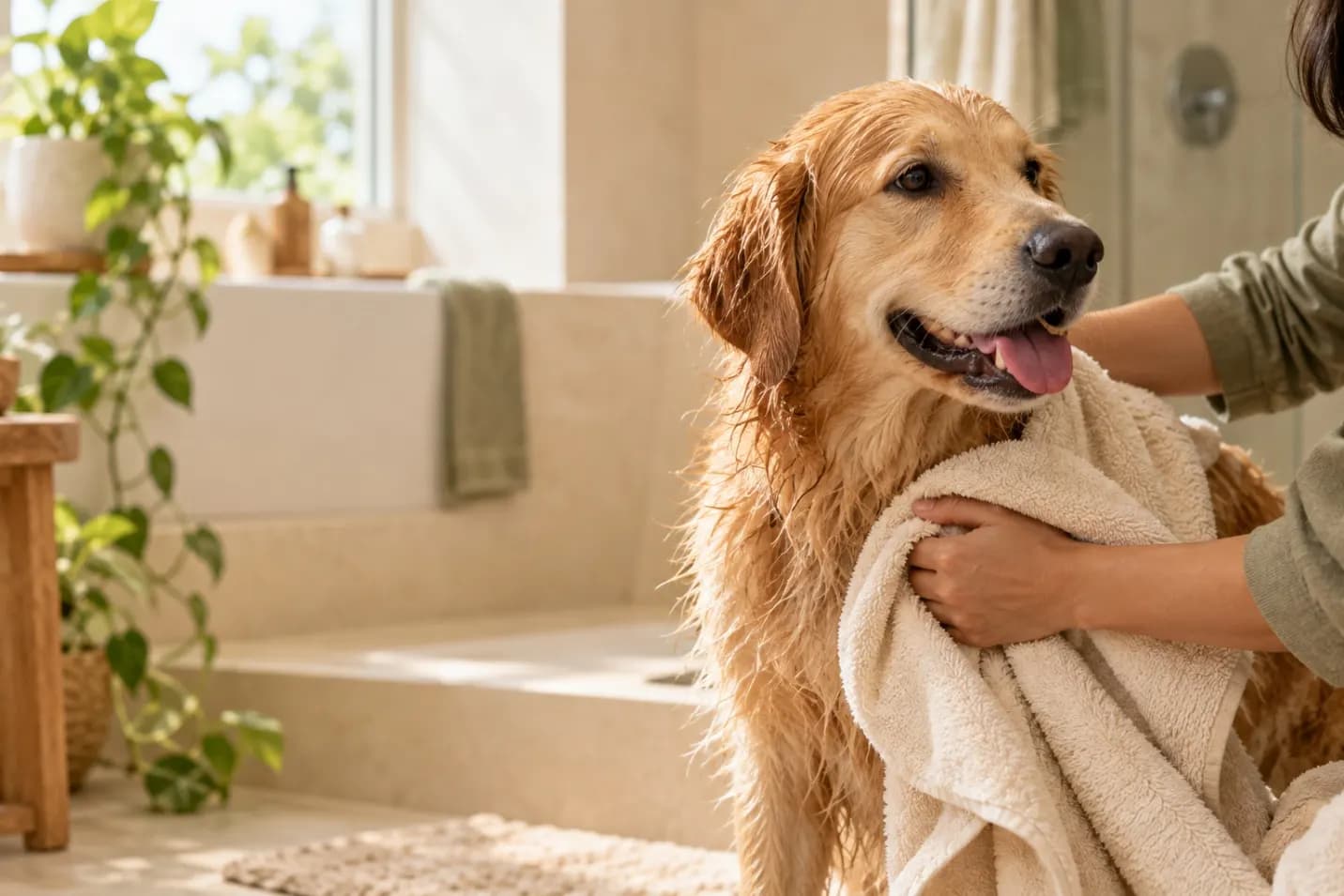
Dog perfume sprays are everywhere now, from pet shops to quick-commerce apps. They promise a dog that smells like a spa. So: are they safe, and are they a good idea?
The short answer: a dog perfume made for dogs, used lightly on a clean coat, can be a pleasant finishing touch. Human perfume is not. And no fragrance should be used to hide a smell that has a cause.
Why not just use your own perfume?
Human perfumes are made for human skin. Many are alcohol-based at high concentrations, which can dry and irritate a dog’s skin, and they are built to project strongly – to be noticed across a room. Dogs also lick and groom their coats, and what is on the fur ends up in the mouth.
Then there is the nose. A dog’s sense of smell is many times more sensitive than ours. A fragrance you find pleasant in a light spritz can be overwhelming to an animal who has to wear it.

What to look for in a dog perfume
- Made for dogs. Check the label says so, and check whether it is suitable for cats – many are not.
- A water base rather than a high-alcohol base. Look for “alcohol-free” or alcohol only in low, safe concentrations.
- IFRA compliance. IFRA standards restrict or limit certain fragrance materials by product type.
- Fewer harsh extras. Parabens, synthetic preservatives and heavy fragrance allergens are worth avoiding.
- A full ingredient list. If a brand won’t tell you what is in it, put it back. Our guide to reading an INCI list helps.
- A light scent. “Long-lasting” should mean it lingers softly, not that it is loud.
Want named options? We compared ten sprays sold in India, with sizes and price per 100 ml, in the best dog deodorant spray in India.
How to use a dog perfume properly
- Start with a clean, dry coat. Scent on a dirty coat just mixes with the smell.
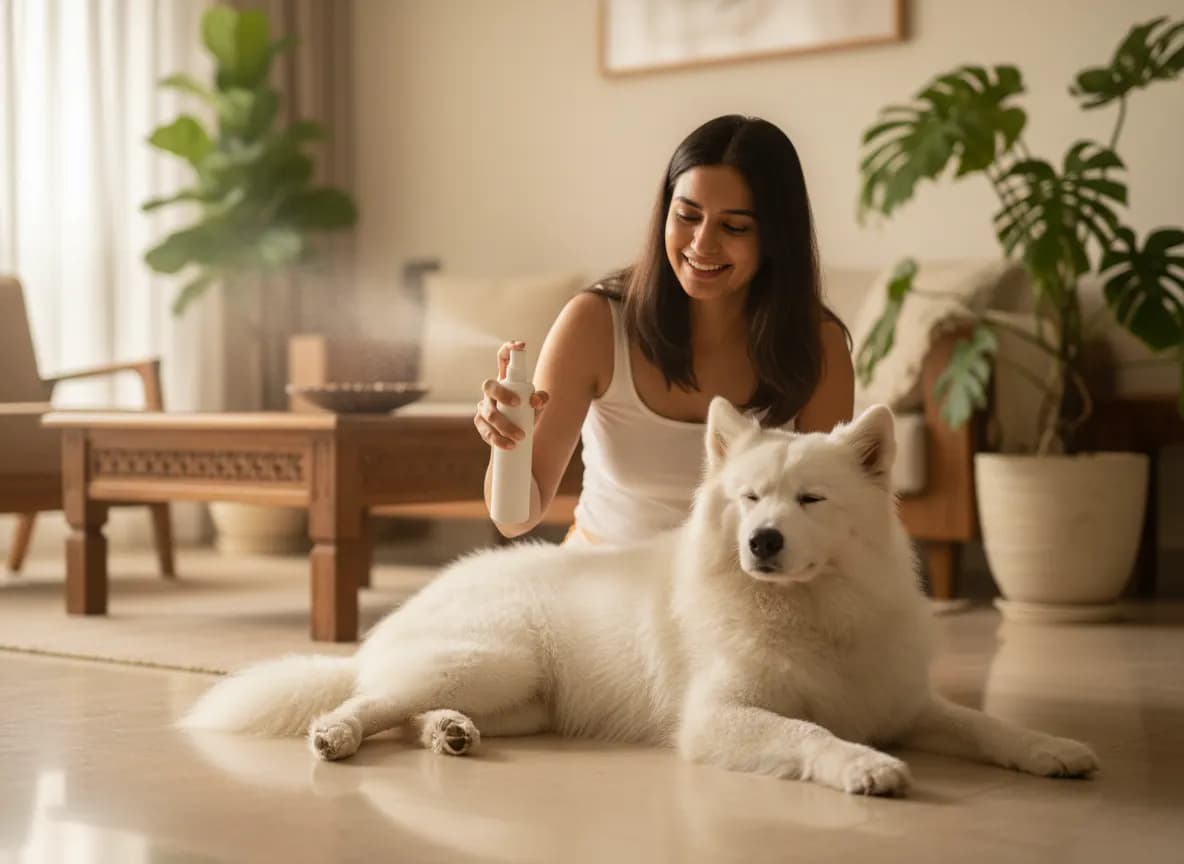
- Spray from a distance – about 25 cm – over the back and flanks.
- Avoid the face, eyes, nose, mouth and genitals.
- Use a few sprays, not a soaking. Let it settle; don’t rub it in.
- Watch your dog. Sneezing, pawing at the face, rubbing against furniture or avoiding you afterwards suggests the scent is too much.
- Stop if there is irritation – redness, scratching or a rash – and talk to your vet.
A fragrance is not a fix
If your dog smells bad again soon after a bath, a perfume will only cover it for a while. Persistent odour usually has a source: a damp undercoat, ears, teeth, anal glands, skin or a bed that needs washing. Why your dog still smells after a bath walks through what to check, and getting rid of dog smell in the house covers the home side.
For a coat that has simply gone a little stale between baths, clean it first: a waterless Dry Foam Shampoo absorbs surface oils and neutralises odour without a full bath. Then add a scent if you want one.
How we made Refreshing Mist
Our Refreshing Mist is a dog perfume built around those rules. It is a light, water-based, leave-on mist, IFRA-compliant and made for daily use. What’s out of it: synthetic fragrance, alcohol in harmful concentrations, synthetic preservatives, parabens and heavy fragrance allergens. Panthenol, betaine and aloe vera sit alongside the scent.
The fragrance is yuzu and ambrette seed musk – bright citrus on contact, warm and skin-close as it settles. The story of the scent explains each note. Hold it 25 cm from the coat, apply 3–5 sprays over the back and flanks and let it settle. It is for dogs only, not cats.