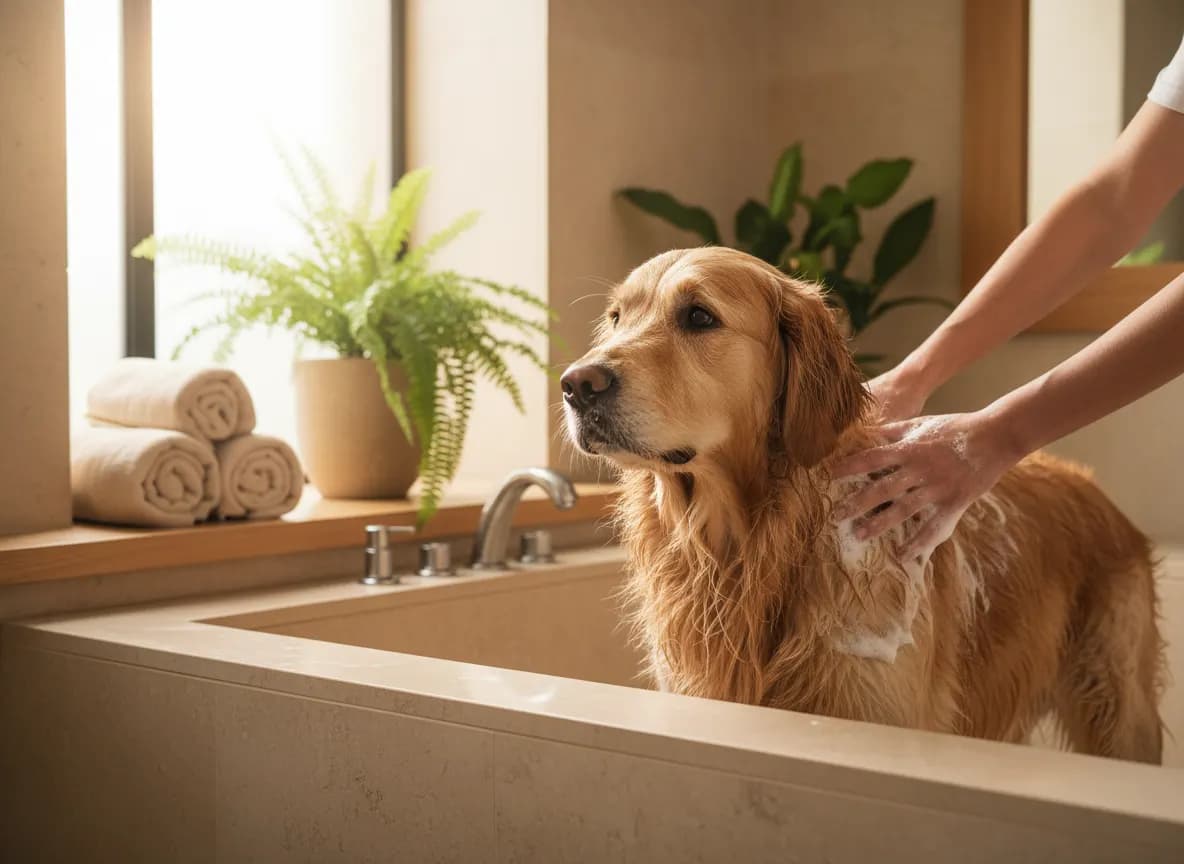
Most of us put effort into the bath and then rush the drying – a quick rub with a towel and the dog is off, shaking water on the sofa. But a coat that stays damp against the skin is where trouble begins: the familiar wet-dog smell, matting, and in humid weather, irritated skin. Dry means dry to the skin, not just dry on top.
Why drying matters
- Smell. Damp fur held against warm skin is a perfect home for the yeast and bacteria behind wet-dog odour. It is one of the top reasons dogs still smell after a bath.
- Skin. Constantly damp skin, especially under a thick undercoat, can become irritated.
- Coat. Long and double coats tangle and mat as they air-dry.
- Comfort. A wet dog in an air-conditioned room or a winter flat gets cold quickly.
Step 1: Squeeze before you rub
Before you lift your dog out, run your hands down the coat to squeeze out as much water as you can, then let them shake – it removes a surprising amount.
Step 2: Towel-dry with pressure, not friction
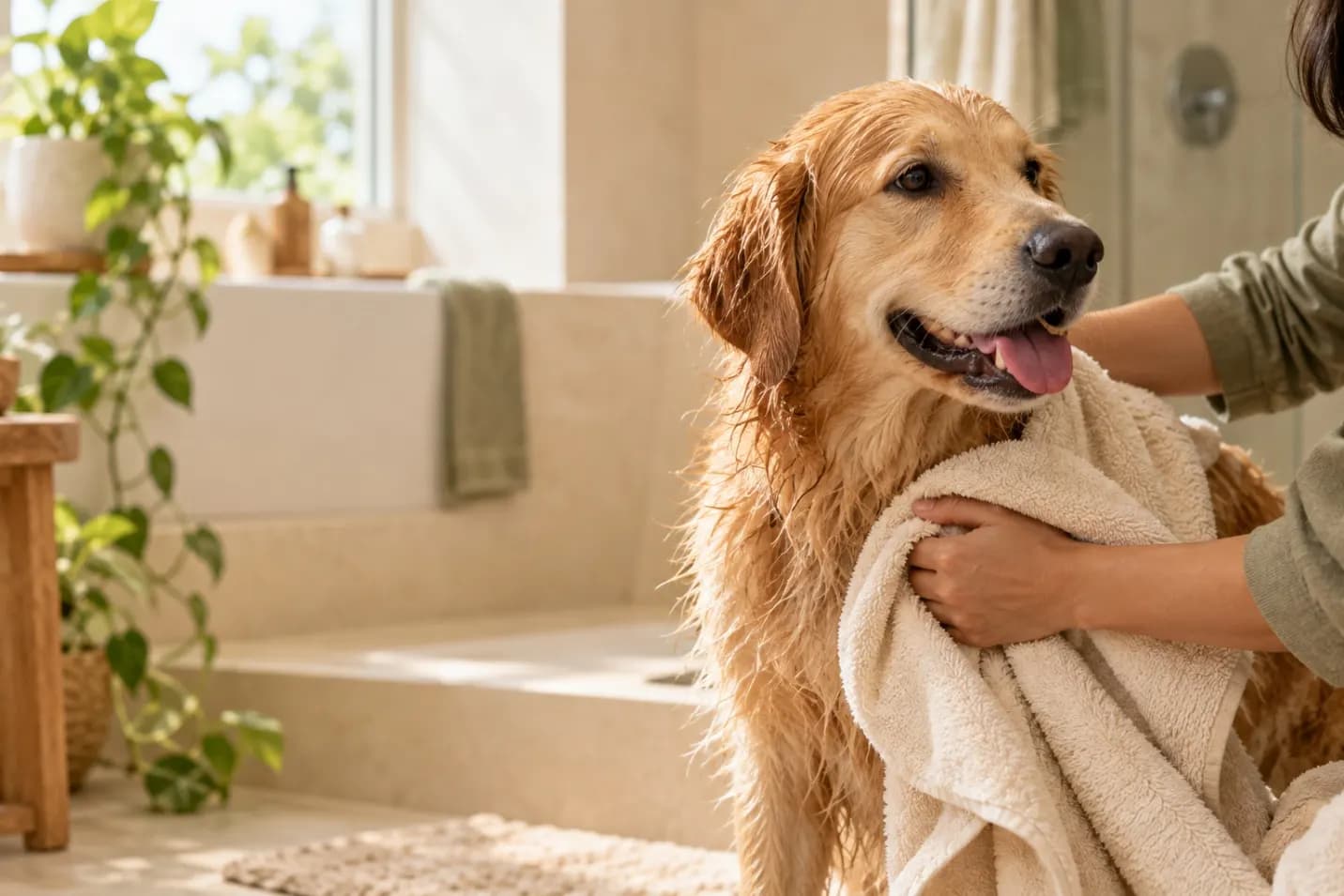
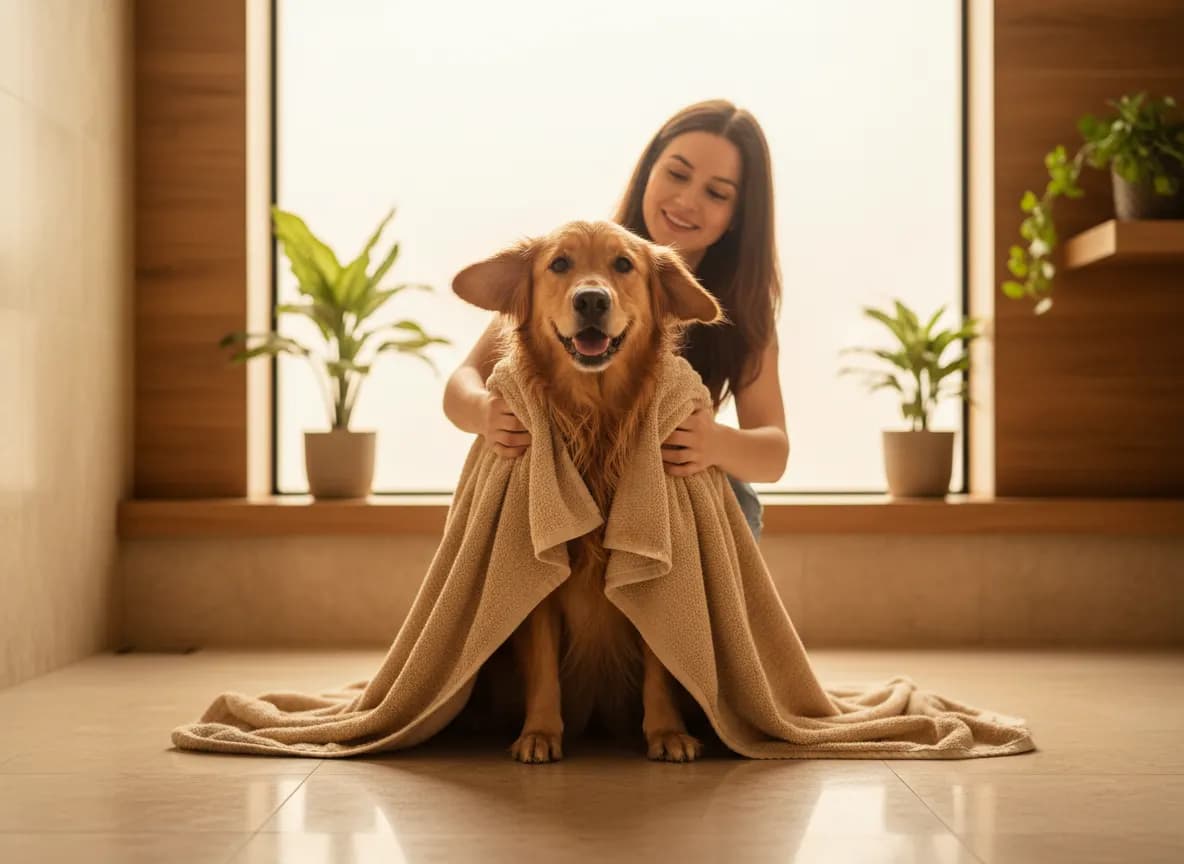
Use a large, absorbent towel; microfibre works well. Press and squeeze the towel into the coat, section by section, rather than rubbing hard in circles, which tangles long hair and roughens the coat. Use a second dry towel when the first is soaked.
Do the legs, belly, armpits and between the toes – places that stay wet longest.
Step 3: Ears and face
Gently wipe the inside of the ear flap and the opening of the ear with a dry, soft cloth. Never push anything into the canal. Wipe the face and the folds around the eyes and mouth. Our ear cleaning guide explains why water in the ear causes trouble.
Step 4: Finish with a dryer (if your dog is happy with it)
For double-coated and long-coated dogs, a towel alone rarely gets the undercoat dry.
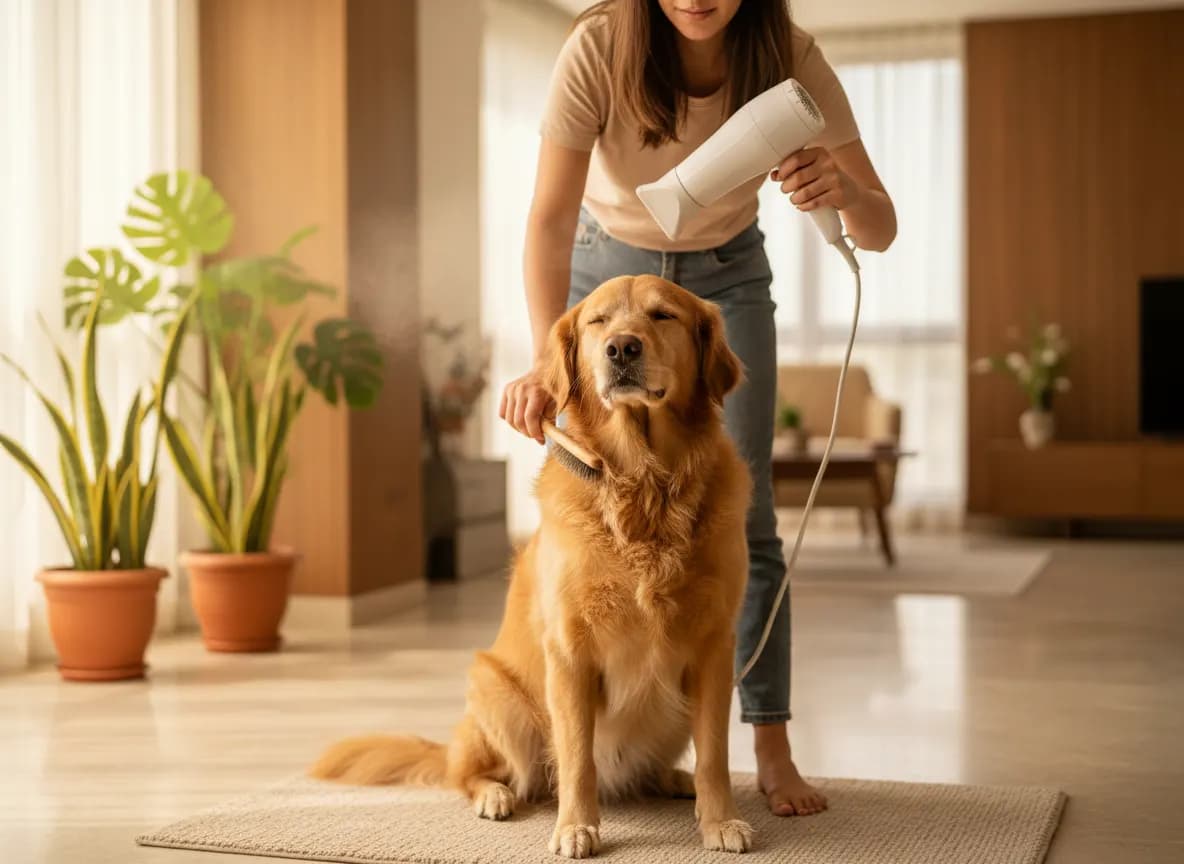
- A pet dryer is best; it is designed for dogs and has cooler settings.
- If you use a human hair dryer, keep it on the coolest or lowest heat, hold it well away from the skin and keep it moving. Human dryers can get hot enough to burn.
- Brush as you dry, lifting the coat so air reaches the skin.
- Avoid the face and ears, and never leave a dryer pointed at your dog.
- Go slowly with nervous dogs. Start with the dryer off, then on low at a distance, with treats.
Check: part the coat in a few places. If the skin feels cool and damp, keep going.
Drying a dog without a hair dryer
No dryer, or a dog who hates it? You can still get there:
- Use two or three absorbent towels, changing as each gets wet.
- Keep your dog in a warm, draught-free room until fully dry.
- Brush regularly while the coat dries, so air can circulate and mats don’t form.
- Bathe in the morning on a dry day so there is time to dry before night.
- In the monsoon, run a fan in the room (not pointed at the dog) to help the air move. The monsoon ritual has more wet-season tips.
Breed notes
- Labradors, Golden Retrievers, German Shepherds: dense undercoats hold water for hours. Use a dryer if you can. See our Labrador and German Shepherd guides.
- Pomeranians, Shih Tzus: dry while brushing outward from the skin, which prevents mats and gives volume.
- Short-coated dogs: a good towel-dry is often enough; dry the belly and paws well.
- Puppies: keep them warm and dry them completely. See your puppy’s first bath.
Make drying easier from the start
A shampoo that rinses cleanly helps the coat dry faster and cleaner. Our Gentle Daily Shampoo is a low-lather, sulphate-free formula that rinses out well. And not every freshen-up needs water: on days your dog just smells a bit stale, the Dry Foam Shampoo cleans without wetting the coat at all.