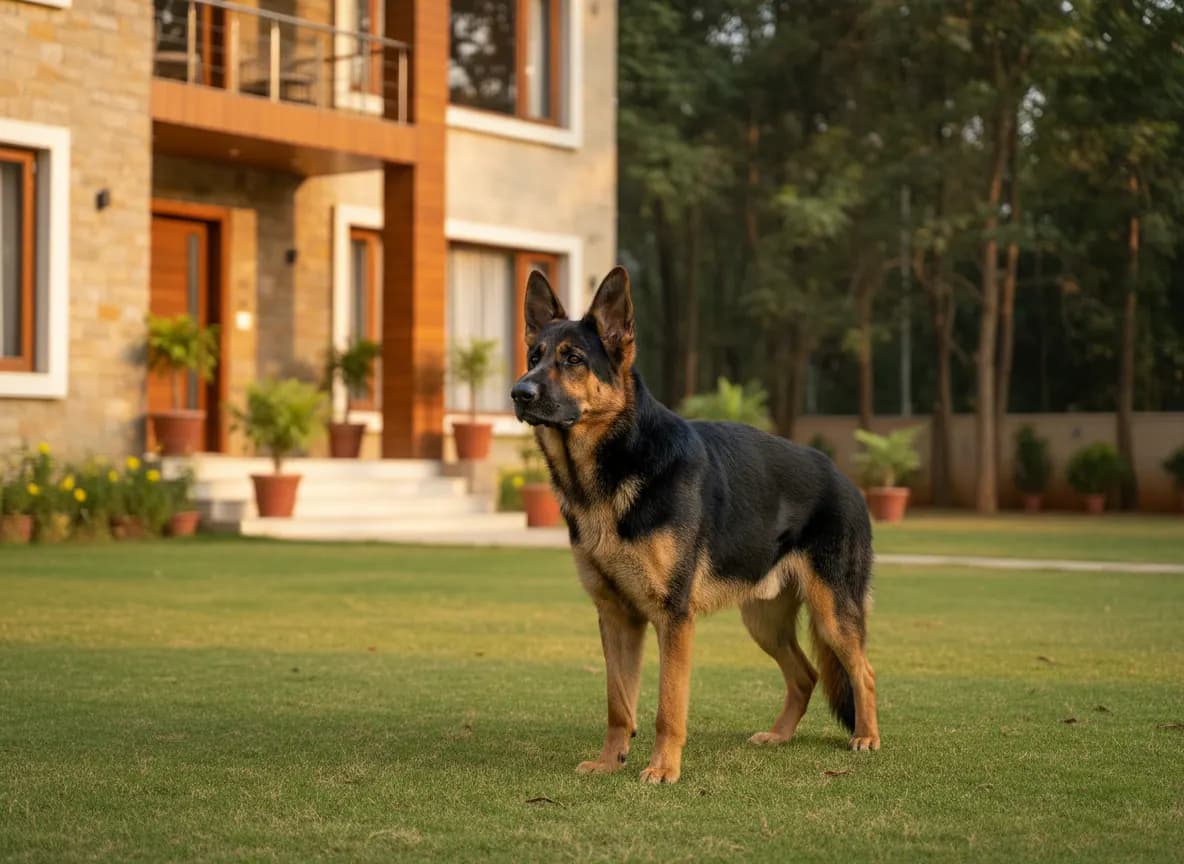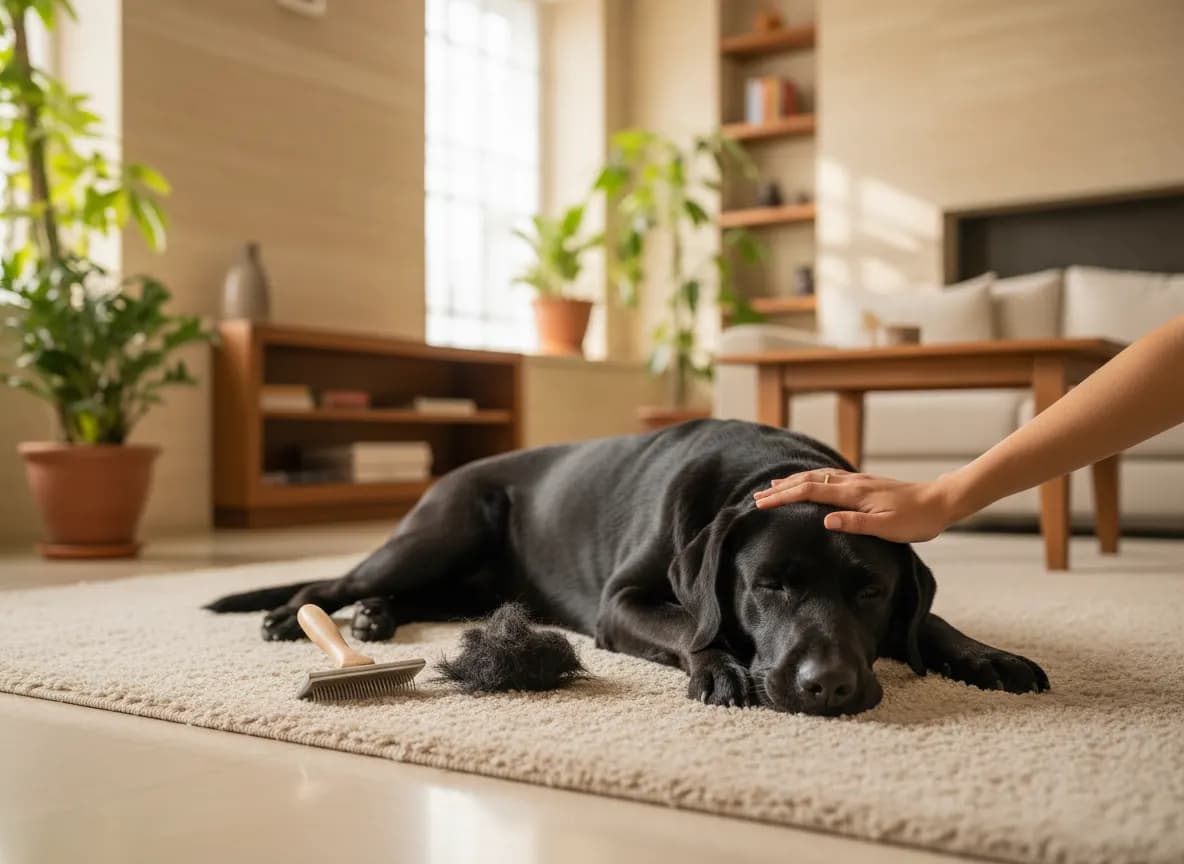
German Shepherds are loyal, clever, and famously hairy. Owners joke that the breed should be called the “German Shedder”, and anyone who has lived with one knows why. The good news: a German Shepherd’s coat needs consistency far more than it needs skill.
Understanding the German Shepherd coat
German Shepherds have a double coat. The outer guard hairs are straight, harsh and weather-resistant; underneath is a dense, soft undercoat. Some dogs are “stock coat” (medium length) and some are long-coated, with feathering on the ears, legs and tail.
They shed lightly all year and then “blow” their undercoat, usually twice a year as the seasons change, when it comes out in clumps for two or three weeks. In much of India, with milder winters, the shed can feel almost constant.
Brushing: little and often
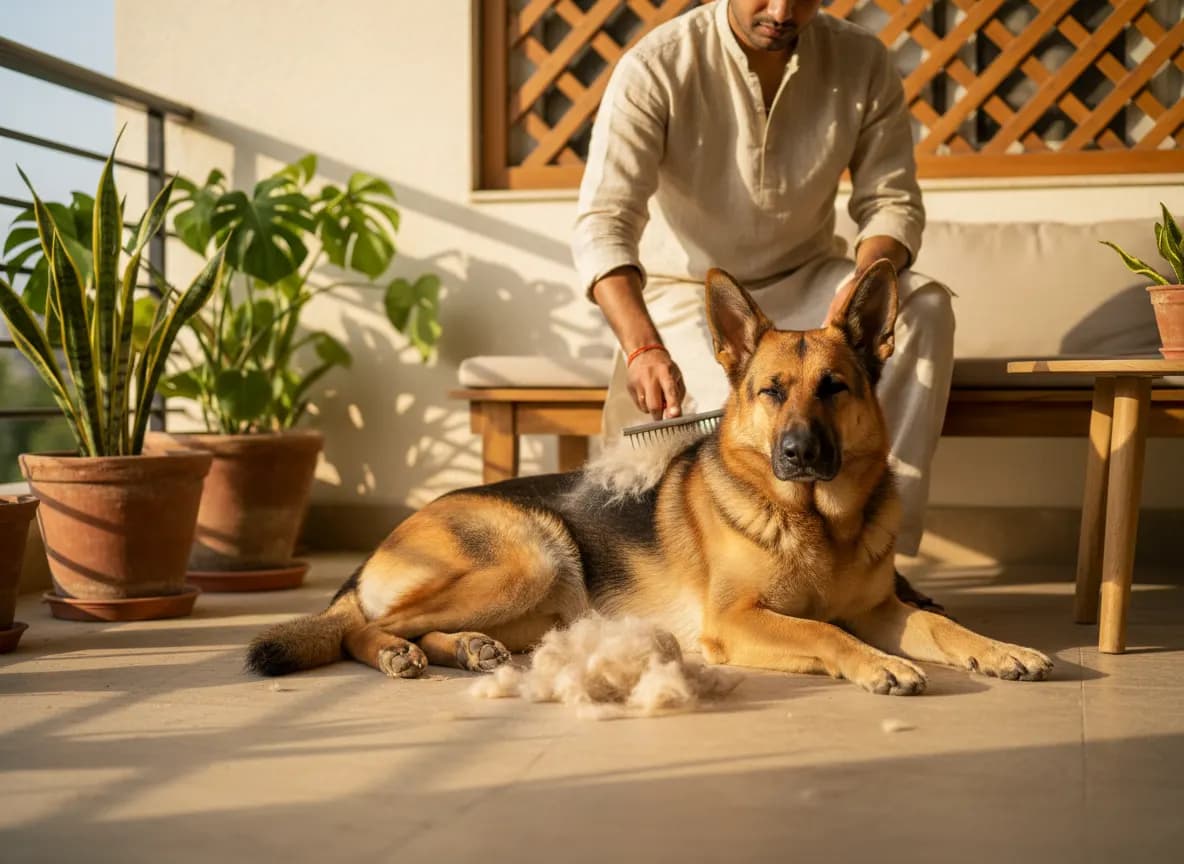
- Three or four times a week with a slicker brush, then an undercoat rake to reach the dense layer.
- Daily during coat blowing. A de-shedding tool lifts loose undercoat that a normal brush slides over.
- Work in sections, in the direction of the coat, from the neck back. Pay attention to the “trousers” on the back legs, behind the ears and the ruff around the neck, where mats can form in long-coated dogs.
Brushing is also the best way to keep the skin healthy: it lets air reach it and spreads natural oils. If hair loss ever looks patchy rather than even, read dog hair fall vs shedding.
Never shave a German Shepherd
Shaving a double coat removes the insulation that protects against both heat and sun, and the coat may grow back unevenly. To keep your Shepherd comfortable in summer, remove loose undercoat with regular brushing, walk early and late, and keep water and shade available. See our summer dog care guide.
How often should you bathe a German Shepherd?
Less often than you think. Every six to eight weeks is enough for most German Shepherds, unless they get into something. Frequent bathing strips the oils that keep the coat weatherproof and the skin comfortable.
When you bathe, brush thoroughly first to remove loose undercoat; otherwise it turns into felt in the water. Use a mild, sulphate-free, pH-balanced dog shampoo such as our Gentle Daily Shampoo, and work it right down through the undercoat to the skin. Rinse for longer than feels necessary – leftover shampoo in a dense coat can irritate the skin. Our step-by-step bath guide covers the routine. For a wider comparison, see the best shampoo for German Shepherd in India.
For the weeks between, the Dry Foam Shampoo freshens an oily or stale coat with no water at all.
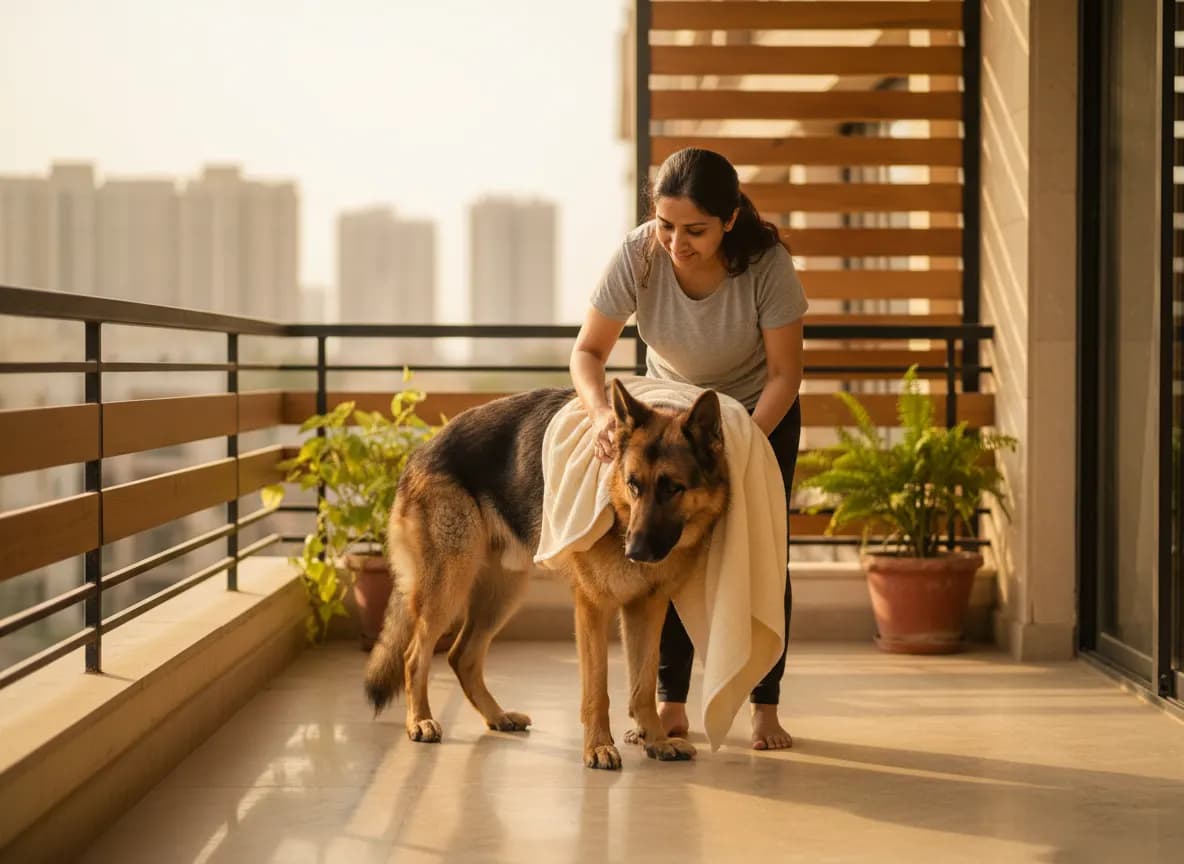
Drying the undercoat
A German Shepherd’s undercoat can stay damp for hours. Damp undercoat against warm skin is how hot spots and the classic wet-dog smell begin. Towel well, then use a pet dryer on a cool or low setting, brushing as you go, until you can part the coat and feel dry skin. Our guide to drying a dog after a bath explains why it matters.
Ears, paws and ticks
- Ears: upright ears are easier than floppy ones but still collect dust. Check them weekly and wipe the visible outer ear. See how to clean your dog’s ears.
- Paws: trim the fur between the pads if it gets long, and use a no-rinse Paw Cleaner after walks.
- Ticks: a dense coat hides ticks well. Check the neck, ears, armpits and between the toes after walks, and use Defense before walks in long grass.
A simple German Shepherd routine
| How often | What |
|---|---|
| After every walk | Clean paws; quick tick check through the ruff and ears |
| 3–4 times a week (daily when blowing coat) | Slicker brush, then undercoat rake |
| Weekly | Check ears and nails |
| Between baths | Dry foam for an oily or stale coat |
| Every 6–8 weeks | Bath after a thorough brush-out; dry to the skin |
When to see a vet
German Shepherds can be prone to skin and ear problems. Persistent scratching or licking, red or moist patches, scabs, a strong smell or head-shaking need a vet, not more washing.