A dog’s ear canal is shaped like an “L”: it runs down, then turns in towards the eardrum. That shape traps moisture, wax and debris, especially in floppy-eared breeds – and it is why poking around inside an ear does more harm than good.
Good ear care at home is mostly looking, wiping and drying. Anything more is for your vet.
Which dogs need more ear care?
- Floppy-eared breeds such as Labradors, Golden Retrievers, Cocker Spaniels, Beagles and Basset Hounds, whose ears fold over and trap warmth and moisture.
- Hairy-eared breeds such as Shih Tzus, Poodles and Lhasa Apsos, where hair grows inside the ear.
- Swimmers and monsoon walkers, whose ears get wet often.
- Dogs with allergies or a history of ear trouble.
Upright-eared dogs, such as German Shepherds, still collect dust and need a regular check.
The weekly ear check
Once a week, in good light:
- Lift the ear and look inside. Healthy ears are pale pink and clean, with only a little light wax.
- Smell. A healthy ear smells of very little. A sour, yeasty or bad smell is a sign to see your vet.
- Look for redness, swelling, dark or crumbly wax, discharge, scabs or anything stuck – like grass seeds in summer.
- Reward your dog. Ear checks should be a pleasant, everyday thing.
How to clean the outer ear
If the visible part of the ear is a little dusty or waxy:
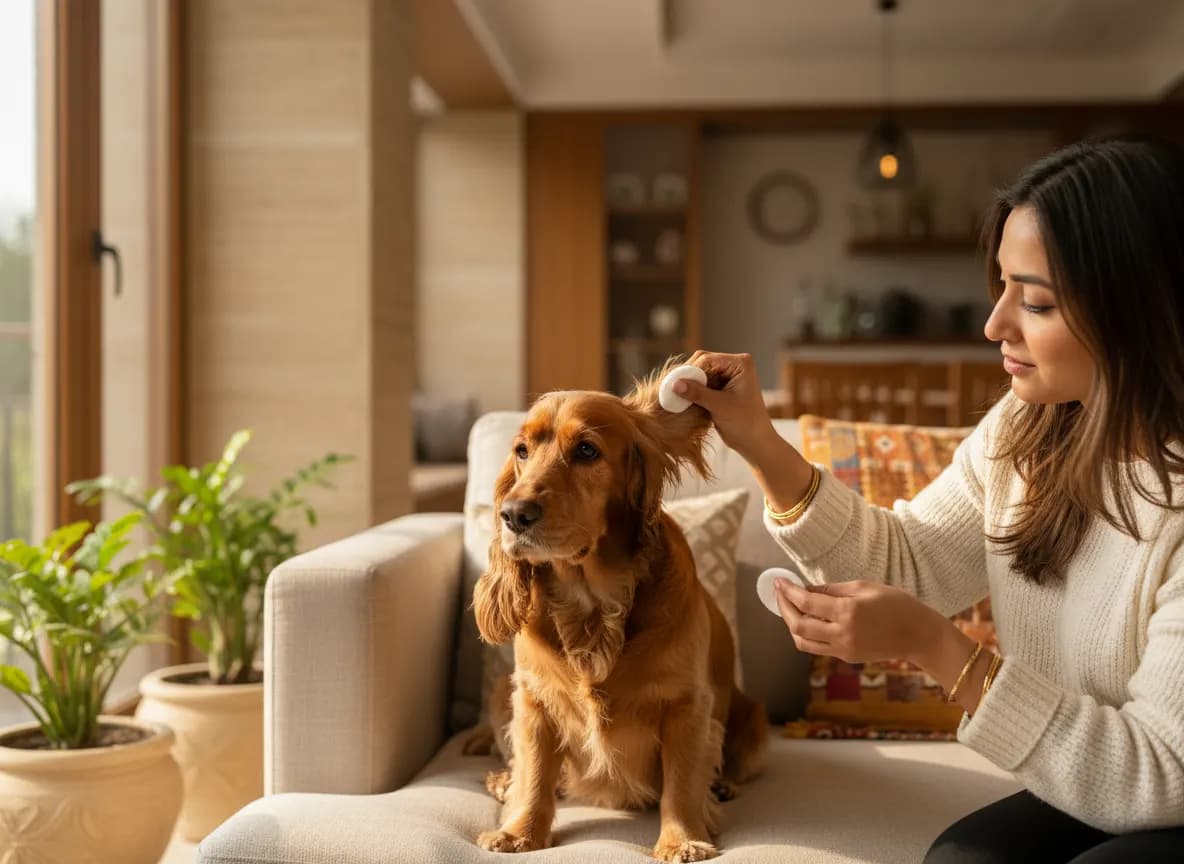
- Use a soft, dry cotton pad or soft cloth, or one lightly dampened with an ear cleaner recommended by your vet.
- Wipe only what you can see: the inside of the ear flap and the entrance to the canal.
- Be gentle, and stop if your dog seems sore.
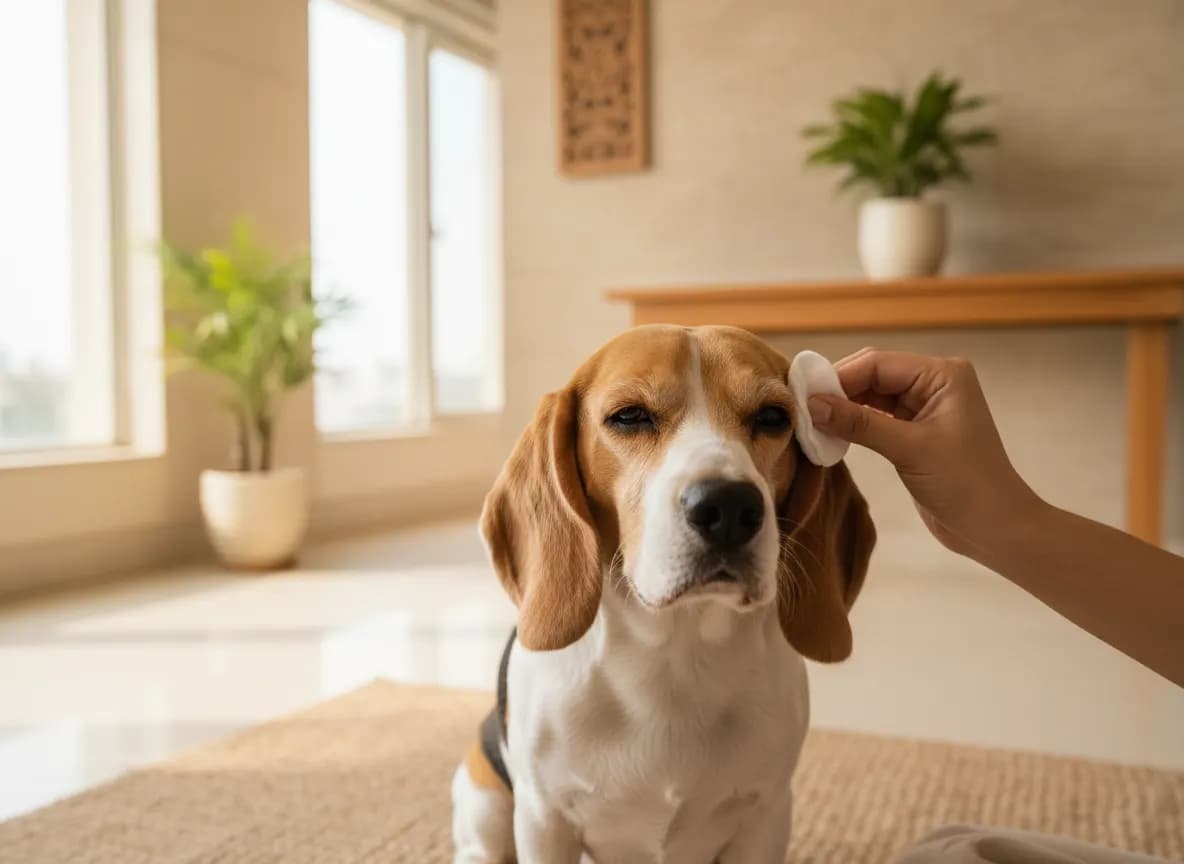
Never put cotton buds into the ear canal. They push wax and debris deeper and can damage the canal or eardrum. Don’t use hydrogen peroxide, alcohol, oils or home remedies inside the ear; they can irritate the skin or make an existing problem worse. If your vet recommends regular cleaning with a liquid cleaner, ask them to show you how.
Ears and bath time
Water in the ear canal is a common start to ear trouble.
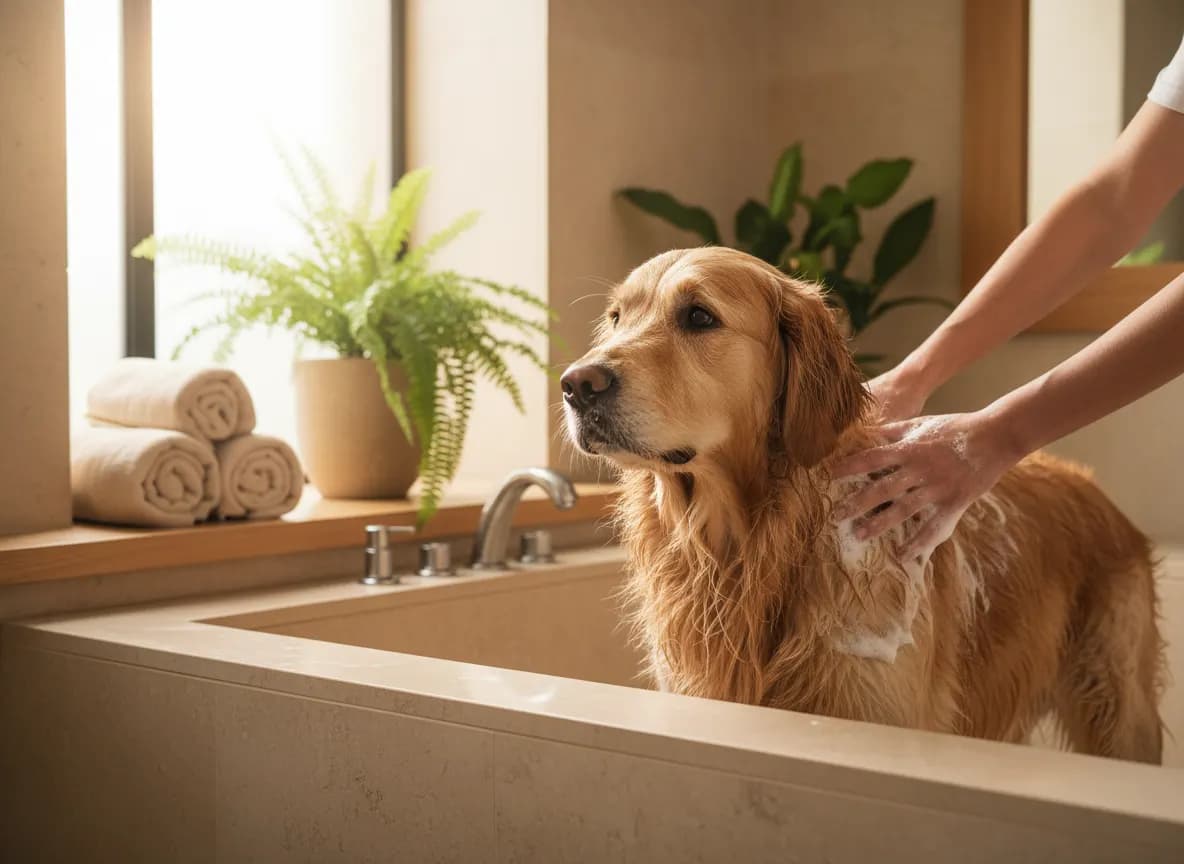
- Keep water out of the ears while bathing. Wet the head last, or wipe the face with a damp cloth instead of pouring water over it.
- Keep shampoo out of the ear canal, and rinse the outer ear well. Even a gentle shampoo like our Gentle Daily Shampoo is for the coat, not the inside of the ear.
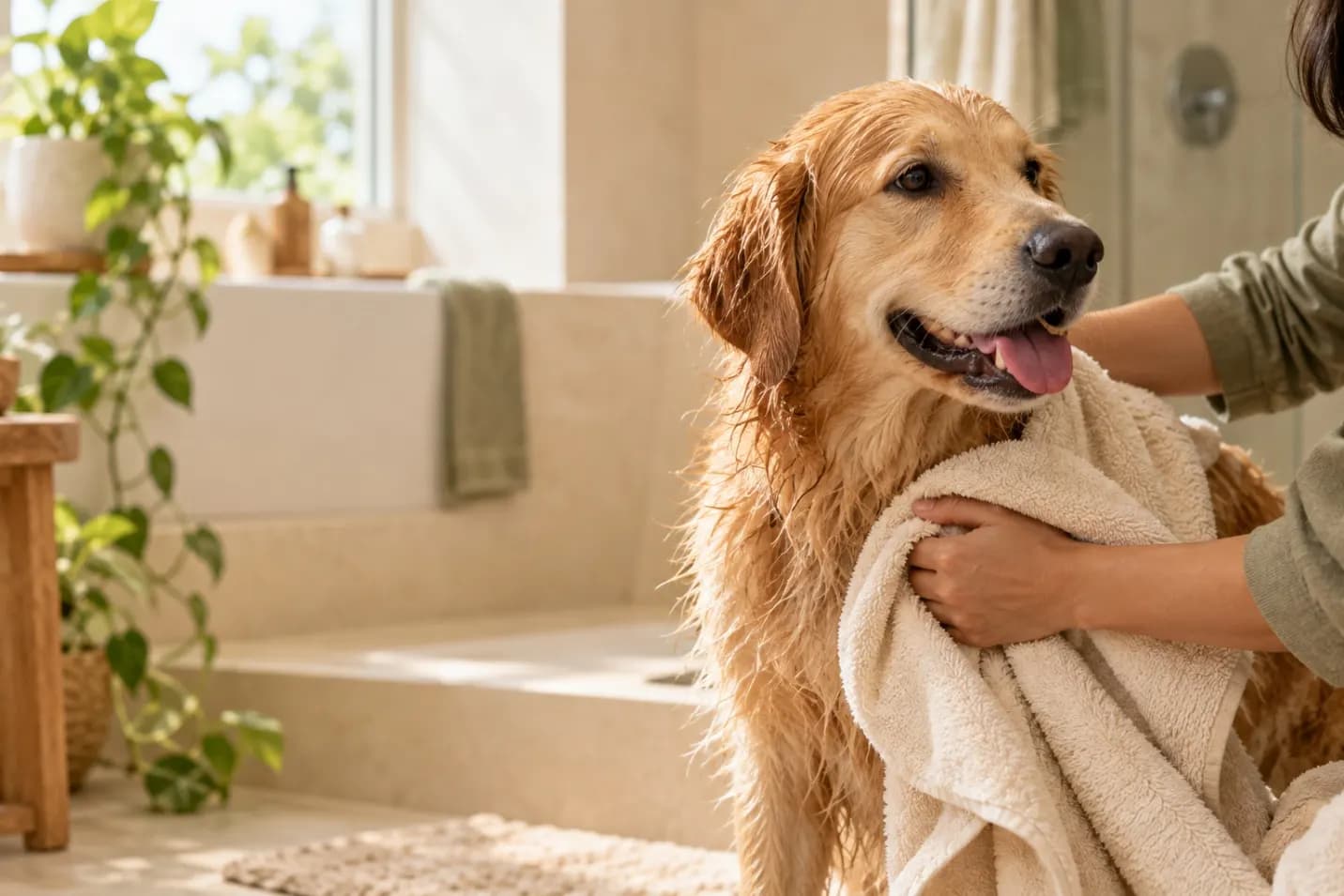
- Dry the ears after every bath and swim: gently wipe the inside of the flap and the opening with a soft, dry towel.
Our step-by-step bath guide builds this into the routine.
How often should you clean a dog’s ears?
Check every week. Wipe the outer ear only when it looks dirty. Many dogs’ ears clean themselves well; cleaning too often can irritate them. Dogs with ear trouble may need a cleaning routine from your vet.
Signs of an ear problem
See your vet if your dog:
- shakes their head or scratches their ears a lot
- has red, swollen, hot or painful ears
- has dark, crumbly, smelly wax or discharge
- tilts their head, loses balance or seems unsteady
- has a swollen, puffy ear flap
- cries when you touch their ears
Ear infections can be painful and need the right diagnosis and treatment. A smell that comes back soon after a bath can also start in the ears; see why your dog still smells after a bath.