Most bath-time problems – a dog that hates it, a coat that still smells, skin that itches afterwards – don’t come from the shampoo. They come from the steps around it: skipping the brush, wetting only the surface, rinsing in a hurry, or leaving the coat damp.
This is the ritual we print on every Gentle Daily Shampoo carton, expanded into a full guide.
Before you begin: set up
Gather everything before the dog is wet – you won’t want to leave a soaking dog to fetch a towel.
- A dog shampoo made for pets (not human shampoo)
- Two or three absorbent towels
- A brush or comb suited to the coat
- A non-slip mat for the tub or bathroom floor
- Lukewarm water – comfortable to your wrist, never hot
- Treats, if your dog works for them
Step 1: Brush the coat thoroughly
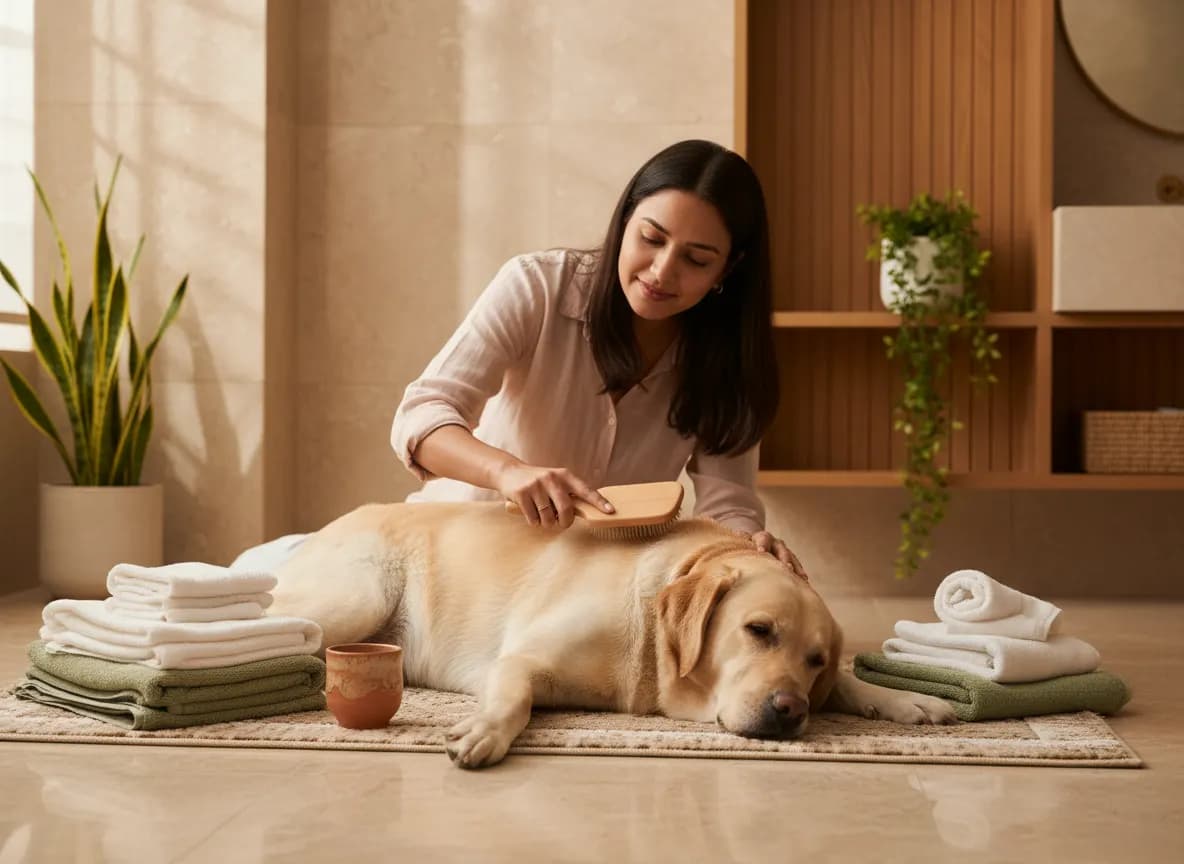
Brush before water touches the coat. Water tightens tangles and mats, and a matted coat can’t be washed or dried properly underneath.
This is also your chance to check the skin for anything unusual, and the paws for anything caught between the toes.
Step 2: Wet completely – down to the skin
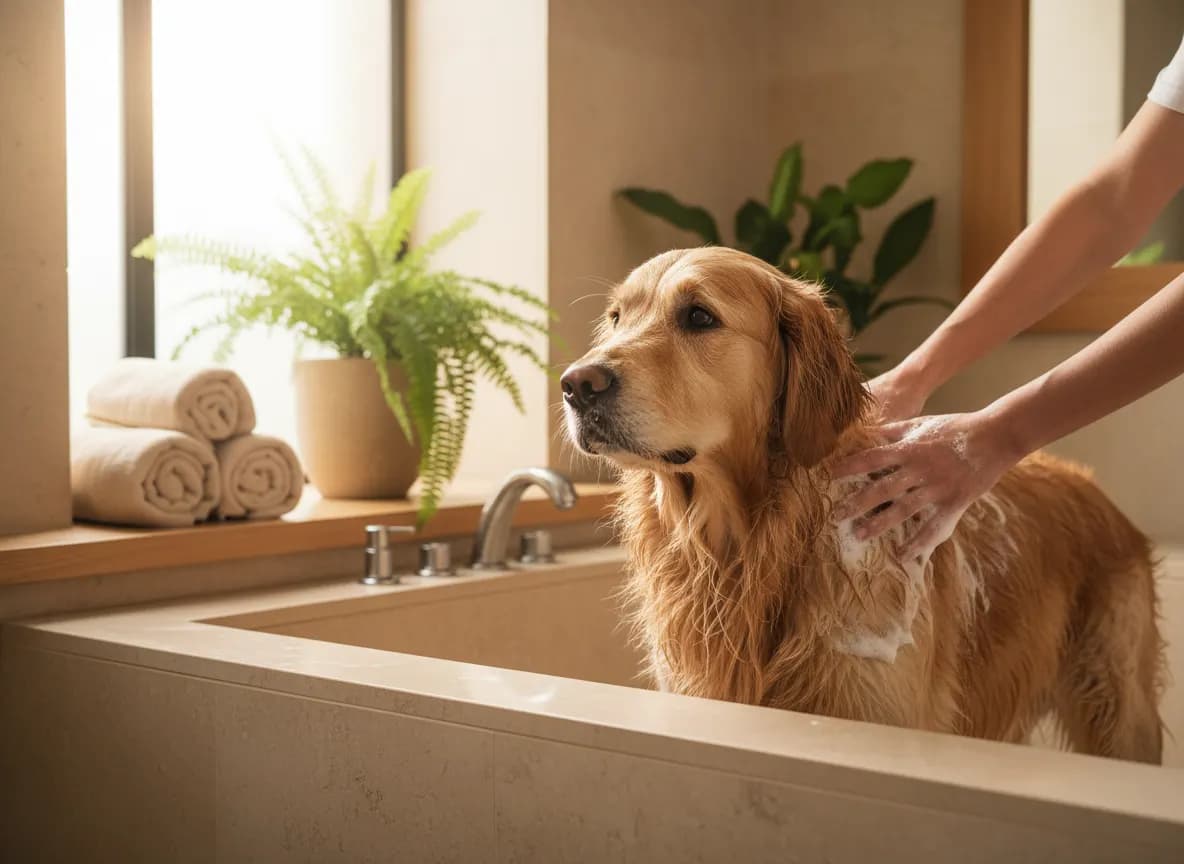
Saturate the coat right down to the skin, not just the surface. Start at the neck and work back, keeping water away from the eyes and ears.
For double-coated breeds – Labradors, Golden Retrievers, German Shepherds, Shih Tzus – take your time. The undercoat repels water, and a coat that only looks wet won’t clean evenly.
Step 3: Lather slowly – and expect less foam
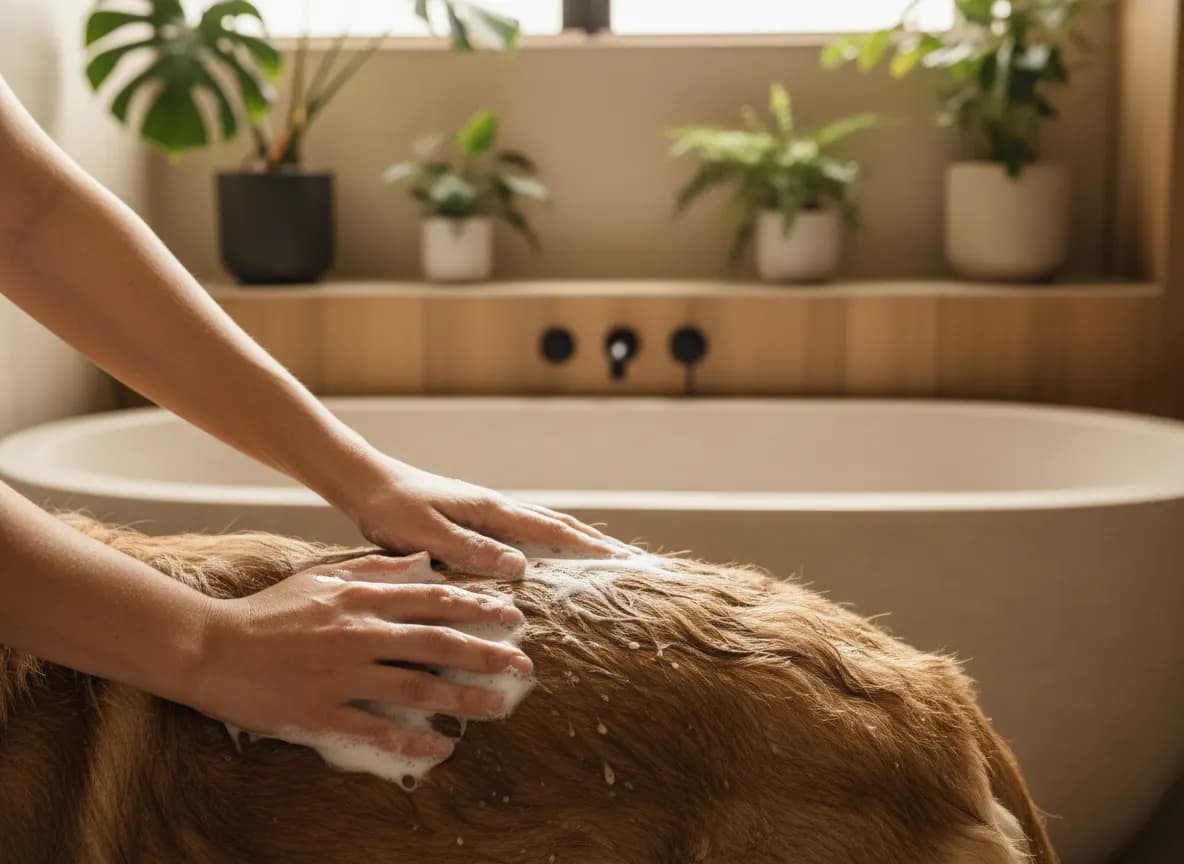
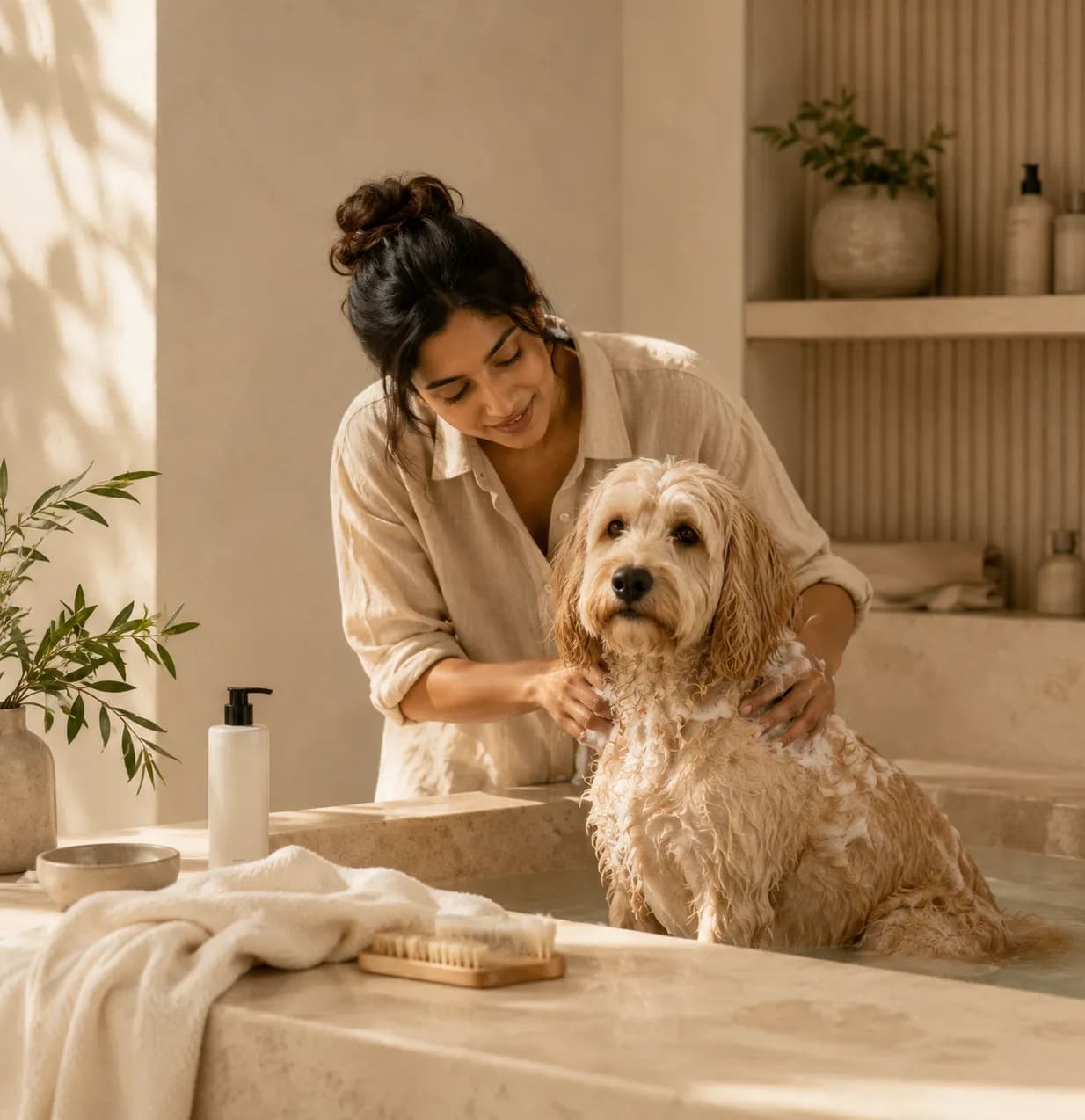
Apply a small amount of shampoo and lather slowly from neck to tail, keeping clear of the eyes.
The lather will be less than you expect. That’s the point: sulphate cleansers create big foam, but they also strip the skin barrier and the coat’s natural oils. A gentle, amino acid-based shampoo cleans as effectively with a quieter lather.
Clean the face with a damp cloth rather than shampoo, and don’t pour water into the ears.
Step 4: Two passes for best results
The first application cleans. A second, if the coat needs it, will show slightly more lather – because the coat is already clean. For most baths, two passes give the best result.
Step 5: Rinse until the water runs clean
Rinse longer than feels necessary. Shampoo left in a dense coat sits against the skin and is one of the most common reasons a freshly bathed dog still smells or itches. Keep going until the water runs completely clear and the coat no longer feels slippery.
Step 6: Dry properly
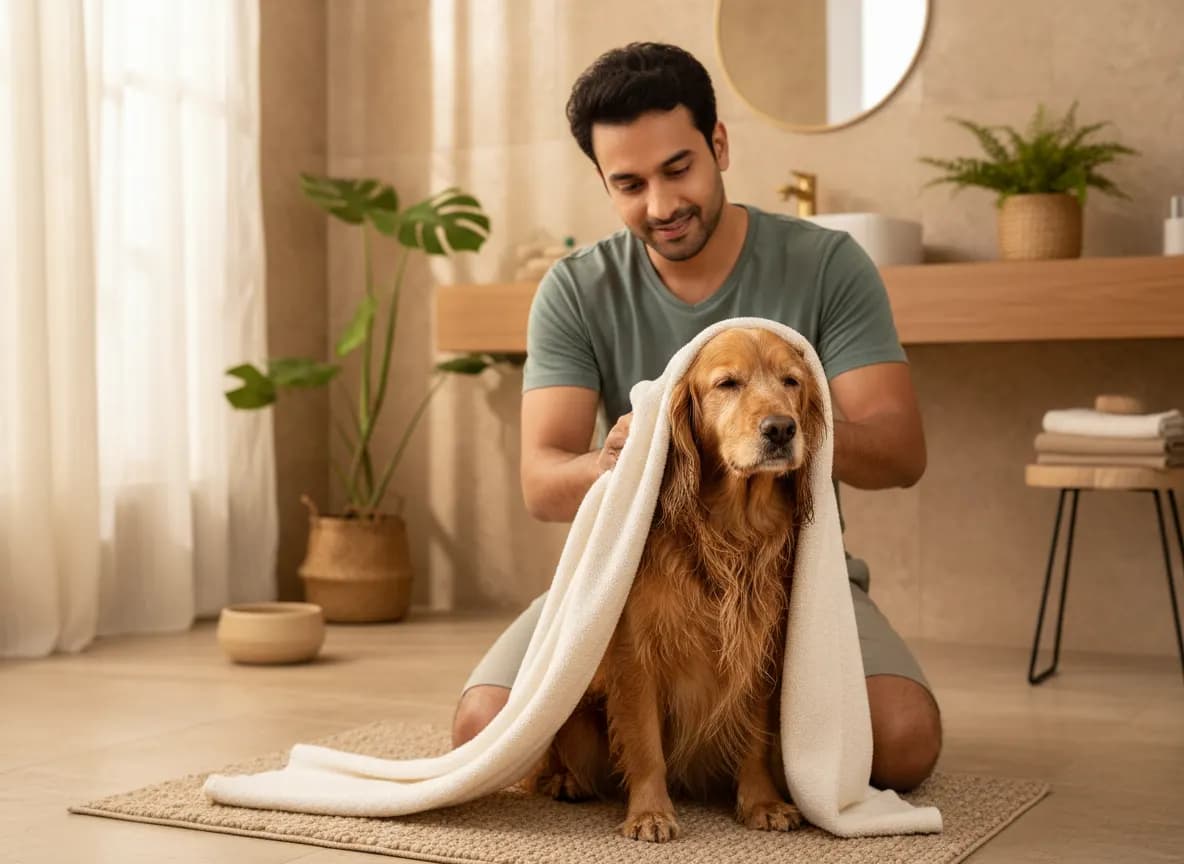
This is the step most people rush.
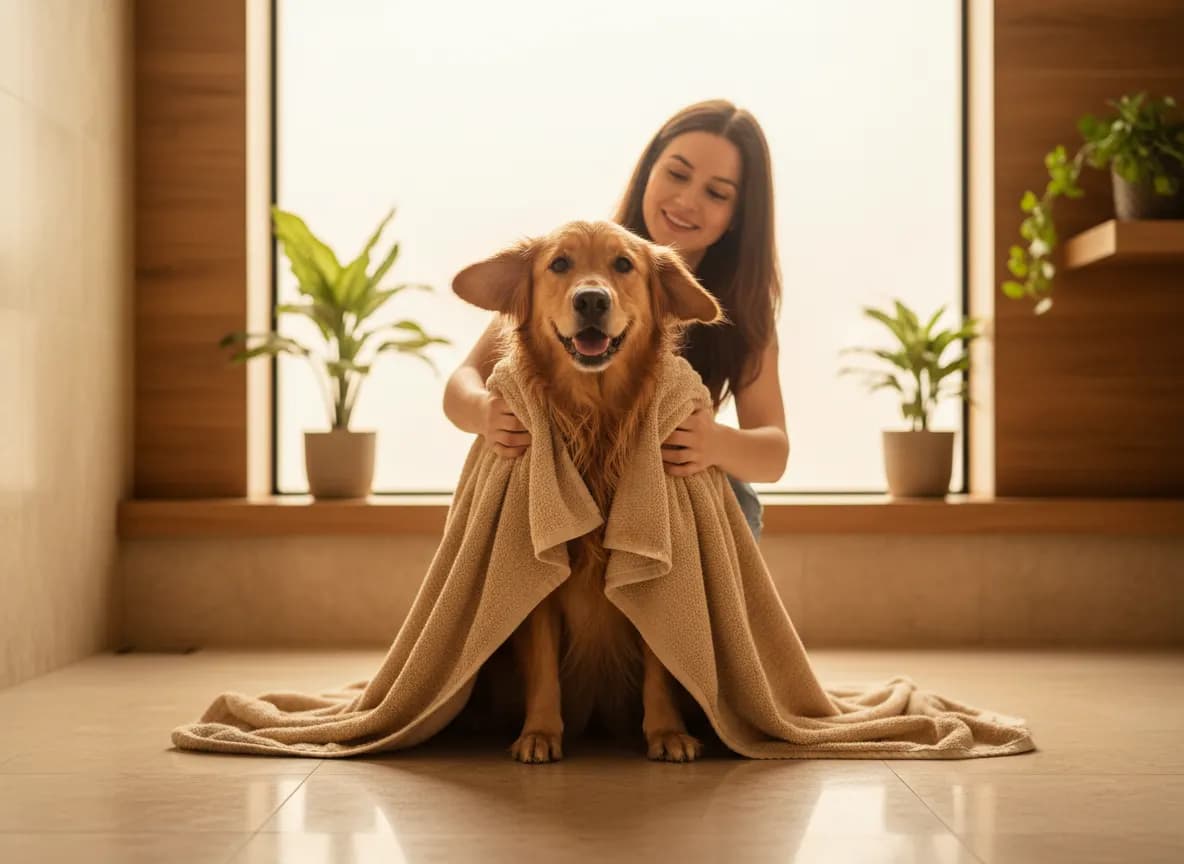
- Press, don’t rub. Squeeze water out with a towel; vigorous rubbing creates tangles.
- Get to the skin. Part the coat and check – the surface can feel dry while the undercoat is still wet.
- Mind the hidden places: under the collar line, the belly, armpits, between the toes, and the outer ears.
- If you use a dryer, choose a pet dryer or a cool, low setting, keep it moving, and stop if your dog is distressed. Never use high heat.
- Let them finish somewhere warm and well-ventilated, not on their bed while still damp.
The reveal
The real result appears as the coat dries: softer, calmer, and with a fragrance that stays close to the coat. With Furrytail’s Gentle Daily Shampoo, that’s up to 48 hours.
If your dog hates water
- Keep sessions short and calm; a quick, positive bath beats a long, stressful one.
- Use a non-slip mat – much of the fear is about slipping.
- Keep water lukewarm and the flow gentle; a cup or jug is less alarming than a shower head.
- Talk, praise and reward throughout.
- Between baths, use a **dry bath** so a wet bath isn’t needed as often.
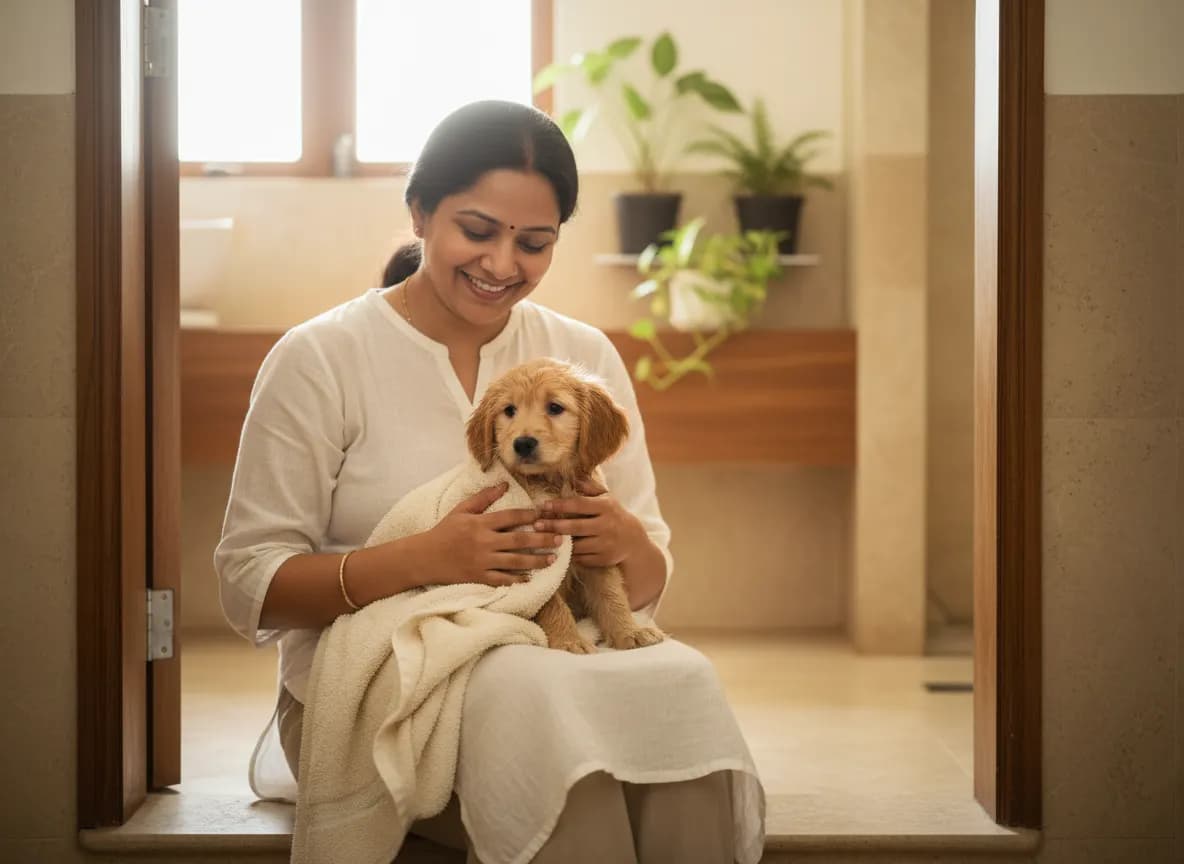
Bathing a puppy for the first time
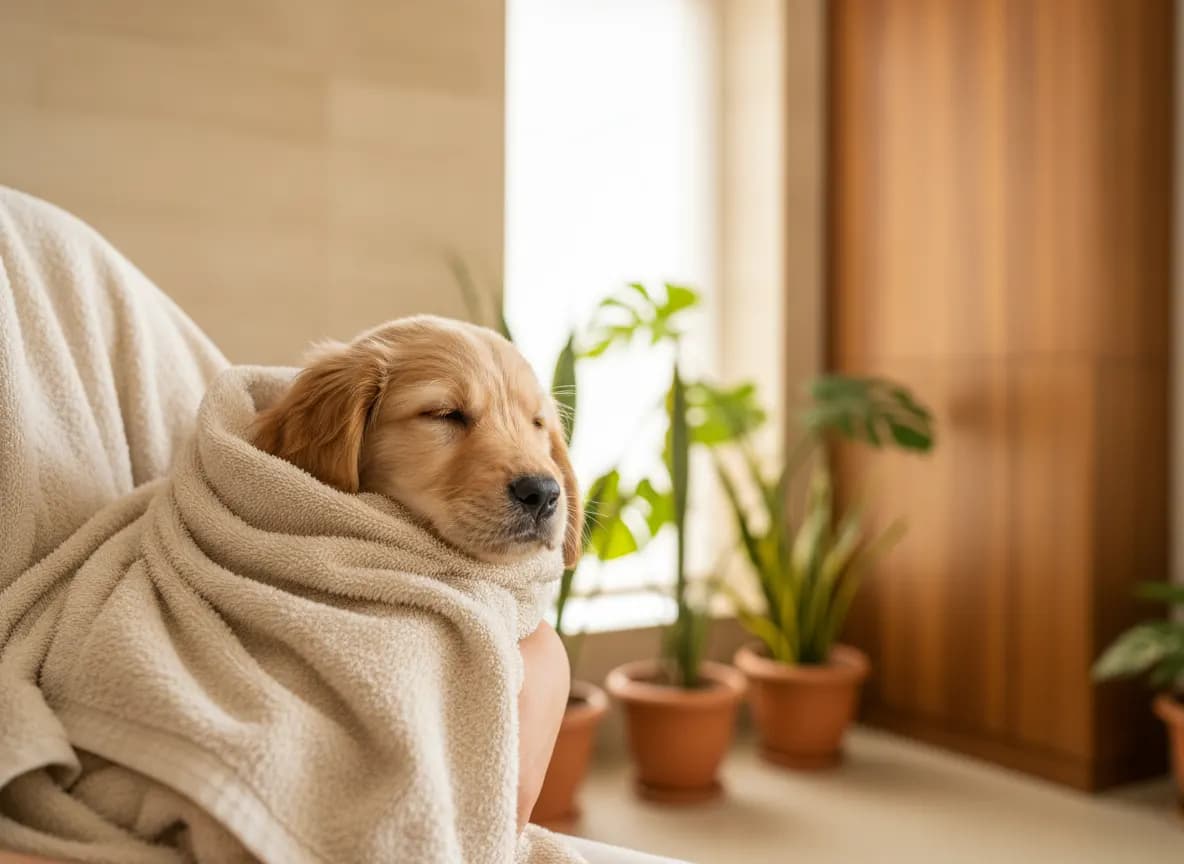
Check with your vet before bathing a puppy under 12 weeks. When it’s time:
- Use a pet shampoo, a small amount, and keep it well away from the eyes.
- Keep the room warm and the bath short.
- Dry the puppy completely – puppies lose heat quickly.
- Make it gentle and positive: the first baths shape how they’ll feel about bath-time for life.
How often?
There’s no universal schedule. Bathe when the coat genuinely needs it – and see how often should you bathe your dog for how coat type, lifestyle and Indian weather change the answer.