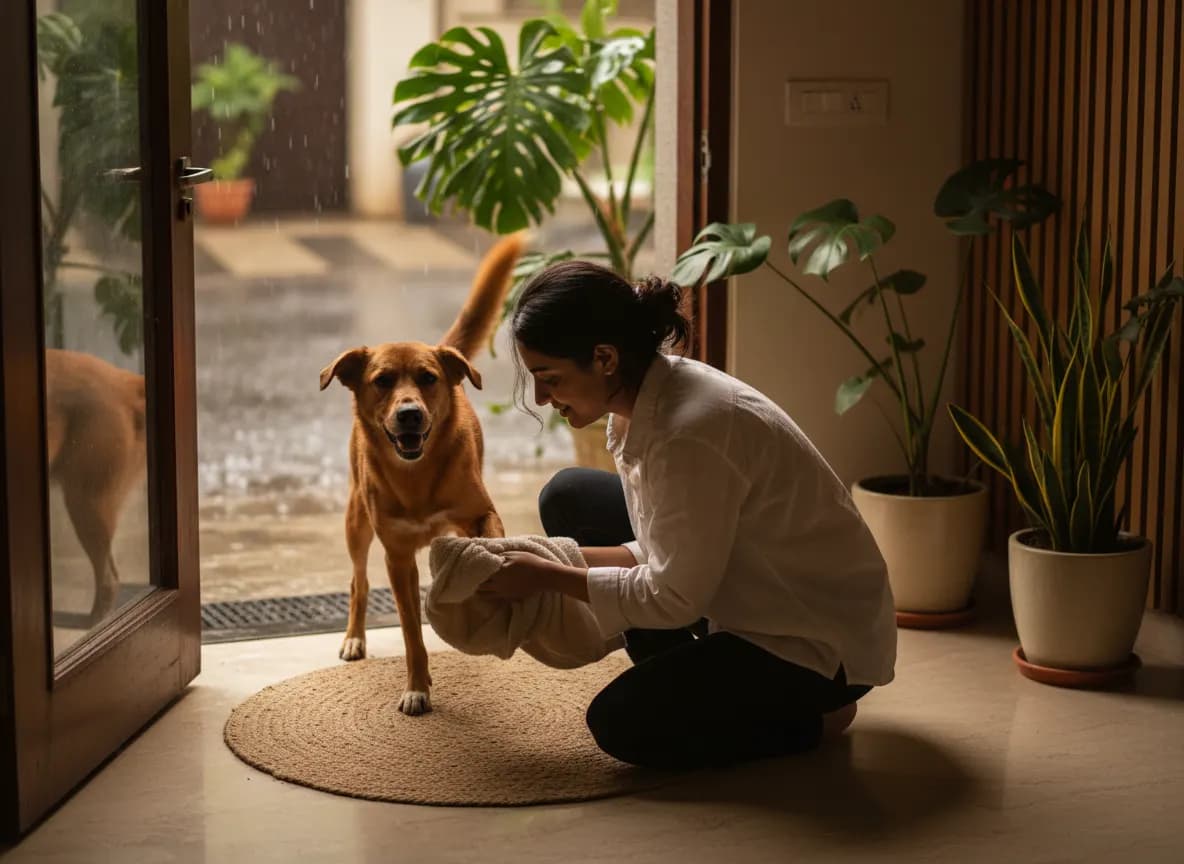
They have crossed pavement, grass, soil, dust, wet surfaces and perhaps a muddy patch or two. Then those same paws move across the entrance, the floor, the rug – and eventually the sofa or bed.
This is not an argument for treating every walk like a contamination event. Nor does every paw need an elaborate cleaning ritual.
It is simply a useful way to think about dog paw cleaning: the paw is the transition point between two environments.
And once you see it that way, the question becomes less How do I keep my dog’s paws perfectly clean? and more What did the paws actually encounter today?
The walk ends at the door. The paws don’t.
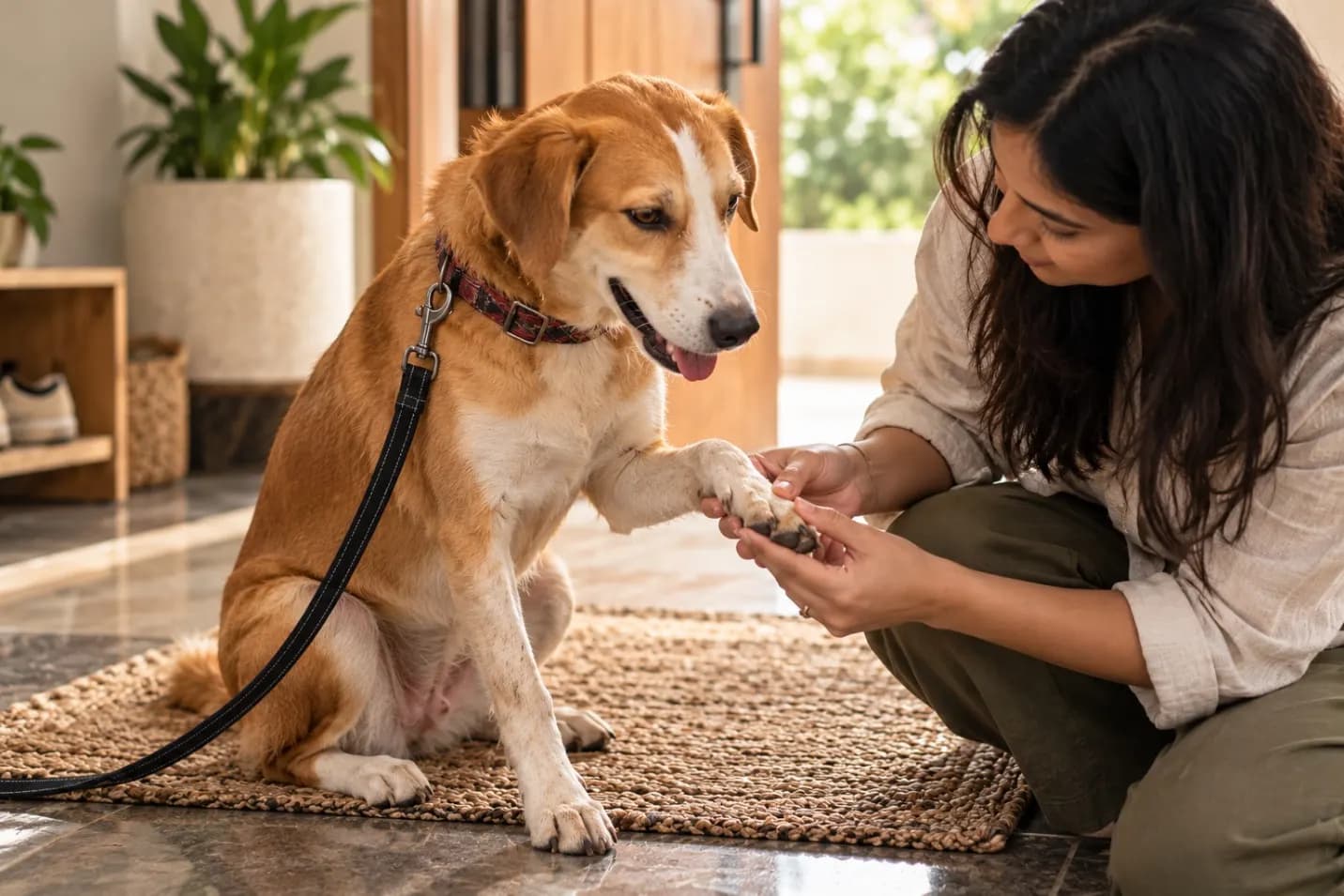
Dog paw pads are not decorative surfaces. They cushion movement, provide traction and help protect the feet from rough terrain and environmental conditions. Because dogs bear weight through relatively small areas of their feet, even minor paw injuries can affect how they walk.
The spaces between the toes deserve attention too.
A quick post-walk inspection can reveal things that are easy to miss at a glance: a small piece of plant material, accumulated mud, a cut, swelling or something unusual around the pads or nails.
Veterinary guidance recommends checking paws after walks for cuts, bruises and foreign material, including around the toes and pads.
The point isn’t to inspect obsessively.
It is to notice.
What your dog’s paws actually pick up outside
For an urban dog, a walk can involve several surfaces within twenty minutes.
There may be dry pavement, a grassy verge, soil around a tree, a damp patch near a drain and the dusty entrance to an apartment complex.
In Indian cities, the combination changes with the weather. Delhi NCR can bring dry dust and heat. Bengaluru may alternate between dry paths and sudden rain. Mumbai and other coastal cities can add humidity and wet surfaces. During monsoon, muddy paths become part of ordinary walking life.
Most of this is simply environmental material – not something inherently dangerous.
But visible dirt, mud and moisture are reasonable reasons to clean paws before moving further into the home.
The response should match the exposure.
- Clean, dry paws after a short walk may need little more than a look.
- Mud-covered paws may need proper cleaning.
- Wet paws may need careful drying.
And if a dog has stepped into a substance that appears chemically irritating or otherwise concerning, ordinary grooming should not be treated as the solution. Veterinary guidance may be appropriate. Chemical burns and other paw injuries can require specific care.
How to clean dog paws after a walk
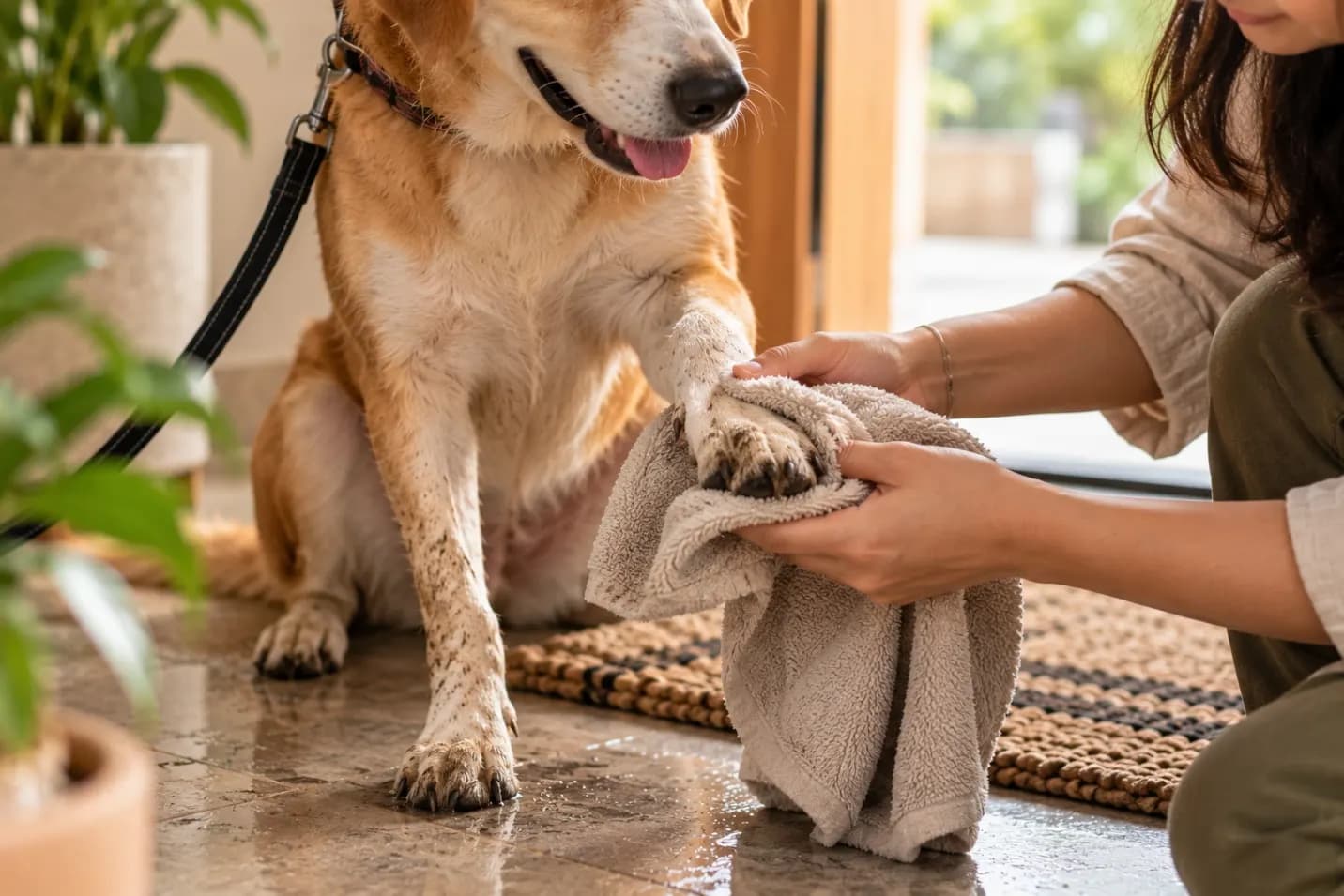
There is no prize for the longest cleaning routine.
A useful framework is:
LOOK → REMOVE → CLEAN → DRY → OBSERVE
- Look.
Check the pads, between the toes, around the nails and the visible surface of the paw. - Remove.
Gently remove visible dirt or loose debris. If something appears deeply embedded, don’t dig at it. Veterinary guidance specifically cautions against attempting to extract deeply lodged foreign material yourself. - Clean.
For ordinary dirt or mud, use an appropriate dog-specific cleaning method. A paw cleaner for dogs can be useful when targeted cleaning makes more sense than bathing the entire dog. Veterinary and pet-care guidance commonly recommends wiping or washing paws after outdoor exposure when dirt or potentially irritating material is present. - Dry.
Do not stop at cleaning. If paws are wet, gently dry them, paying attention to the spaces between the toes. - Observe.
Notice anything that doesn’t look or feel normal: persistent redness, swelling, pain, discharge, repeated licking or a visible wound.
That last step is important because cleaning is not treatment.
A paw cleaner is not a miniature bath
This distinction matters.
Paw cleaning ≠ full-body bathing.
A dog can return from a dusty walk with dirty paws while the rest of its coat remains perfectly acceptable.
In that situation, targeted cleaning can be a more proportionate response than turning a twenty-minute walk into a full grooming session.
Likewise, a muddy monsoon walk may genuinely require more thorough washing – and when the whole coat needs it, that is a job for a bath with Ritual – Gentle Daily Shampoo, taken as often as the dog actually needs.
The point is not that a paw cleaner is always better than a bath.
It is that different exposures call for different levels of cleaning.
The current pet-care market reflects this distinction, with dedicated paw-cleaning products positioned specifically for post-walk use.
When cleaning becomes too much
Good hygiene is not the same as maximum hygiene.
Repeated or overly aggressive cleansing can be irritating for some dogs, particularly when there is already an underlying skin problem. Veterinary dermatology references consider bathing frequency and excessive wetting relevant when evaluating certain skin conditions.
That does not mean routine paw cleaning is harmful.
It means clean according to what the paws encountered rather than following a rigid rule that every paw must be scrubbed after every outing.
Avoid aggressive rubbing. Avoid improvising with household cleansers. And don’t assume that a product intended for humans is automatically appropriate for canine skin – if in doubt, read the INCI list.
A good post-walk routine should leave the paws clean enough – not stripped, scrubbed or irritated.
Monsoon changes the routine
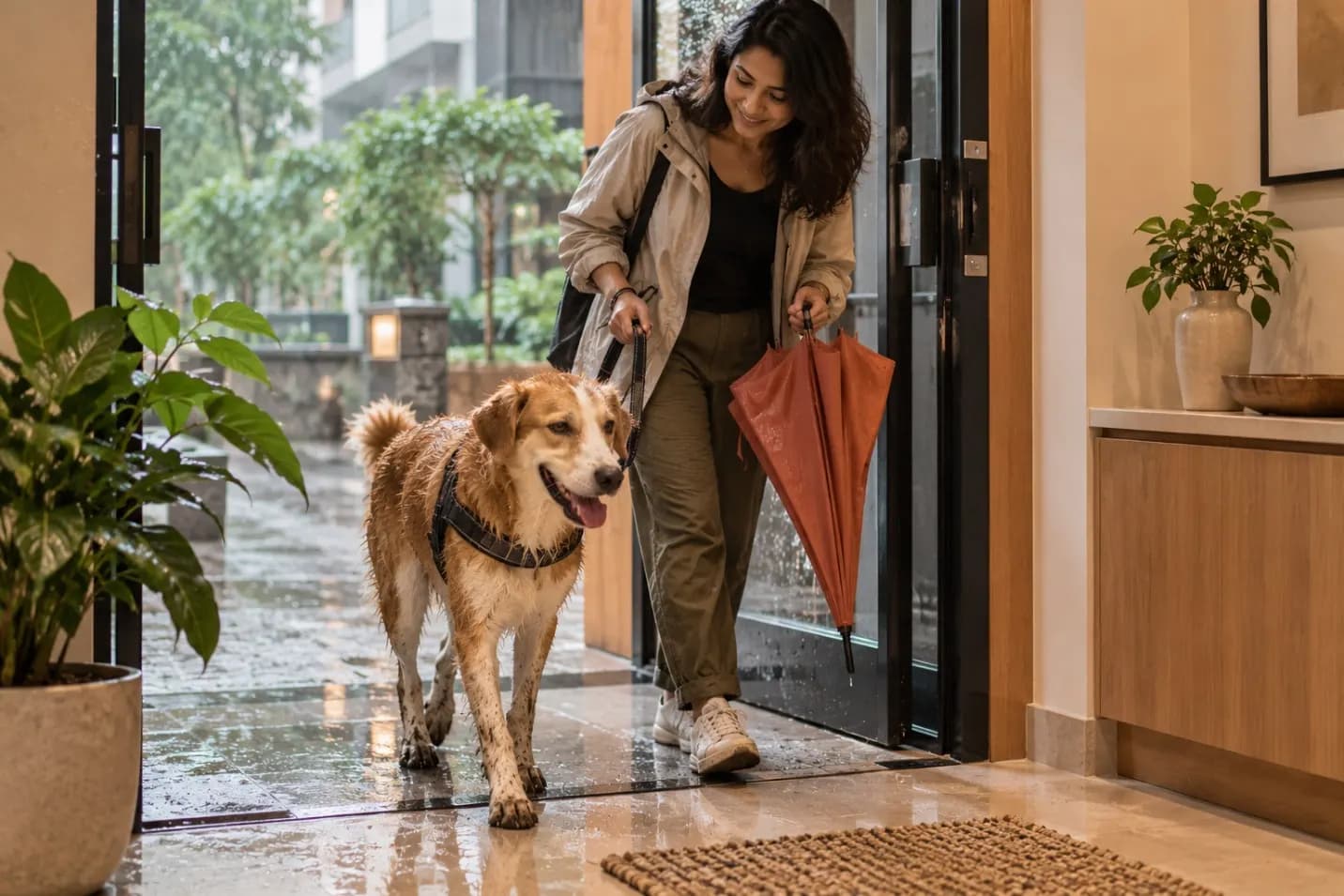
Indian monsoon weather makes this particularly relevant.
A short walk can suddenly involve wet pavement, mud and standing water. Dogs may return with damp fur around their feet and material packed between their toes.
The answer isn’t necessarily more baths.
It is more attention to the transition.
Check the paws. Clean visible mud when needed. Dry them properly. Look between the toes. (The monsoon ritual covers the rest of the wet-season routine, from damp coats to ticks.)
Paw anatomy and skin conditions vary between dogs, and moisture can be relevant to some interdigital problems; veterinary literature describes the role that moisture, friction and tissue maceration can play in certain interdigital disorders.
But that is very different from saying that every wet paw will develop a problem.
Monsoon care is about observation, not alarm.
Where a paw cleaner fits
This is where a targeted product has a useful role.
Remedy – Paw Foam Cleaner sits within Furrytail’s Remedy care family: the part of the routine concerned with targeted, everyday care.
Its relevance is simple.
After a walk, not every dog needs a bath.
Sometimes the question is simply: What do I do with these paws before we continue into the house?
A dedicated paw-cleaning format can make that transition easier to incorporate into an everyday grooming routine. If you are weighing foams against washer cups, wipes and balms, we compared ten options in the best dog paw cleaner in India.
But the principle comes first: use cleaning where cleaning is warranted, follow the product’s directions, and don’t confuse routine grooming with veterinary treatment. That restraint is part of the Furrytail approach to formulation.
A paw cleaner does not diagnose paw disease, treat an infection or replace veterinary care.
When paws need more than cleaning
Some changes deserve more attention than another wipe.
Persistent redness, swelling, pain, limping, bleeding, discharge, significant odour, repeated licking or chewing, wounds or suspected chemical exposure are reasons to consider veterinary assessment.
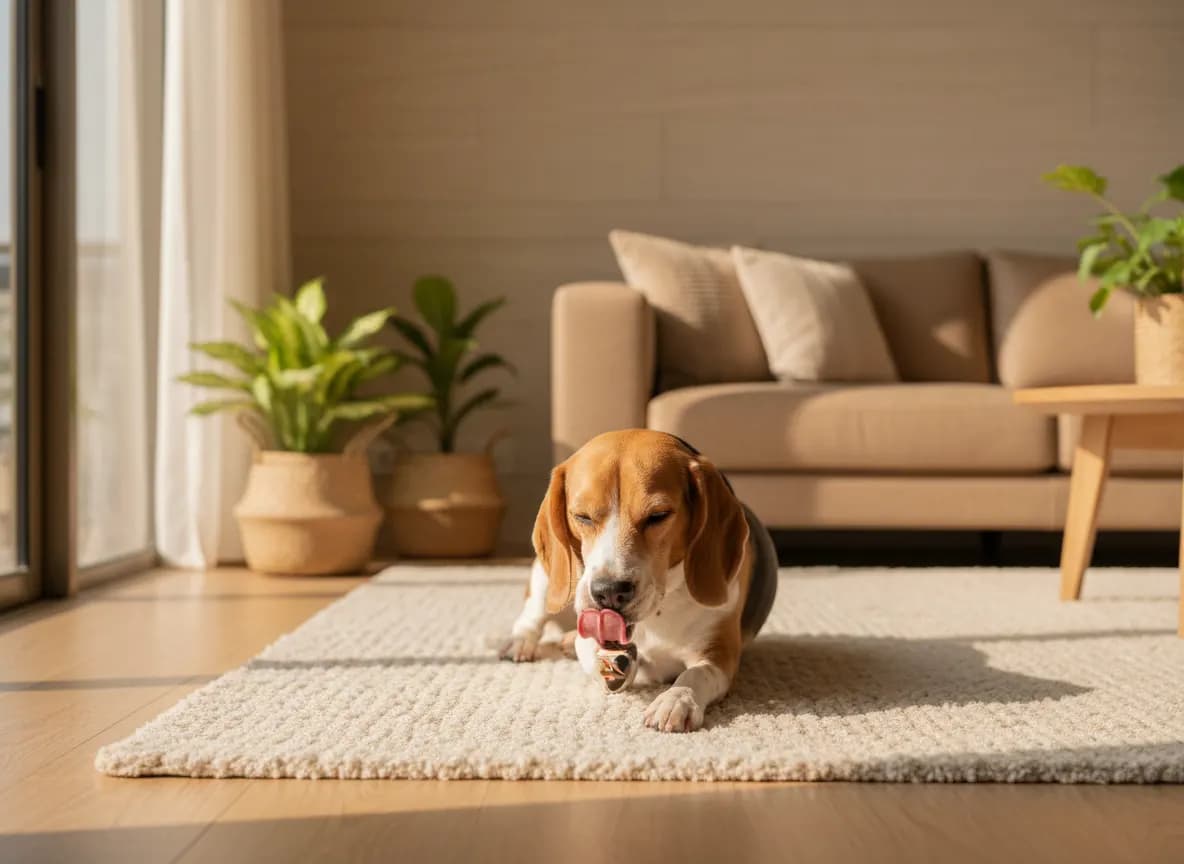
Paw licking in particular is not a diagnosis (why dogs lick their paws). It can occur with several different skin problems, including allergies, parasites and infections.
So if something keeps happening, don’t simply increase the cleaning routine.
Find out why.
The better way to think about paw care
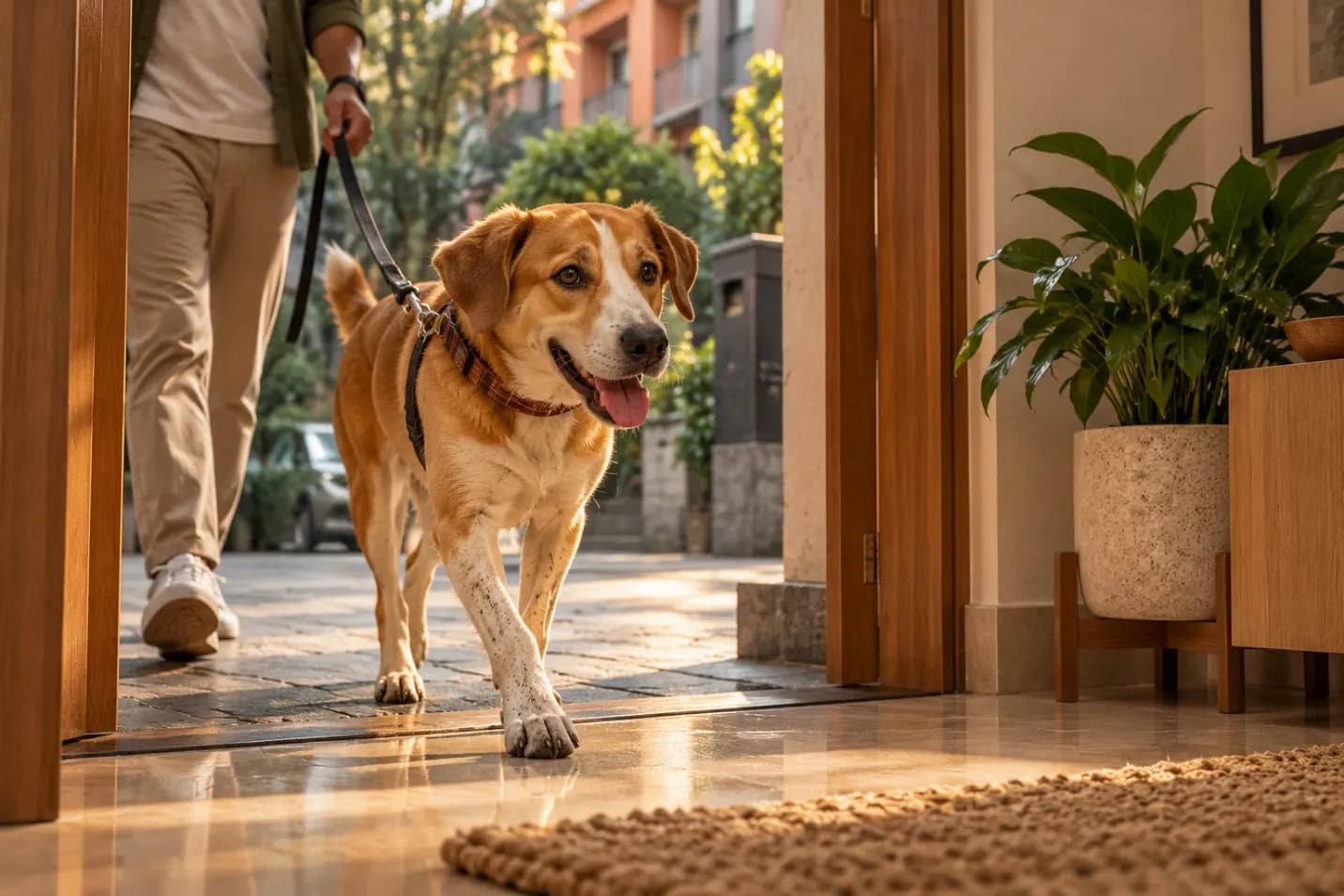
The most useful post-walk routine is not complicated:
STREET → PAWS → HOME
The street provides the exposure.
The paws carry the evidence.
The home is where you decide what needs to be cleaned.
Sometimes that means nothing more than a quick inspection. Sometimes it means wiping. Sometimes it means washing and drying. And occasionally, it means stopping the grooming routine altogether and asking a veterinarian what is going on.
Good paw care isn’t about making paws sterile.
It is about paying attention to what they encountered – and responding proportionately.
The walk may end at the door. The care continues quietly after it.