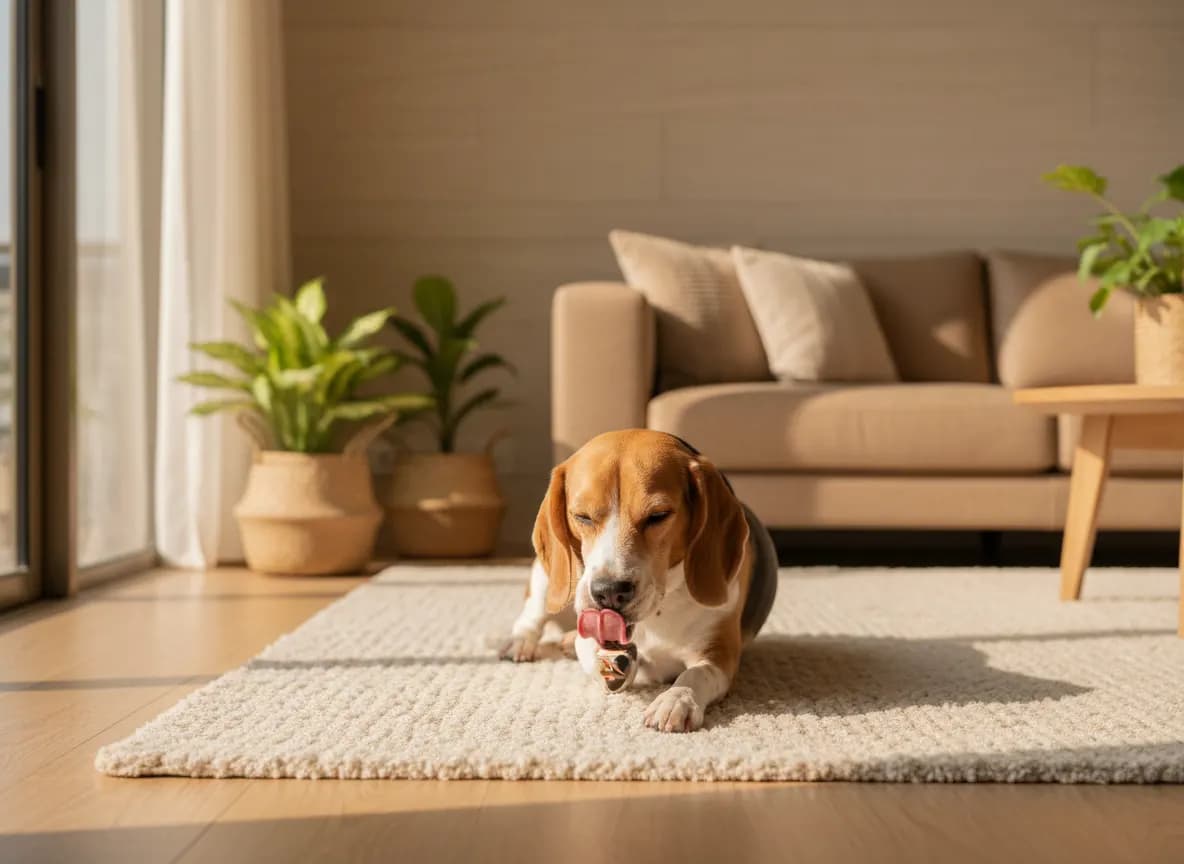
Every dog licks its paws sometimes. It’s part of how they groom, especially after a walk or a meal. But when the licking becomes constant – at night, after every walk, until the fur turns reddish-brown – it’s worth paying attention.
Paw licking isn’t a diagnosis. It’s a sign. The job is to work out what it’s a sign of.
Normal grooming vs too much licking
Usually normal: a few minutes of licking after a walk or nap, on clean, healthy-looking paws, with no limping or change in behaviour.
Worth a closer look:
- licking or chewing that goes on for long stretches, or wakes your dog at night;
- rust-brown staining on light-coloured fur between the toes (from saliva);
- red, swollen or moist skin between the toes or around the pads;
- a smell from the paws;
- limping, flinching when you touch a paw, or favouring one leg;
- licking that focuses on one paw rather than all four.
Common reasons dogs lick their paws
Something on or in the paw
Dirt, mud, grit, grass seeds, a splinter, a cut or a cracked pad can all set off licking – especially if it’s one paw and it started suddenly after a walk.
Moisture between the toes
Paws that stay damp after monsoon walks or baths can become irritated, and licking keeps them wet – a loop that’s easy to start and hard to stop. This is one of the most common, and most preventable, triggers in Indian cities.
Allergies
Environmental allergies (to things like pollen, grass or dust mites) and food allergies often show up as itchy paws, often alongside itchy ears, belly or armpits.
Parasites
Fleas, mites and ticks can cause itching that dogs relieve by licking and chewing. See ticks, fleas and the Indian dog.
Skin infections
Yeast and bacterial infections between the toes often bring redness, a greasy feel and a distinctive smell. They need a vet, not a home remedy.
Pain, boredom or stress
Dogs sometimes lick a paw because a joint or nail hurts, and some lick out of boredom or anxiety, the way people bite their nails.
What to check at home
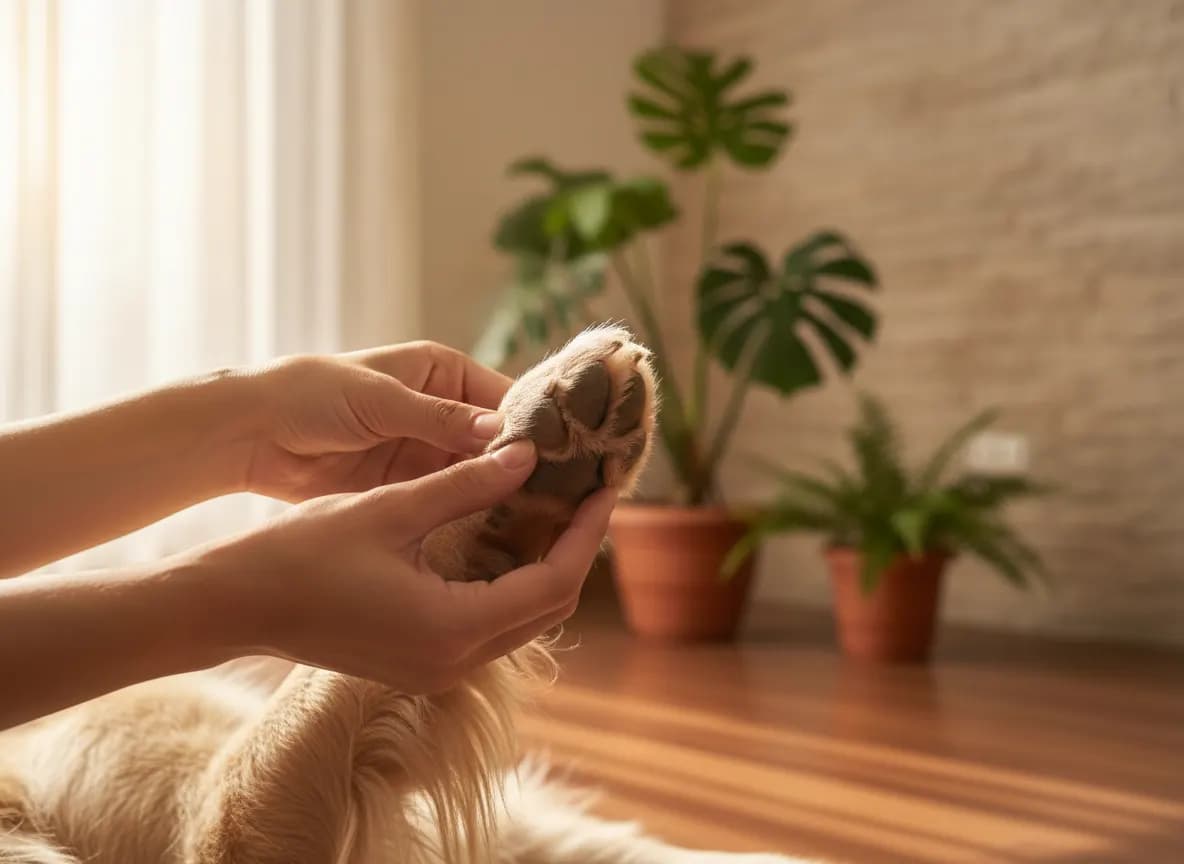
- Look between the toes and pads in good light. Gently spread the toes.
- Check for anything stuck – seeds, grit, a thorn – and any cut, crack or swelling.
- Check the nails – a split or overgrown nail can hurt.
- Notice the pattern – one paw or all four? After walks? At night? With other itching?
If something is deeply embedded, don’t dig at it – see your vet.
How to keep paws clean and dry
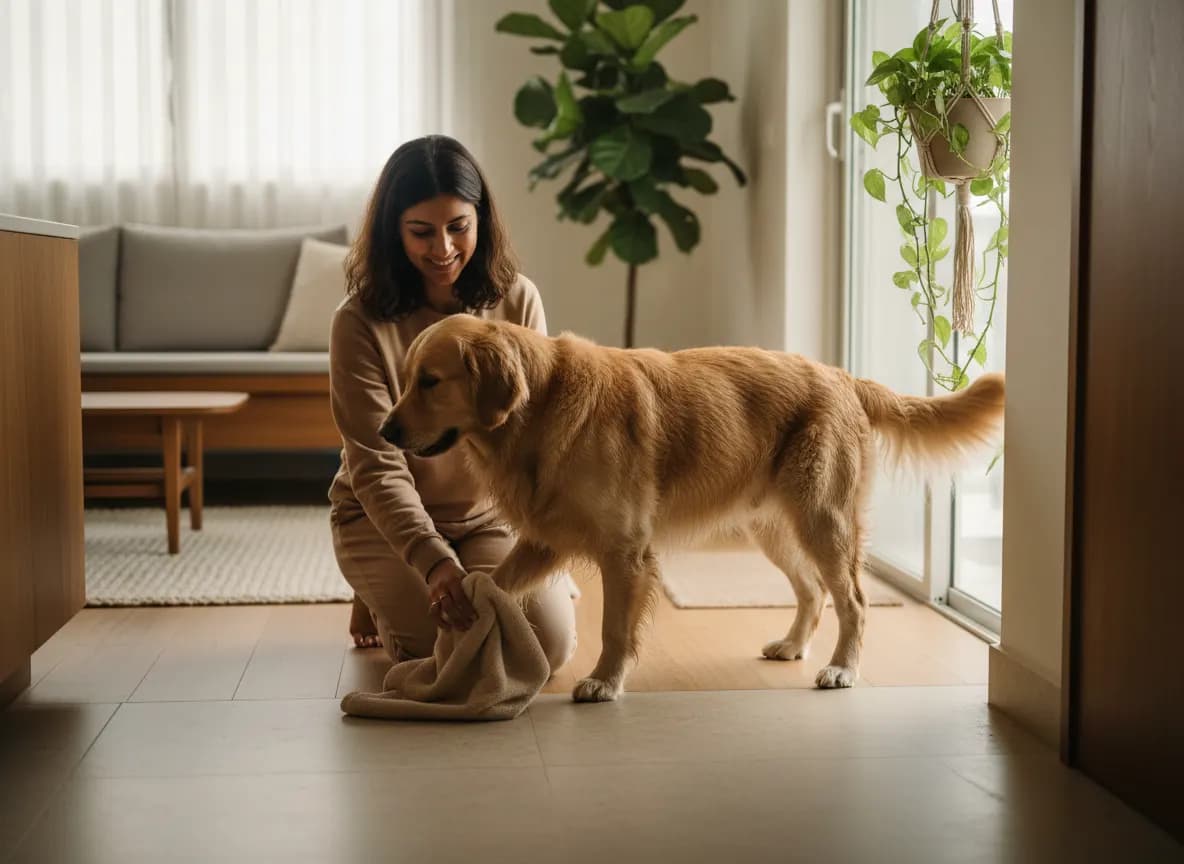
- Clean the paws after every walk. A no-rinse Paw Cleaner at the door lifts surface grit and residue without water.
- Dry between the toes – especially in monsoon and after baths.
- Keep the fur between the pads trimmed so it holds less mud and moisture.
- Avoid human creams and home remedies on the paws – your dog will lick them off.
More in the paw problem and the monsoon ritual.
When to see your vet
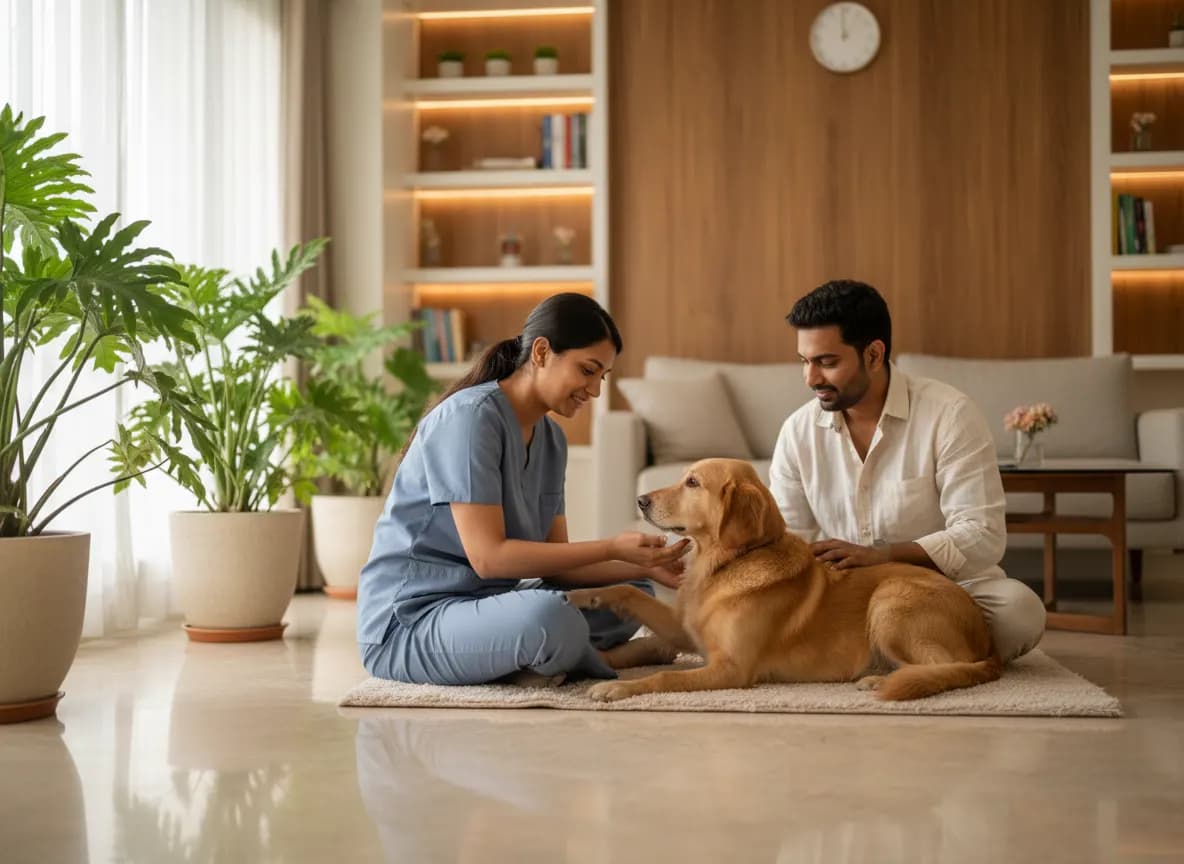
Cleaning and drying help with dirt and moisture – they don’t treat allergies, infections or injuries. See your vet if the licking:
- lasts more than a few days or keeps coming back;
- comes with redness, swelling, sores, discharge or a smell;
- causes limping or pain;
- is focused on one paw and you can’t find the cause;
- comes with itching elsewhere – ears, belly, armpits.
The takeaway
A dog licking its paws after a walk is grooming. A dog licking its paws all evening is telling you something.
Look first, clean and dry what you can, and let your vet handle what grooming can’t.