
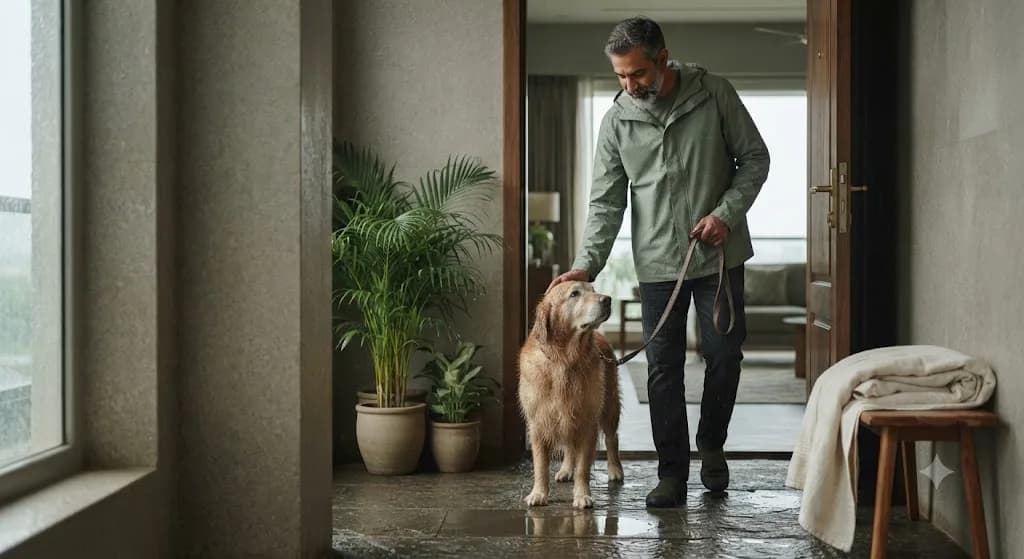
There is a particular moment after a monsoon walk when the front door opens and the problem becomes obvious.
Four wet paws. A damp coat. Mud between the toes. Water on the floor. And a dog who would prefer to shake everything off immediately.
In Mumbai, Chennai or Bengaluru, this can become a daily ritual for weeks.
The instinct is often to reach for the shampoo. But monsoon grooming is not necessarily a question of more bathing. Healthy dogs generally need bathing according to their coat, lifestyle and individual needs; bathing too frequently can strip natural oils and contribute to dryness or irritation.
The better approach is to separate the problems.
Paws need cleaning. Wet coats need drying. Parasites need prevention. Baths should happen when they are actually useful.
That distinction makes the monsoon routine considerably easier.
1. Start at the paws
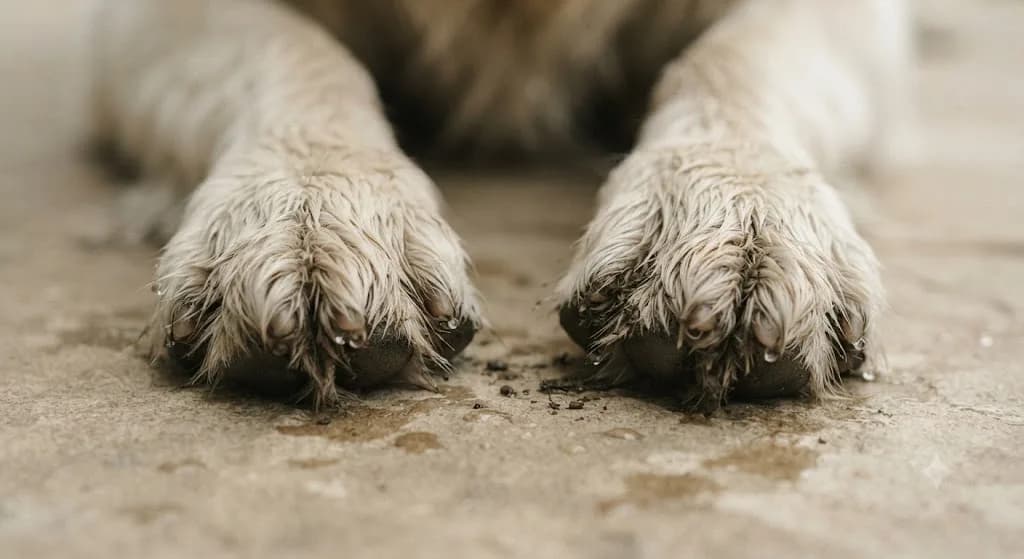
The paws are where the outside world comes home first.
After a wet walk, inspect the pads and the spaces between the toes. Mud, grit, plant material and other debris can collect there, particularly in dogs with hairy feet. Regular inspection also gives you an opportunity to notice cuts, redness or irritation before they become more obvious problems.
A full bath is rarely necessary simply because the paws are dirty.
For a routine walk, start small: clean the paws, including between the toes, then dry them thoroughly. Veterinary guidance similarly recommends checking between the toes and removing accumulated debris rather than treating every outdoor outing as a full bathing event.
This is where a paw cleaner makes sense in the ritual.
Not as another product to add to the shelf, but as a way of solving a very specific problem: the four surfaces of the dog that have just travelled through the city.
2. Then deal with the wet coat
The second mistake is treating wet and dirty as the same thing.
They aren’t.
A dog can come home soaked by rain without needing shampoo. What the coat needs first is proper drying.
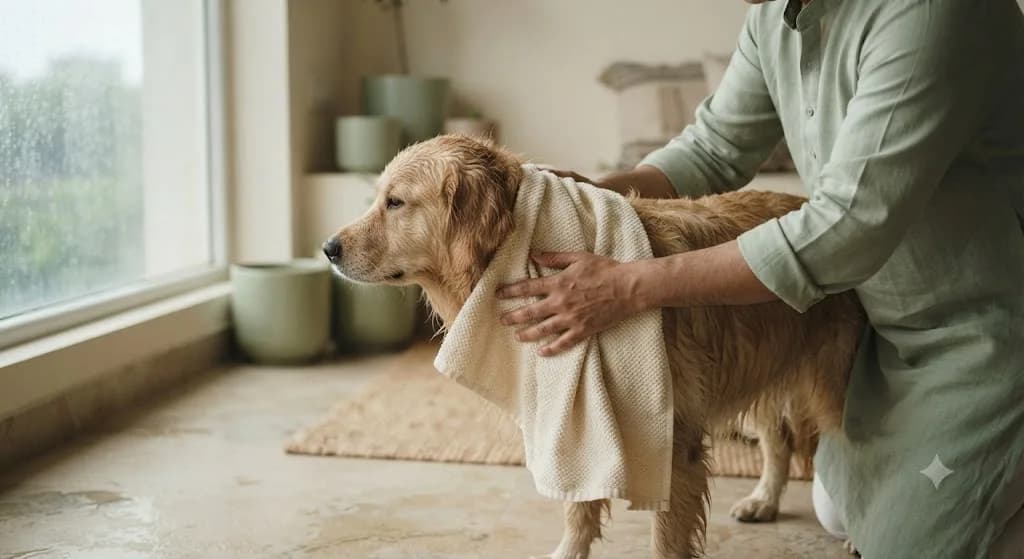
Towel-drying removes much of the surface moisture. Dogs with dense, long or double coats may require more attention because moisture can remain close to the skin. Drying also creates a useful opportunity to check for unusual bumps, redness, cuts, scabs or parasites.
Think of this as the quiet middle step of the monsoon ritual:
Rain → towel → inspect → dry.
Not automatically:
Rain → shampoo → shampoo again.
The distinction matters because frequent bathing can remove oils from the skin and coat and contribute to irritation in some dogs.
3. The bath should have a reason
Monsoon can make dogs feel permanently dirty.
The city is wet. The streets are muddy. The coat smells different. The paws seem to collect half the neighbourhood.
But bathing frequency should still be individual.
Veterinary guidance notes that bathing depends on factors such as coat type, lifestyle and health status. A dog that has rolled in mud or entered dirty water may genuinely need a bath; another that simply walked through rain may only need cleaning and drying. Dogs with certain skin conditions may also have veterinarian-directed bathing schedules.
So rather than asking:
“How often should I bathe my dog during monsoon?”
a better question is:
“What happened to the coat today?”
If it is merely wet, dry it.
If the paws are muddy, clean the paws.
If the coat is genuinely dirty or has an unpleasant residue or odour, bathe.
If the skin is irritated, unusually itchy or repeatedly problematic, speak with your veterinarian rather than simply increasing the number of baths.
And when you do bathe, use a shampoo formulated specifically for dogs. Human shampoos are not designed around canine skin.
4. Monsoon is also a parasite season - but prevention is not a rainy-day decision
Ticks are a different category of problem.
They are not something to address only after seeing one.
Veterinary parasite guidance recommends consistent, year-round tick control rather than waiting for seasonal activity or visible infestation. Ticks can also persist in environments around homes, making reactive treatment less reliable.
That does not mean every dog needs the same product or schedule.
It means parasite prevention should be part of the dog’s broader care plan, selected according to species, lifestyle, geography and veterinary advice.
A tick-control spray can therefore belong in the defense part of the monsoon ritual, but it should not be confused with shampoo, paw cleaning or a treatment for an existing skin condition.
And frequency matters: follow the product label rather than inventing a monsoon-specific schedule.
If you find an attached tick, don’t improvise with household remedies. Prompt, careful removal is recommended, and a veterinarian should be involved when there is a heavy infestation or concerning signs.
5. The ritual is really about sequence
The most useful way to think about monsoon grooming is not as a shopping list.
It is a sequence.
After an ordinary rainy walk
- Inspect
Look at paws, between toes and visible areas of the coat.
- Clean
Remove mud and outdoor debris, concentrating on the paws when that is all that needs attention. - Dry
Towel-dry thoroughly, paying attention to areas that hold moisture. - Check
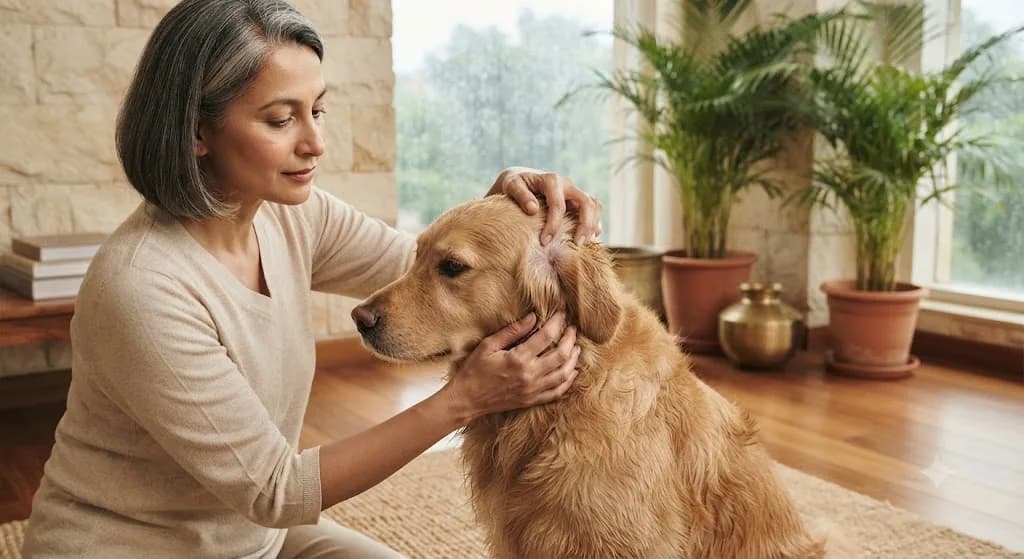
Look for ticks, irritation, cuts, unusual odour or changes in the skin. - Bathe when necessary
Use a dog-formulated shampoo when the coat genuinely needs a deeper clean. - Maintain parasite prevention
Keep the dog’s established tick and flea prevention routine consistent.
The order is deliberately simple.
It prevents the common tendency to use the most intensive grooming step first.
6. What changes in Mumbai, Chennai and Bengaluru?
The ritual stays the same, but the daily reality differs.
In Mumbai, heavy rainfall and waterlogging can make the distance between a clean walk and a muddy return particularly short.
In Chennai, monsoon conditions can arrive differently across the year, making the transition between dry days and very wet outings less predictable.
In Bengaluru, shorter intense showers can turn familiar walking routes into muddy, wet surfaces surprisingly quickly.
The useful response isn’t to create three entirely different grooming systems.
It is to make the post-walk reset easy enough to perform every time.
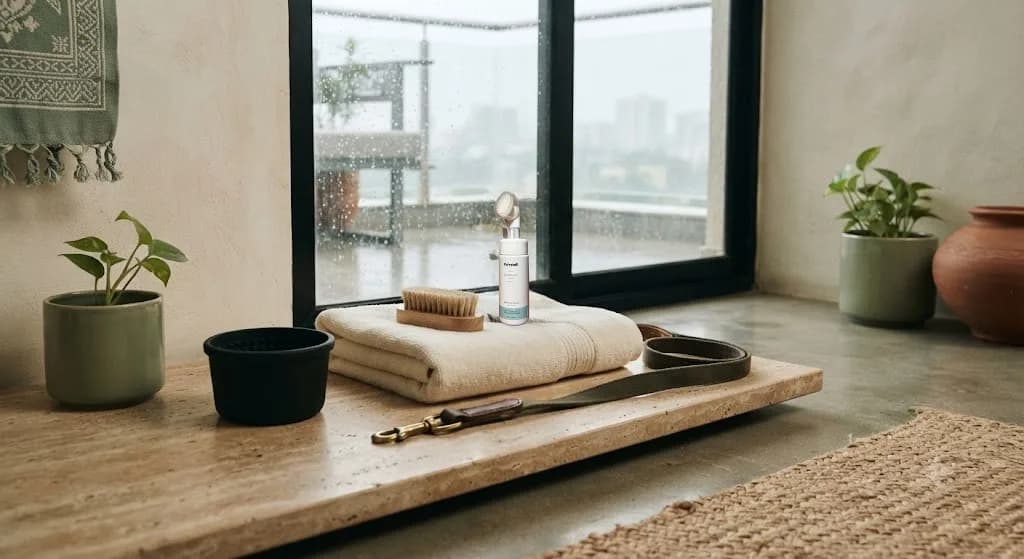
Keep the towel where the leash comes off. Keep the paw-cleaning step close to the entrance. Keep parasite prevention on its own schedule. Keep shampoo for the occasions when shampoo is actually required.
Good routines remove friction.
Practical takeaway
For most healthy dogs, a sensible monsoon routine looks less like constant bathing and more like targeted maintenance.
Wet? Dry.
Muddy paws? Clean the paws.
Dirty coat? Bathe.
Tick risk? Maintain prevention.
Persistent itching, redness, lesions, unusual odour or repeated skin problems? Ask your veterinarian.
The goal is not to make the dog permanently pristine.
It is to keep the transition between outside and inside clean, dry and considered.
The monsoon ritual is a small system
The best grooming routine is rarely the most complicated one.
It is the one that fits naturally between the walk and the front door.
A paw cleaner by the entrance. A good towel within reach. A proper bath when the coat actually calls for one. A consistent parasite-prevention routine. A few seconds spent looking rather than assuming.
That is enough to turn monsoon grooming from a daily scramble into a ritual.
And perhaps that is the real luxury of good pet care: not doing more, but knowing what needs doing - and what doesn’t.