There is something strangely comforting about a calendar.
First Saturday: haircut.
Last Sunday: groceries.
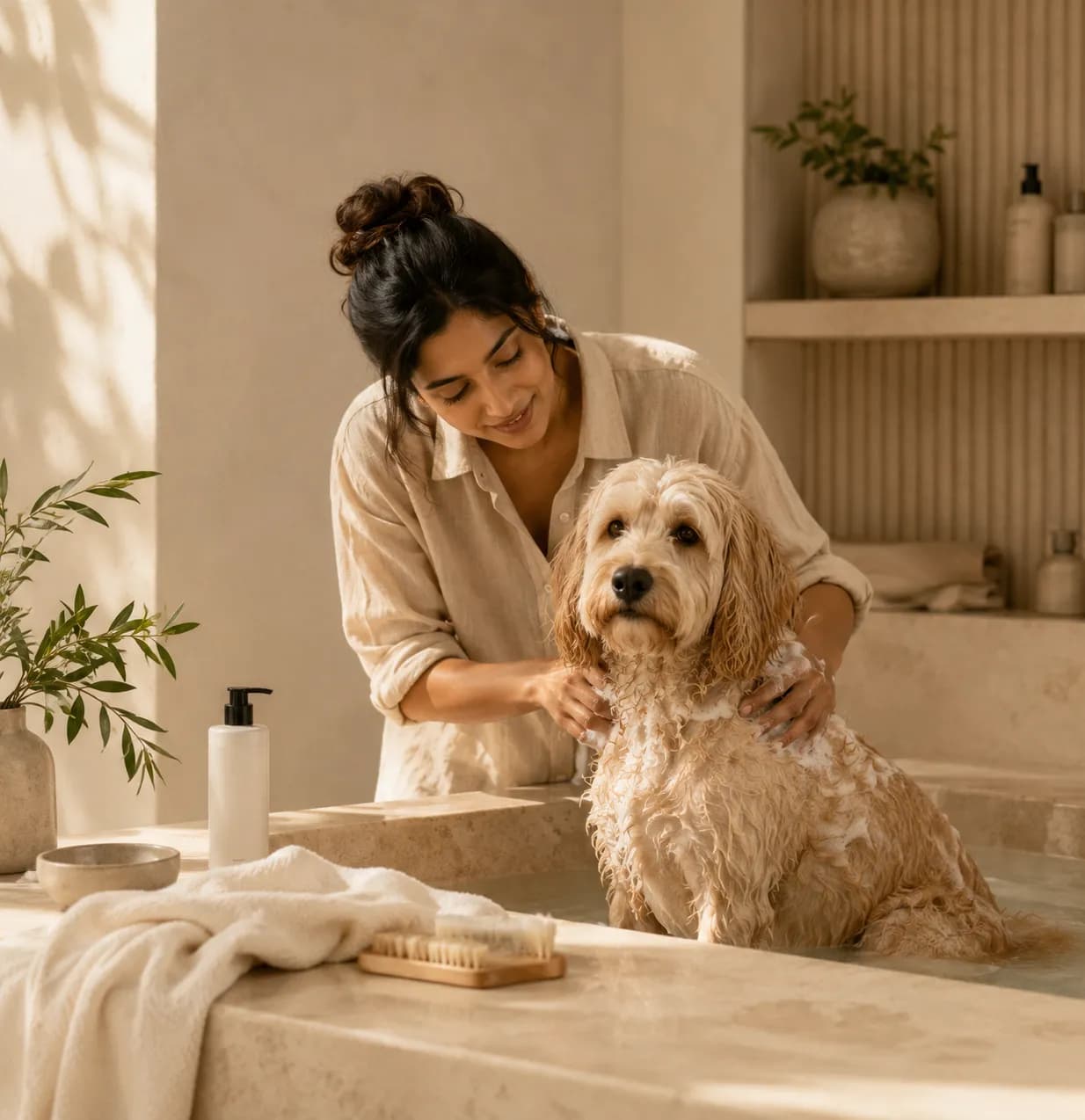
Every four weeks: dog bath.
Except dogs do not live by calendars.
A dog who spends most of the day indoors in an air-conditioned apartment has a very different grooming life from one who runs through muddy parks, swims on weekends or comes home from a monsoon walk with half the street attached to its coat.
So, how often should you bathe your dog?
The honest answer is: there is no universal schedule.
Veterinary guidance generally considers factors such as coat type, lifestyle, outdoor exposure and underlying health when determining bathing frequency. Some healthy dogs may need baths only occasionally, while others require more regular bathing because of their coat, activities or a veterinarian-directed skin-care routine.
The better question is not “Is it bath day?”
It is: “Does my dog need a bath today?”
1. Start with the coat, not the calendar
A dog’s coat is more than hair. It is part of the skin environment, and different coats behave differently.
Short coats may be relatively simple to maintain between baths. Long or continuously growing coats can require considerably more brushing and professional grooming. Dense or double coats can hold loose hair and debris and often benefit more from consistent brushing than from simply adding more baths.
That last distinction matters.
Brushing and bathing solve different problems.
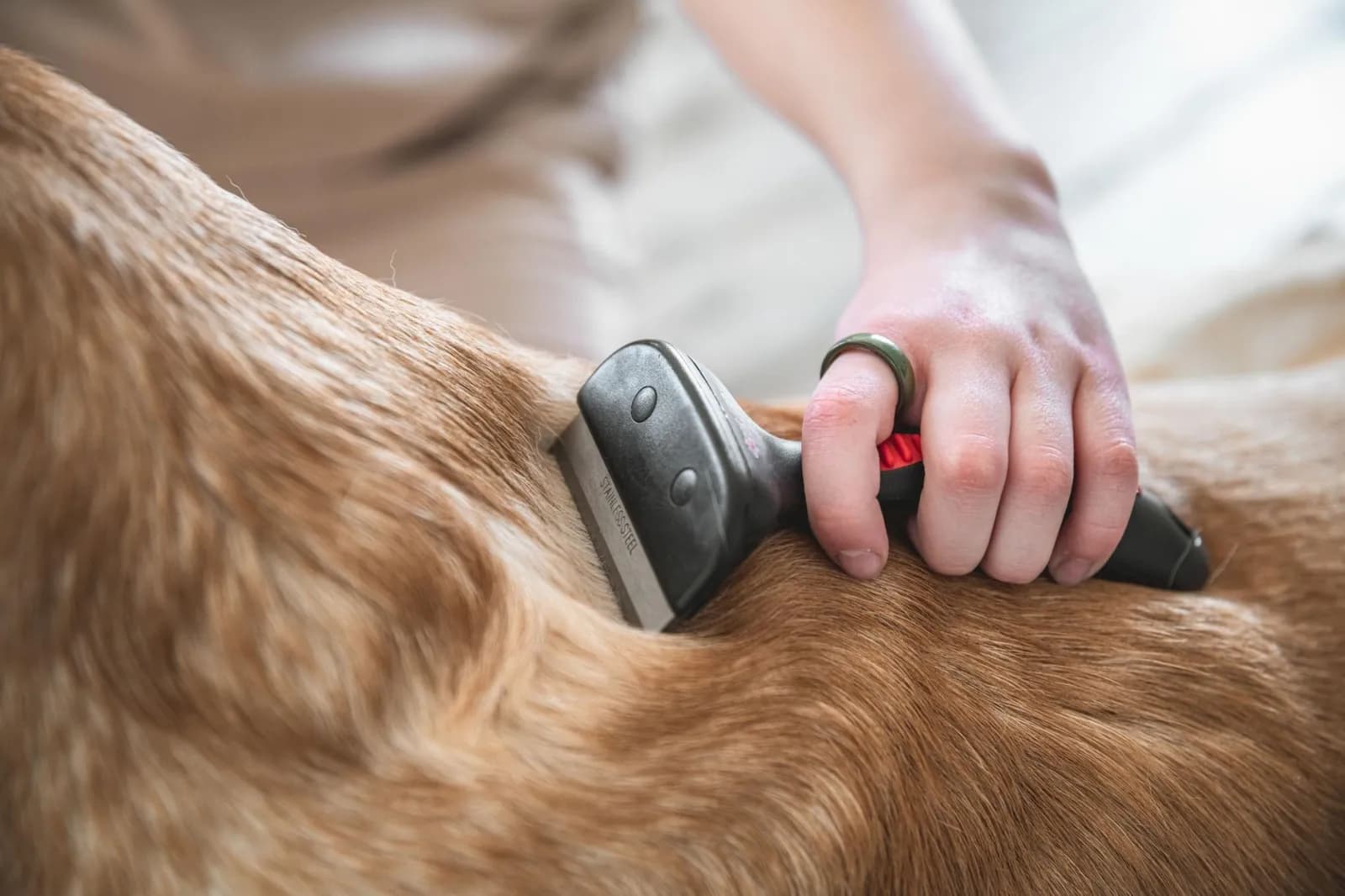
Regular brushing can remove loose hair and surface debris, help prevent tangles and allow you to inspect the skin underneath. Veterinary grooming guidance considers coat brushing an important part of routine care, particularly for dogs with longer or denser coats.
So a dog with a thick coat does not automatically need more frequent shampooing.
They may simply need better grooming between baths.
And a dog with a short coat is not automatically maintenance-free either.
2. Lifestyle changes the equation
Imagine two dogs living in the same apartment building.
One spends most of the week indoors, takes two short walks on paved paths and comes home clean.
The other visits the park every morning, runs through grass, rolls on dusty ground and swims on weekends.
Should they have the same dog bath routine?
Probably not.
Veterinary sources specifically note that dogs who become muddy or dirty through outdoor activities may need bathing based on those events rather than on a predetermined calendar.
That is why how often to wash a dog cannot be answered without asking what the dog actually does.
A useful distinction is:
- Mostly indoor: brushing and local cleaning may often be enough between baths.
- Regular park visits: inspect the coat and paws after outdoor activity.
- Swimming: rinse or bathe when needed depending on what the dog has been exposed to.
- Mud or dirt: clean when the coat is genuinely dirty rather than waiting for a particular date.
- Rolled in something unpleasant: this is rarely a situation where the calendar gets the final say.
The goal is not maximum cleanliness.
It is appropriate cleanliness.

3. A full bath isn’t the only kind of clean
One of the easiest ways to improve a dog’s grooming routine is to stop treating every cleaning problem as a full-bath problem.
After a dusty walk, for example, you might brush the coat.
After a muddy outing, you may need to clean the paws and affected areas.
After exposure to something particularly dirty, a complete bath may make more sense.
This creates a useful hierarchy:
Brush → local clean → rinse → full bath
Not every situation requires moving all the way to the last step.
This becomes especially relevant in Indian cities, where a dog’s daily exposure can vary dramatically between seasons. A Delhi NCR walk in a dry, dusty spell is different from a Bengaluru afternoon in heavy rain. Mumbai’s monsoon streets create another kind of exposure altogether – we cover that season in the monsoon ritual.

The practical question is always:
What actually needs cleaning?
4. Skin health changes everything
This is where routine grooming and veterinary care need to be separated.
A healthy dog being bathed for ordinary grooming is not the same as a dog undergoing therapeutic bathing for a diagnosed skin condition.
Veterinarians may prescribe more frequent bathing, sometimes with medicated shampoos, for particular dermatological conditions. The frequency and product depend on the condition and should be determined by the veterinary team rather than copied from a general grooming schedule.
That means more baths are not automatically better – and fewer baths are not automatically safer.
If your dog repeatedly develops:
- itching
- redness
- flaky or irritated skin
- hair loss
- sores
- recurrent hot spots
- unusual or persistent odour
- greasy skin
the answer is not necessarily another bath.
These signs can have multiple causes and warrant veterinary assessment rather than an attempt to solve the problem by simply increasing bathing frequency.
Therapeutic bathing is a treatment plan, not a grooming trend.
5. Then there is the Indian climate
India makes the bathing question particularly interesting.
Not because Indian dogs necessarily need more baths – but because their environment can change considerably across the year.
Summer can mean dust, heat and frequent outdoor activity. Monsoon can mean wet pavements, muddy parks and coats that take longer to dry. In humid cities such as Mumbai and Chennai, the experience of keeping a coat dry can be quite different from a dry spell in Delhi NCR or a cooler period in Bengaluru.
But humidity itself should not become another simplistic rule:
“It’s humid, therefore bathe your dog more.”
The more useful approach is to watch the actual coat and skin.
- Has the dog become dirty?
- Is the coat damp for prolonged periods?
- Has the dog been swimming?
- Has mud accumulated?
- Is there a persistent odour?
- Has the skin changed?
Those observations are more meaningful than the date on the calendar.
6. So, how often should dogs be bathed?
There is no single number that works for every dog.
Veterinary guidance gives different ranges for different situations. For example, VCA notes that healthy non-shedding dogs may often be bathed around every six to eight weeks, while other sources describe monthly bathing as reasonable for many dogs depending on their circumstances. At the same time, active or dirty dogs may need bathing sooner, while dogs with dermatological conditions may follow a much more frequent veterinarian-directed schedule.
These are examples, not prescriptions.
Instead, think in terms of five questions:
Coat
What does the coat require?
Lifestyle
How active is the dog?
Outdoor exposure
What are they actually encountering?
Skin
Is the skin healthy, or is there an underlying concern?
Climate
What is the current environment doing to the coat?
Put together, these five factors create a much more useful answer than “once a month.”
A practical bathing routine
For a healthy dog, think of bathing as one part of grooming rather than the entire grooming routine.
Between baths:
- Brush according to the coat’s needs.
- Check the skin while grooming – and look for ticks after outdoor walks.
- Clean paws or visibly dirty areas after messy walks.
- Dry the coat properly after getting wet.
- Use products formulated specifically for dogs.
- Adjust the routine when lifestyle or seasons change.
Dog-specific shampoo matters because canine skin differs from human skin, and veterinary sources advise against using human shampoo for dogs.
For a routine bath, a gentle dog-specific cleanser can become part of a considered grooming ritual rather than something used simply because the calendar says it is time. Furry Tail’s Ritual – Gentle Daily Shampoo sits naturally within that philosophy: bathing as considered everyday care, rather than bathing for the sake of a schedule. If you want to know what is in the bottle, start with how to read its ingredient list, what its ferment-based preservation does and why it smells of sandalwood.
The takeaway
The best answer to “how often should you bathe your dog?” is rarely a number.
It is a method.
Look at the coat.
Consider the lifestyle.
Notice the outdoor exposure.
Pay attention to the skin.
Adapt to the climate.
A dog living through Mumbai’s monsoon, Delhi’s dust or Bengaluru’s changing weather may need a different routine at different points of the year.
And sometimes the right answer is a bath.
Sometimes it is a brush.
Sometimes it is simply cleaning the paws.
Good grooming is not about doing more.
It is about knowing what your dog actually needs.
Read more about ingredients and thoughtful pet care.