There is a particular moment in the bath when the shampoo starts to foam.
The coat smells fresh. The bottle looks reassuring. The label says gentle, natural, soothing, perhaps even veterinary-inspired.
And yet the most useful information is usually much smaller.
Turn the bottle around.
The ingredient list tells a different story - not necessarily a bad one, but a more interesting one. Most pet shampoos are built around the same fundamental jobs: water, cleansing agents, conditioning ingredients, fragrance or botanical components, and something to keep the formula stable.
The question is not whether an ingredient sounds familiar or unfamiliar. It is why it is there, what it is doing, and whether the whole formula makes sense for an animal's skin and grooming behaviour.
That is where a better shampoo conversation begins.
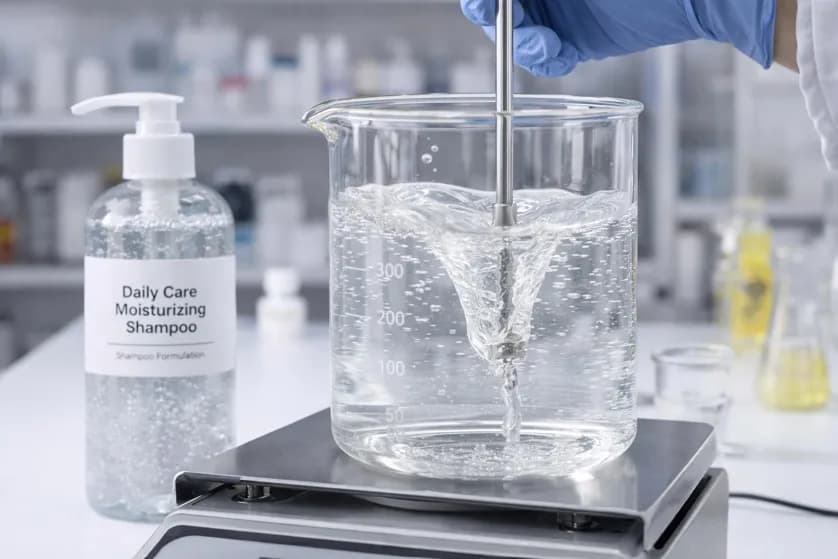
A shampoo is a formulation, not a list of fashionable ingredients
A good pet shampoo has a fairly simple brief: remove dirt, excess oil and residue without making the skin feel like it has been scrubbed clean.
Veterinary dermatology generally separates animal shampoos into three broad categories: cleansing, antiparasitic and medicated. A routine cleansing shampoo is fundamentally different from a product designed to manage infection, seborrhoea or parasites.
This distinction matters. A shampoo containing chlorhexidine, for example, may have a legitimate place in veterinary dermatology. It does not automatically make sense as an everyday grooming shampoo. Medicated formulations are designed around a specific therapeutic purpose and should be used accordingly.
The first question to ask of a bottle, then, is surprisingly basic:
What is this shampoo actually formulated to do?
If the answer is simply cleansing, the rest of the formula should support that job without unnecessary drama.
Then there are the surfactants
Surfactants are the working part of shampoo. They help water spread across the coat, loosen oils and dirt, and lift that material away when the shampoo is rinsed. They are also responsible for much of what we perceive as "lather".
And this is where marketing can distort the experience.
More foam does not necessarily mean more cleaning.
A review of companion-animal skin research notes that surfactants are common in pet shampoos and that their effect depends on the specific surfactant, concentration and exposure. Some detergents can irritate the skin barrier and compromise function, particularly with inappropriate exposure.
That does not mean every sulphate is automatically dangerous, or that every unfamiliar surfactant is better. It means formulation matters.
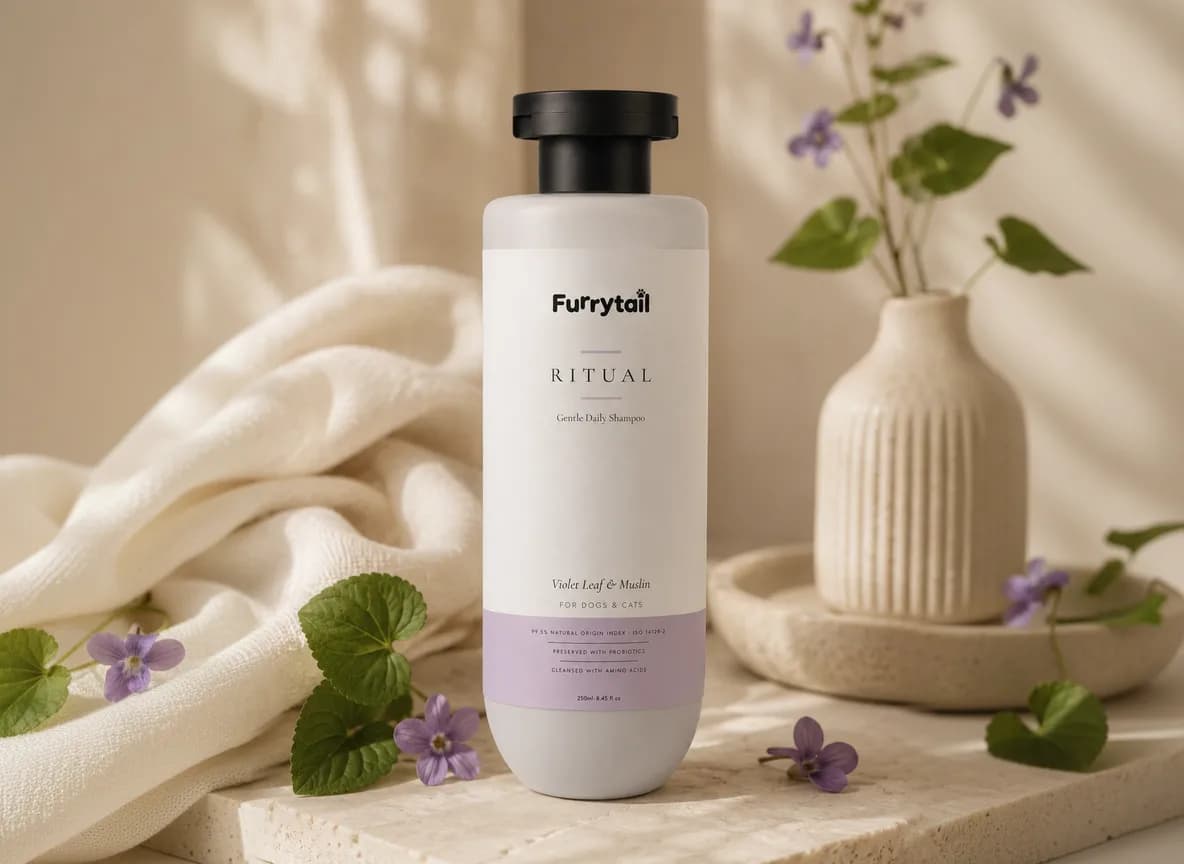
Amino acid surfactants and other mild surfactant systems can be designed to cleanse effectively while taking a gentler approach to the skin. Furrytail's Gentle Daily Shampoo, for example, uses amino-acid-derived cleansing agents including sodium cocoyl isethionate, alongside cocamidopropyl betaine and decyl glucoside.
The result is intentionally less theatrical: less foam, more attention to what happens after the rinse.

"Natural" is not the same as well formulated
This is perhaps the most persistent problem with reading pet-care labels.
An ingredient can be natural and still be inappropriate for a particular animal, concentration or formulation. An ingredient can also have a chemical-sounding INCI name and perform a perfectly useful job.
The word "natural" tells you very little on its own. (We unpack what “natural” actually means in pet care separately.)
Take fragrance. A botanical essential oil may sound gentler than a synthetic fragrance molecule. But some essential oils and their constituents can present species-specific risks, particularly for cats. Feline grooming behaviour also matters because topical substances may eventually be ingested through licking.
This is why "natural" should never replace the more useful questions:
Which species? At what concentration? For what purpose? In what finished formula?
The same principle applies to preservatives.
A water-based product needs a preservation strategy. The absence of a conventional preservative does not automatically make a product better; the formula still needs to remain microbiologically stable.
Furrytail's approach is different by design: the Gentle Daily Shampoo uses Leuconostoc/Radish Root Ferment Filtrate as part of its preservation system rather than synthetic preservatives, according to the current product formulation.
The important point is not that one preservation philosophy is universally superior. It is that preservation is part of formulation, not an ingredient to remove for marketing purposes.

Fragrance deserves more thought than "fresh"
Pet shampoo has traditionally been associated with a particular smell: unmistakably clean, often strong, sometimes difficult to place.
But fragrance is not simply decoration.
For a premium grooming ritual, scent can change how the entire experience feels (it is why we wrote a whole primer on sandalwood). At the same time, fragrance choices have to account for species, exposure and known sensitivities.
This becomes particularly important when dogs and cats share a product.
Cats are not simply small dogs. Their metabolism, grooming behaviour and sensitivity to certain compounds can make ingredient and fragrance selection a species-specific formulation question. Furrytail's formulation process explicitly includes species eligibility and fragrance review before finalisation.
That is a more useful standard than simply asking whether a shampoo "smells good." It should smell considered and make sense for the animal using it.
The ingredient list is where the quiet details live
A front label might give you five words. The INCI list gives you the architecture. Look for the functional groups:
- Cleansers / surfactants - what actually removes dirt and excess oil?
- Conditioners - what helps the coat feel softer and easier to manage?
- Humectants - what helps retain moisture?
- Botanicals and extracts - why are they included?
- Fragrance components - what creates the scent, and for which species?
- Preservation system - how is the water-based formula kept stable?
- pH adjusters and thickeners - what keeps the finished formula usable and consistent?
This is also why ingredient literacy is more valuable than memorising a blacklist.
For example, veterinary sources recognise a wide range of legitimate ingredients in cleansing and medicated shampoos, depending on the intended use. Oatmeal, aloe, fatty acids, glycerin and other conditioning or moisturising components can appear in routine formulations, while ingredients such as chlorhexidine, miconazole or benzoyl peroxide have more targeted veterinary applications.
Context changes everything.
What should you actually look for?
For an everyday grooming shampoo, start with the boring questions. They are usually the important ones.
- Is it made specifically for dogs or cats?
Species suitability comes before fragrance, packaging or ingredient fashion. - Does the cleansing system look considered?
A shampoo should clean the coat without relying on aggressive cleansing simply to create a dramatic lather. - Is there a clear reason for the conditioning and botanical ingredients?
A long list is not automatically a thoughtful one. - Does the fragrance make sense for the species?
Especially with cats, this deserves closer attention. - Is the product clearly a cleansing shampoo or a medicated treatment?
If your pet has persistent itching, redness, lesions, unusual hair loss or another skin problem, a grooming shampoo is not a substitute for veterinary assessment – and more baths are rarely the answer (see how often to bathe your dog). Veterinary dermatology distinguishes routine cleansing from therapeutic treatment for good reason.
The better shampoo is not the louder one
A well-formulated pet shampoo does not need to make ten promises. It needs to get a few things right.
It should clean effectively. It should suit the intended species. Its surfactant system should make sense. Its preservation strategy should be deliberate. Its fragrance should be considered. And every ingredient has a name and a reason for being there.
That is the difference between reading a label and actually understanding one.
It is also why every Furrytail box prints what we left out. The Nothing List goes through each item, product by product.
The next time you reach for a pet shampoo, turn the bottle around before you open it.
Ignore the bubbles for a moment.
Read what is underneath them.