
There is a particular comfort in the word natural. It suggests something familiar, uncomplicated and closer to the world as it was meant to be. On a bottle of dog shampoo, it can feel like a useful shortcut: natural must mean gentler, perhaps safer, perhaps better.
But formulation is rarely that simple.
A natural ingredient can irritate. A synthetic ingredient can serve a useful, well-understood purpose. And a product containing ingredients of natural origin can still vary considerably in its quality, suitability and performance.
When choosing a natural dog shampoo or another pet-care product, the more useful question is not simply how natural it is. It is what the ingredients are, why they are there, how the formulation is designed to work and whether the finished product is appropriate for the animal it is intended for.
The label is a starting point, not a verdict.
What does “natural” actually mean?

In everyday language, natural usually suggests that an ingredient comes from plants, animals, minerals or other sources found in nature. In formulation, however, the distinction between natural, naturally derived and synthetic can be more complicated.
An ingredient may be extracted directly from a botanical source. Another may begin with a natural raw material and undergo processing or chemical transformation. A third may be manufactured through a synthetic route.
These descriptions tell us something about origin and production. They do not, on their own, establish the ingredient’s safety or performance.
There is also no single universal consumer definition of “natural” that applies across every market and product category. For example, the US Food and Drug Administration says it has not established a regulatory definition of “natural” for cosmetics. That is useful context, but it should not be mistaken for a statement of Indian law.
For a pet parent reading a label, the practical lesson is straightforward: ask what the claim means for that particular product.
Natural versus synthetic: a false choice?
The debate often presents natural and synthetic ingredients as opposing camps: one desirable, the other suspect.
Chemistry does not divide so neatly.
An ingredient’s identity, concentration, impurities, route of exposure and intended use can all influence how it behaves. The source of an ingredient does not independently establish whether it will be safe in a finished formulation.
Consider fragrance. A botanical essential oil may contain many naturally occurring compounds, some of which can irritate or be harmful at certain concentrations or through particular forms of exposure. The ASPCA cautions that concentrated essential oils can pose risks to pets and that species, formulation and exposure matter. (We looked at one fragrance ingredient in detail in Santal: a primer.)
That does not mean botanical ingredients should be dismissed. Nor does it mean synthetic ingredients are automatically preferable.
It means neither category deserves a blanket endorsement.
A better formulation question is: what does this ingredient contribute, at what concentration, and is the finished product appropriate for its intended use?
The ingredient is only part of the formulation

An ingredient list is useful, but it is not the entire formulation.
A shampoo is a system. Its cleansing agents, conditioning components, preservatives, fragrance and other ingredients work together in a particular concentration and product format. The same ingredient can behave differently depending on what surrounds it and how the product is used.
This is why judging a dog shampoo by one ingredient – or by the number of botanical names on its label – can be misleading. It is the same pattern we described in what we found in most pet shampoos.
Preservatives, for example, are not automatically undesirable simply because they are synthetic. In water-containing products, preservation can be an important part of controlling microbial contamination. Whether a preservative system is appropriate depends on the formulation, the intended use and suitable safety and quality controls.
Likewise, a plant-derived ingredient is not automatically beneficial just because it sounds familiar.
A thoughtful label review asks three questions:
- Purpose: What role does each ingredient play?
- Context: How does it function within the finished formulation?
- Evidence: What supports the product’s claims and intended use?
The objective is not to memorise every chemical name. It is to understand why a formulation contains what it does.
What does the Natural Origin Index mean?
This is where a technical measure can be more useful than a vague adjective.
ISO 16128-2:2017 provides approaches for calculating natural, natural-origin, organic and organic-origin indexes for cosmetic ingredients and products, based on ingredient characterisation. It works alongside ISO 16128-1, which defines the relevant ingredient categories.
A Natural Origin Index is a way of quantifying natural-origin contribution under that framework. It is not a universal score for how good a product is.
Furrytail’s approved product claim is:
99.5% Natural Origin Index per ISO 16128-2
The wording matters. It refers to a Natural Origin Index under a specified technical framework – not an unrestricted statement that the product is “99.5% natural” in every possible sense.
It is also important to understand what the index does not establish.
It is not, by itself, a safety certification, veterinary approval, clinical efficacy result or proof that a product is hypoallergenic. It does not guarantee suitability for every dog or cat, establish that the formulation is gentler than every alternative, or prove that the product contains no synthetic ingredients.
ISO itself states that the 16128 framework does not address human or environmental safety, product communication, socio-economic considerations or applicable regulatory requirements.
A percentage can answer a specific question about ingredient origin. It cannot answer every question a consumer might have about a product.
What should you look for on a pet-care label?
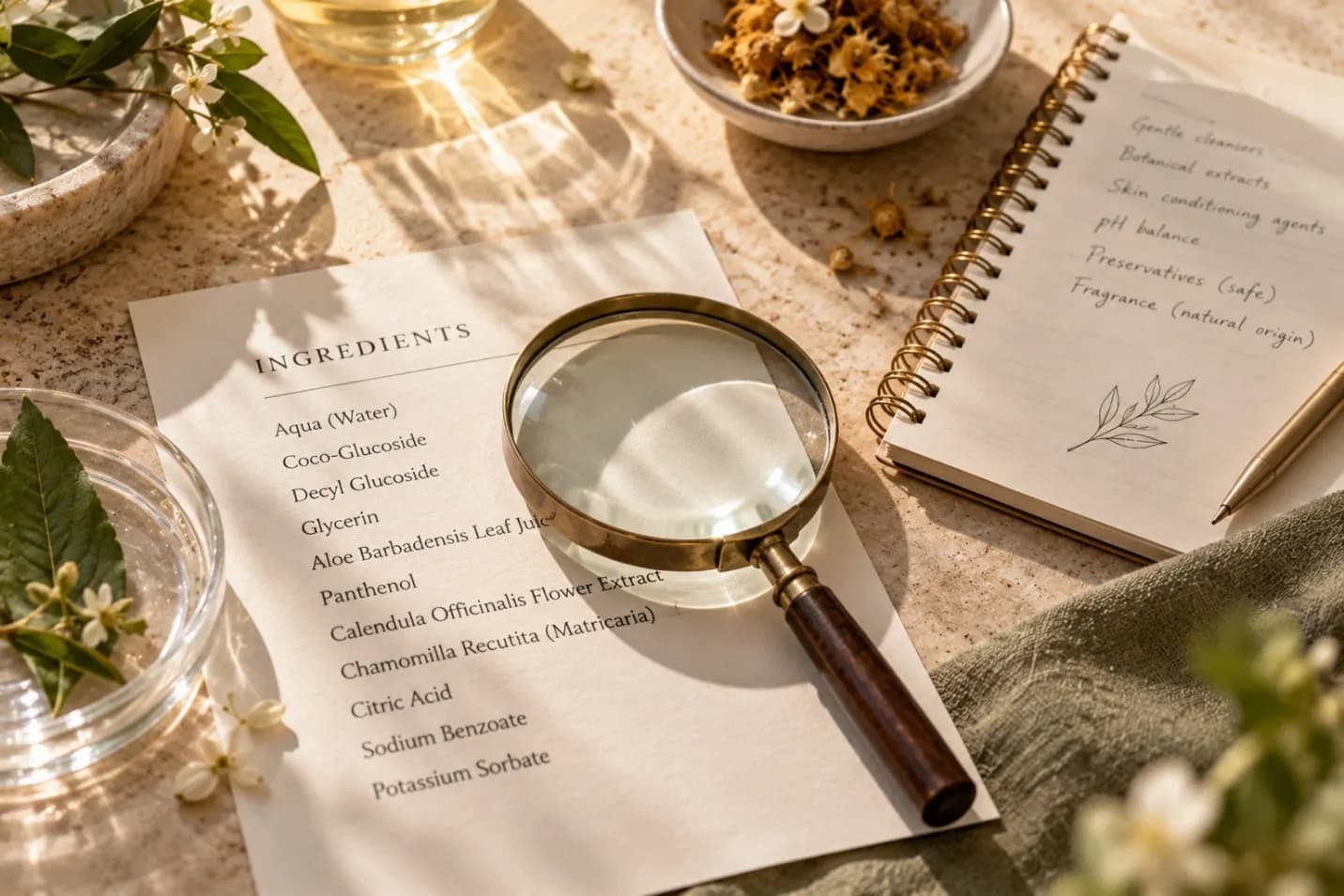
Start with the actual ingredient list rather than the front-of-pack promise.
Ingredient nomenclature can look technical because it is designed to identify ingredients, not necessarily to tell a consumer the whole story in familiar language. Learning to recognise common ingredient names is useful – reading the INCI listis a good place to start – but unfamiliar terminology is not evidence of danger.
Next, look at the product’s intended use. A rinse-off shampoo, a leave-on spray and a concentrated essential oil do not create identical exposure conditions. A formulation appropriate for one use cannot automatically be assumed appropriate for another.
Species matters, too. Dogs and cats do not always respond to the same substances in the same way. A product intended for dogs should not be assumed suitable for cats unless its documentation explicitly supports that use.
Finally, consider the claims. “Natural origin,” “hypoallergenic,” “dermatologically tested” and “veterinarian approved” are not interchangeable phrases. Each requires its own definition and supporting evidence. A natural-origin calculation does not substantiate unrelated claims about clinical outcomes or suitability for sensitive skin.
If your dog has a persistent skin problem, recurrent irritation or a known sensitivity, an ingredient list alone cannot identify the cause. Veterinary advice is more appropriate than selecting a product solely because it is labelled natural.
A more considered way to formulate
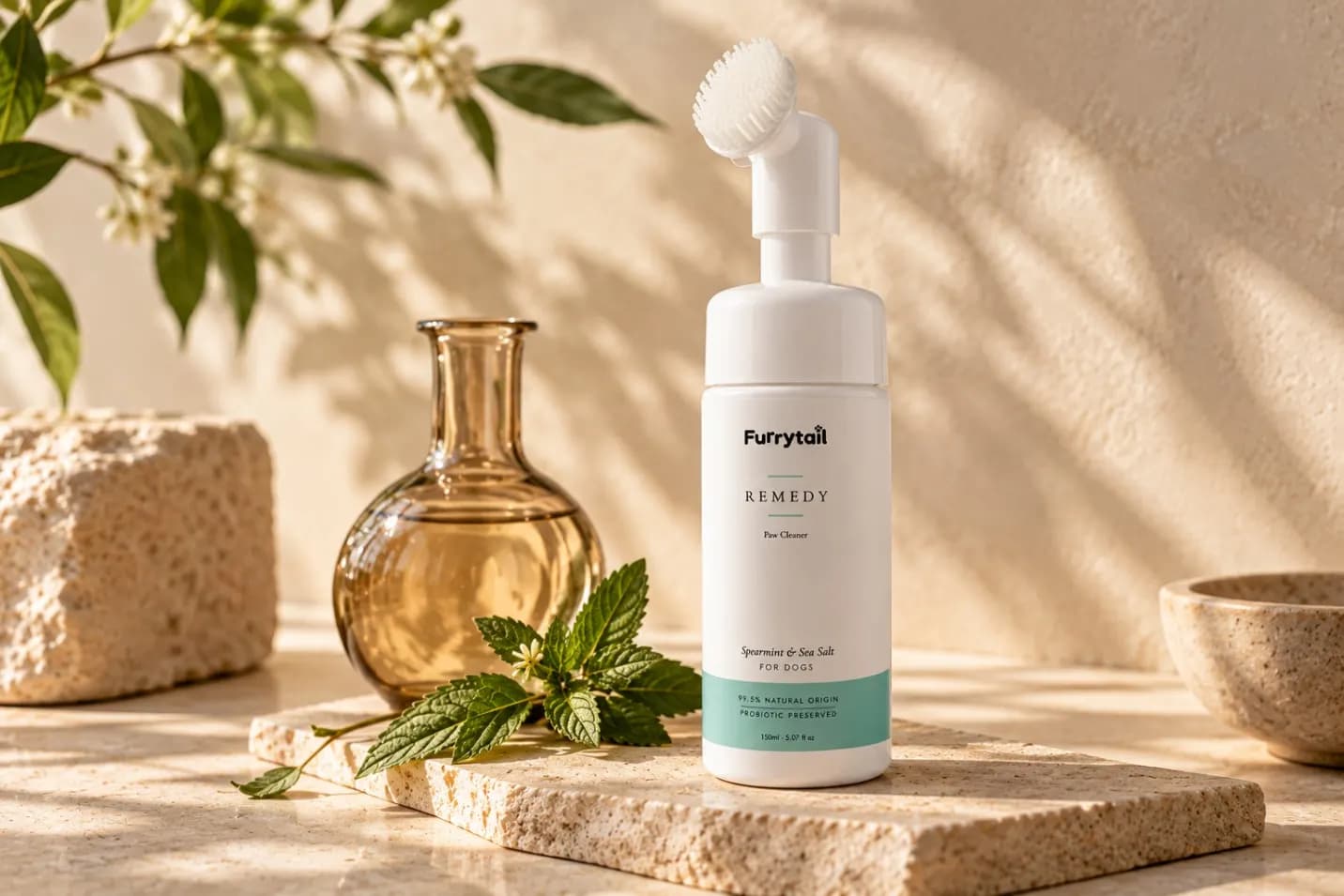
At Furrytail, the useful question is not how many ingredients can be described as natural. It is whether the formulation has a clear purpose and whether its claims can be explained responsibly.
That means treating ingredient transparency as more than a decorative list on packaging. It means distinguishing origin from function, formulation rationale from clinical evidence, and a technical index from a safety guarantee.
The same discipline applies when assessing products from any brand – including our own, from the Remedy Paw Cleaner to Ritual – Gentle Daily Shampoo.
A high Natural Origin Index can tell you something meaningful within its defined framework. It should not be asked to tell you everything. For the arithmetic behind the number, see how the Natural Origin Index is calculated.
The next time you reach for a natural dog shampoo, look beyond the adjective. Read the ingredients. Understand the intended use. Ask what supports the claims.
Good formulation is not a contest between nature and chemistry. It is the considered use of ingredients, for a defined purpose, in a product designed for the animal that will use it.