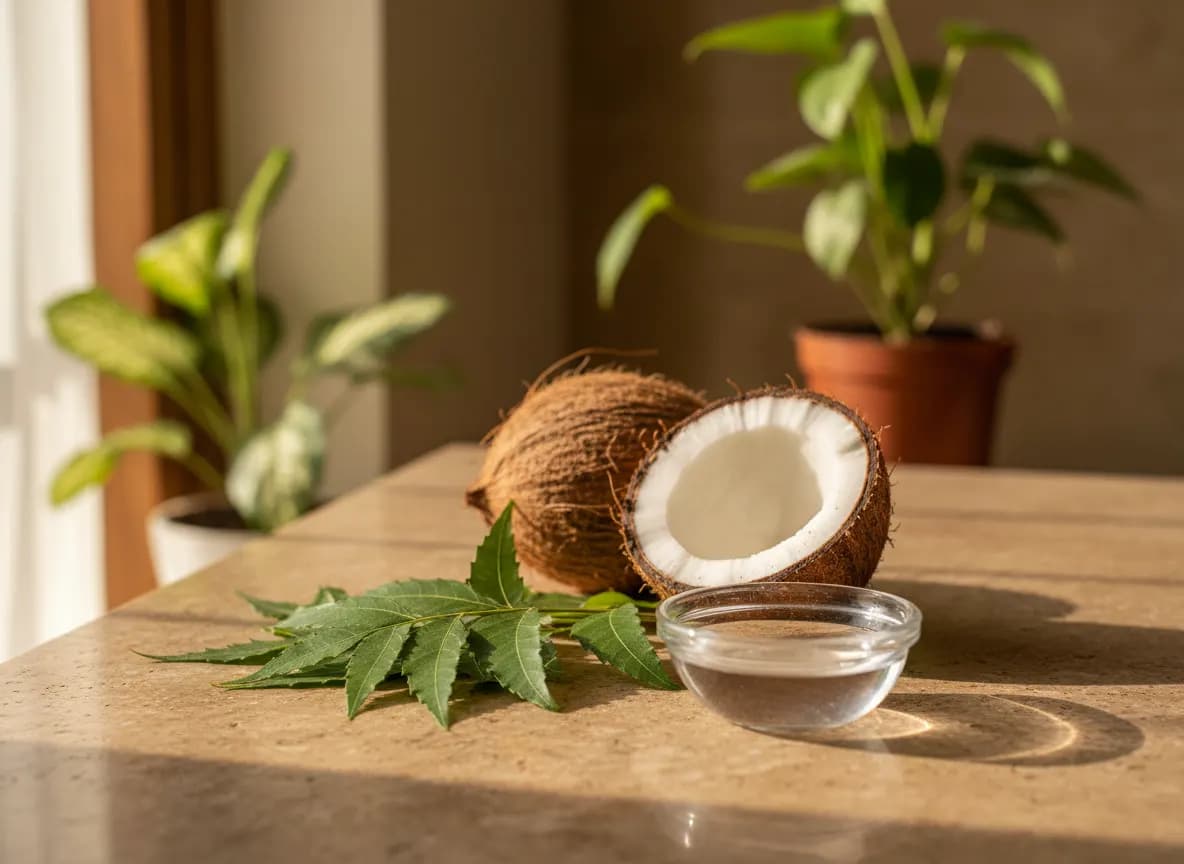
Every Indian household has a remedy. Neem leaves for the skin, coconut oil for dry paws, a besan and curd bath to make the coat shine. Many of these ideas come from a sensible place. Some hold up; some don’t; and a few can cause the very problems they promise to solve.
Here is what is known about the most popular ones. As always: for itching, sores, hair loss or anything that looks like a skin condition, see your vet first.
Neem
What it is: Azadirachta indica, the neem tree, a staple of traditional Indian care for centuries.
What the evidence suggests: Neem has been widely studied, mostly in laboratory and human research, for antimicrobial and insect-repellent properties. Good-quality veterinary evidence for home neem remedies on dogs is limited.
How to use it sensibly:
- Neem in a formulated product is the most reliable way to use it. Neem extract is part of our Gentle Daily Shampoo formula and of Defense, where it adds a deterrent layer alongside vetiver and cypress.
- Raw neem oil is thick, strong-smelling and can irritate some dogs’ skin. It is also unpleasant if licked. Don’t apply it neat.
- Boiled neem-leaf water as a rinse is popular, but strength varies with every batch. If you use it, keep it weak, patch-test first and stop if the skin reddens.
Coconut oil
What it is: a kitchen staple, rich in fatty acids, used on human hair and skin across South India.
What the evidence suggests: coconut oil can moisturise the skin’s surface, which is why people like it for dry, cracked paw pads and noses. Evidence that it treats skin conditions in dogs is weak.
How to use it sensibly:
- A very thin layer on dry pads or elbows can help, used sparingly.
- Too much on the coat makes it greasy, attracts dust and can leave a dog smelling rancid in the heat.
- Dogs lick it off. Large amounts eaten can upset the stomach and add calories. Ask your vet before giving it as a supplement.

Homemade dog shampoo
Recipes online use dish soap, baking soda, vinegar, besan (chickpea flour), curd or reetha (soapnut).
The problem is pH and balance. A dog’s skin has a different pH from ours, and a shampoo needs to clean without stripping the skin’s oils, rinse out completely and stay free of contamination. Homemade mixes are hard to get right:
- Dish soap is a strong degreaser: excellent for pans, harsh on skin.
- Vinegar and lemon are acidic and can sting.
- Baking soda is alkaline and drying in quantity.
- Besan and curd can be hard to rinse out of a thick coat, and residue left in the coat can irritate the skin. Curd can also spoil and smell.
- No preservation. Home mixtures can grow bacteria within days.
Our guide on human shampoo and dogs explains why pH matters, and what “natural” means in pet care explains why natural ingredients still need careful formulating.
Other remedies worth a mention
- Haldi (turmeric) paste: stains the coat and skin; skip it on the coat, and see a vet for wounds.
- Aloe vera: soothing in formulated products – it is in our shampoo and Paw Cleaner – but don’t let dogs chew the plant itself.
- Camphor, kerosene and strong home-mixed oil blends: never use these on dogs.
The better way to use nature
The ingredients behind many home remedies are genuinely useful – that is why neem, aloe vera and oat appear in our formulas. The difference is formulation: the right ingredient, at the right level, in a pH-balanced base, preserved so it stays safe in the bottle. Our shampoo, for example, is cleansed with amino acid-derived surfactants and preserved with probiotics, 99.5% natural origin by ISO 16128-2.
Nature, made reliable.