You notice it on a black dog first: little white flakes scattered through the coat, or on the sofa where your dog sleeps. Dog dandruff is common. Sometimes it is simply dry skin from how and how often your dog is washed. Sometimes it is a sign of something that needs a vet.
This guide covers both, with one clear rule: grooming can support healthy skin, but it does not treat skin conditions. If you are unsure, ask your vet.
What is dog dandruff?
Skin constantly renews itself and sheds old cells. Normally you never see them. Dandruff is when those cells shed in visible flakes, often with dry, tight skin underneath – or, in some dogs, with greasy, smelly skin instead.
Common, everyday causes
- Washing too often. Frequent bathing strips the oils that keep skin supple. See how often to bathe a dog.
- Harsh shampoo. Sulphate-heavy shampoos, and human shampoos made for a different skin pH, can leave skin dry. Our guide to human shampoo on dogs explains why.
- Shampoo left in the coat. Poor rinsing is one of the most common causes of itchy, flaky skin, especially in thick coats.
- Dry weather and heating. North Indian winters, air conditioning and heaters all dry the air. Our winter dog care guide covers this.
- Not enough brushing. Brushing spreads the skin’s natural oils and lifts dead skin away.
- Diet. Skin reflects what goes in. Talk to your vet before changing food or adding supplements.
Causes that need a vet
Flakes can also come with conditions grooming cannot fix: parasites (including mites sometimes called “walking dandruff”, where the flakes seem to move), allergies, fungal or bacterial infection, hormonal conditions and more. See your vet if you notice:
- itching, scratching or licking that doesn’t stop
- red, inflamed, scabby or broken skin
- hair loss in patches
- greasy skin with a strong smell
- flakes that seem to move
- a sudden change, or flakes in a puppy or older dog
Never treat these at home with a “dandruff shampoo” for humans. A vet can find the cause and prescribe the right treatment.
Grooming habits that help everyday dry skin
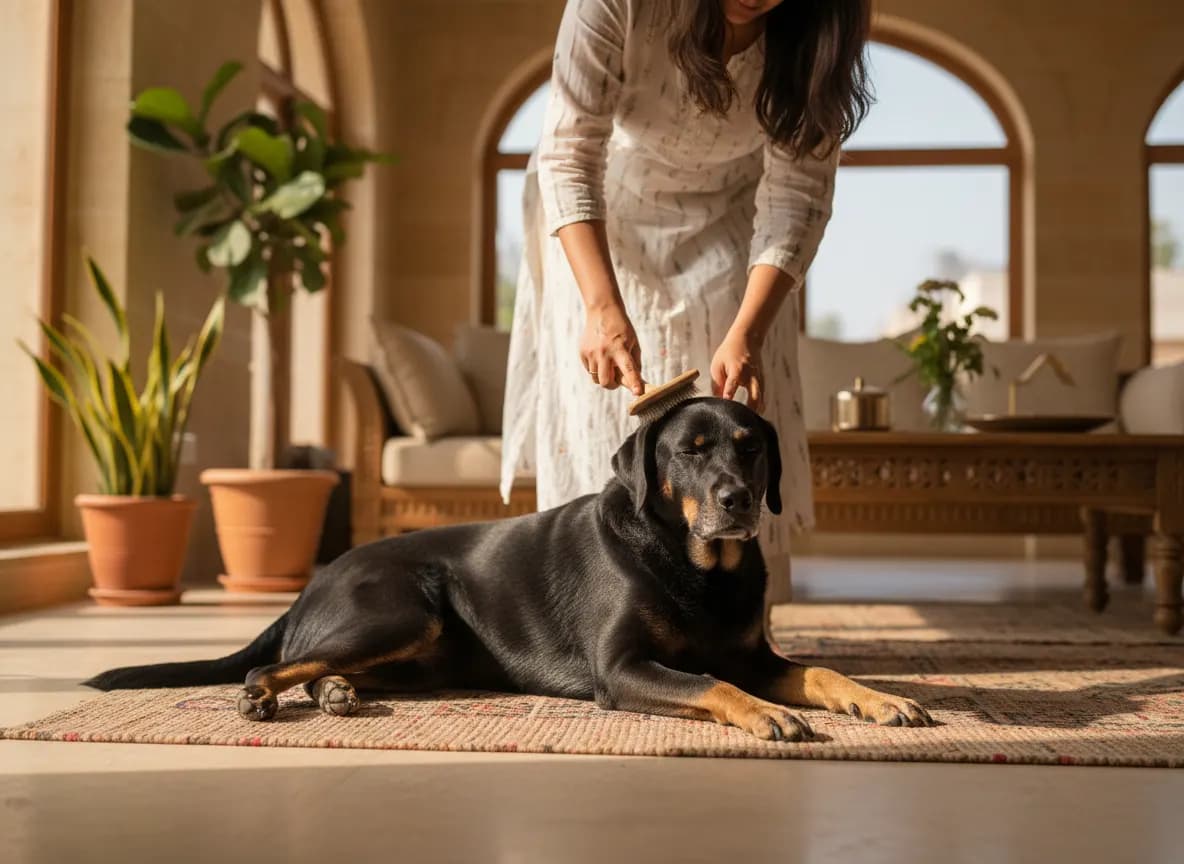
Brush regularly. A few times a week (more for long coats) with a brush suited to the coat. It distributes natural oils and removes flakes before they build up.
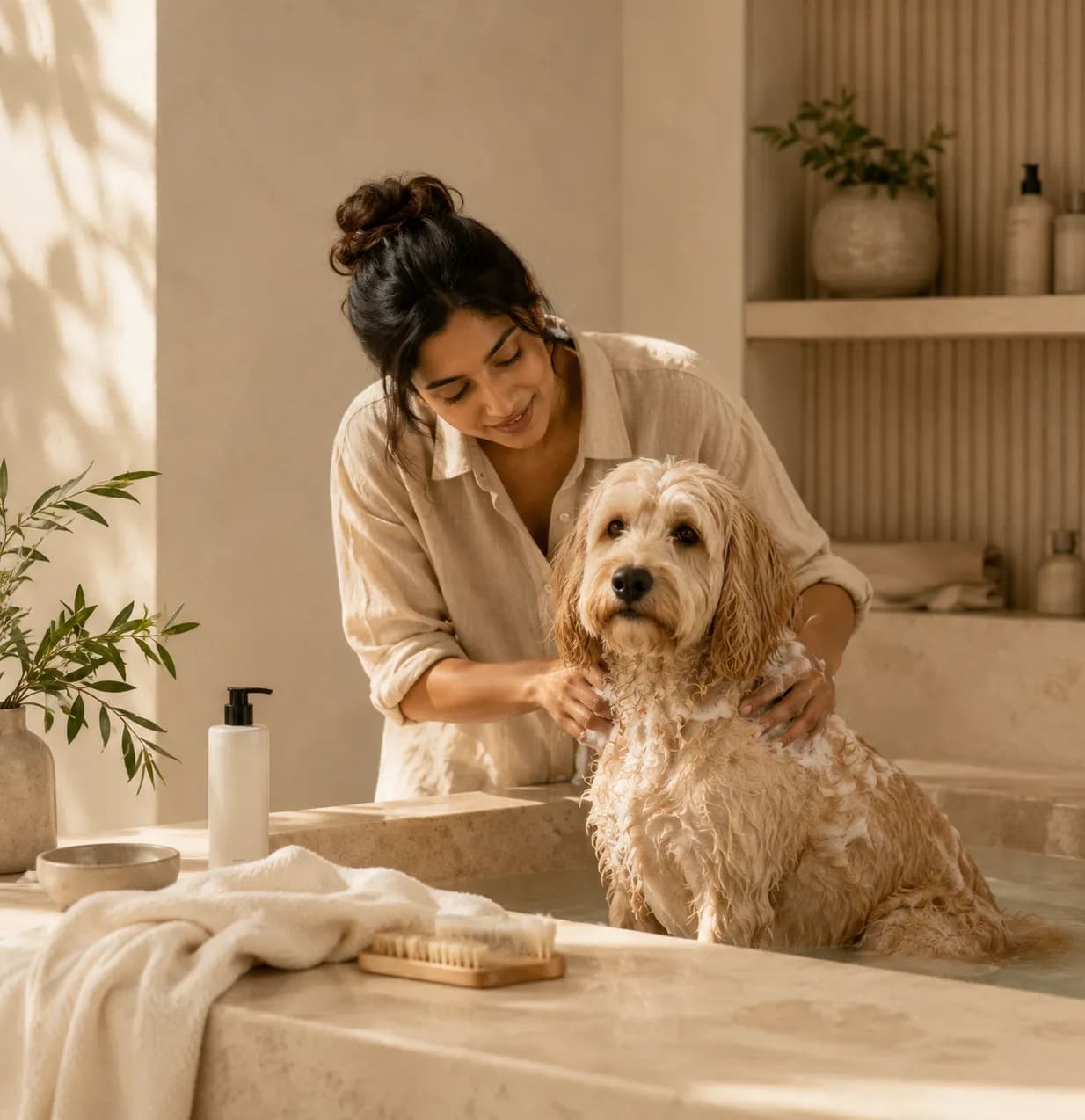
Bathe less, and bathe gently. Bathe when your dog genuinely needs it, using a mild, sulphate-free, pH-balanced shampoo made for dogs. Our Gentle Daily Shampoo is cleansed with amino acid-derived surfactants and made for sensitive skin, with colloidal oatmeal, aloe vera and vegetable glycerin, and a guar conditioner with camellia oil and vitamin E. It is a gentle daily shampoo, not a medicated or anti-dandruff treatment.
Use lukewarm water, not hot. Hot water dries skin, for dogs as for us.
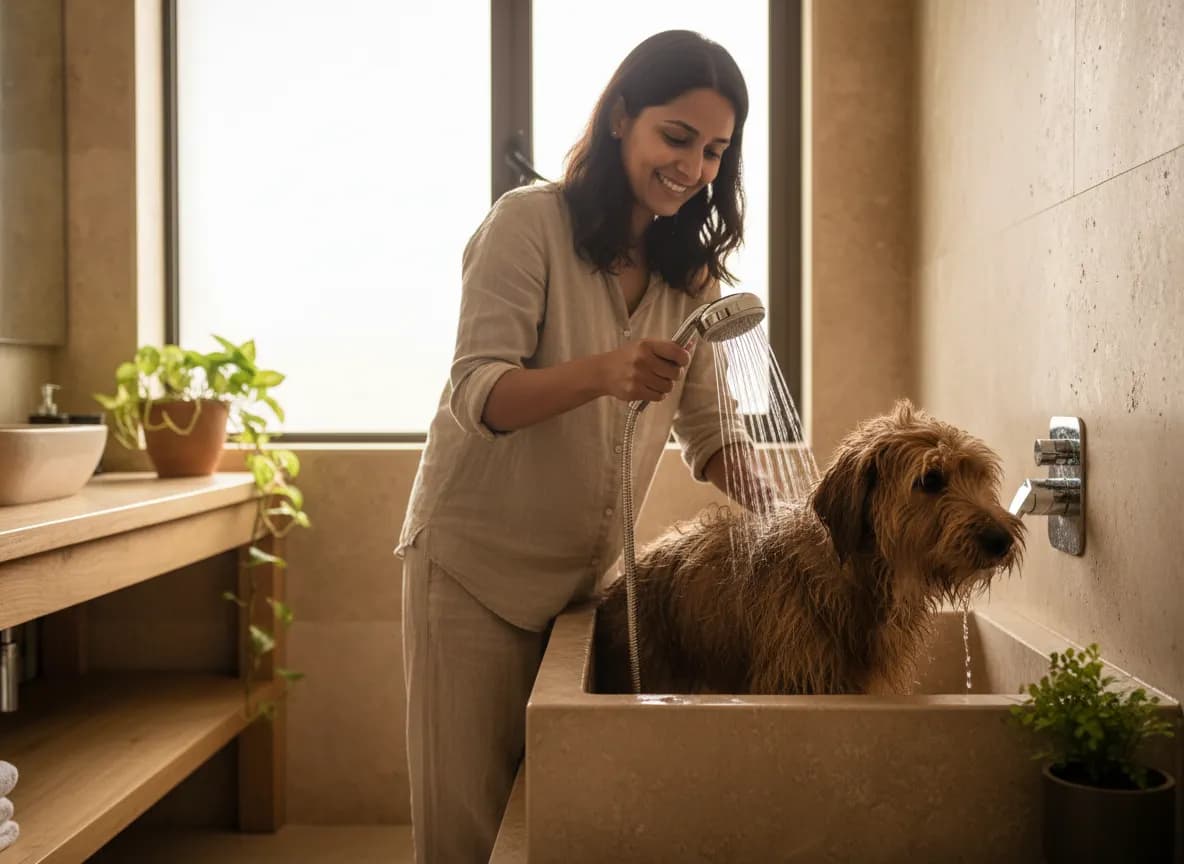
Rinse for longer than you think. Keep rinsing until the water runs completely clear and the coat no longer feels slippery, especially in the undercoat, armpits and belly.
Dry thoroughly, gently. Press water out with a towel rather than rubbing hard, and keep dryer settings cool or low. See how to dry a dog after a bath.
Freshen without washing. For a coat that smells stale between baths, a waterless Dry Foam Shampoo refreshes it without a full wash.
Keep water bowls full and, in very dry winters, avoid parking your dog beside a heater.
When to expect improvement
If the cause is simply over-washing or poor rinsing, you may notice fewer flakes over a few weeks of gentler habits. If nothing changes, or anything gets worse, see your vet.