Winter in Delhi NCR and much of North India is more than a drop in temperature. Mornings can be close to freezing, fog cuts visibility, and smog settles over the city for weeks. Indoors, the air dries out and heaters come on.
Dogs handle this very differently depending on their coat, size and age. A Husky or a German Shepherd may love it; a short-coated Indie, a small breed, a puppy or an older dog can feel the cold quickly.
Who feels the cold most
- Short-coated dogs – Indies, Beagles, Dachshunds, Dobermans, Boxers.
- Small and toy breeds – Chihuahuas, Pomeranians, Shih Tzus with short cuts.
- Puppies and senior dogs, and dogs with joint problems.
- Thin or unwell dogs.
Signs your dog is cold: shivering, curling up tightly, lifting paws off the ground on walks, reluctance to go out, or seeking out warm spots.
Keep them warm – safely

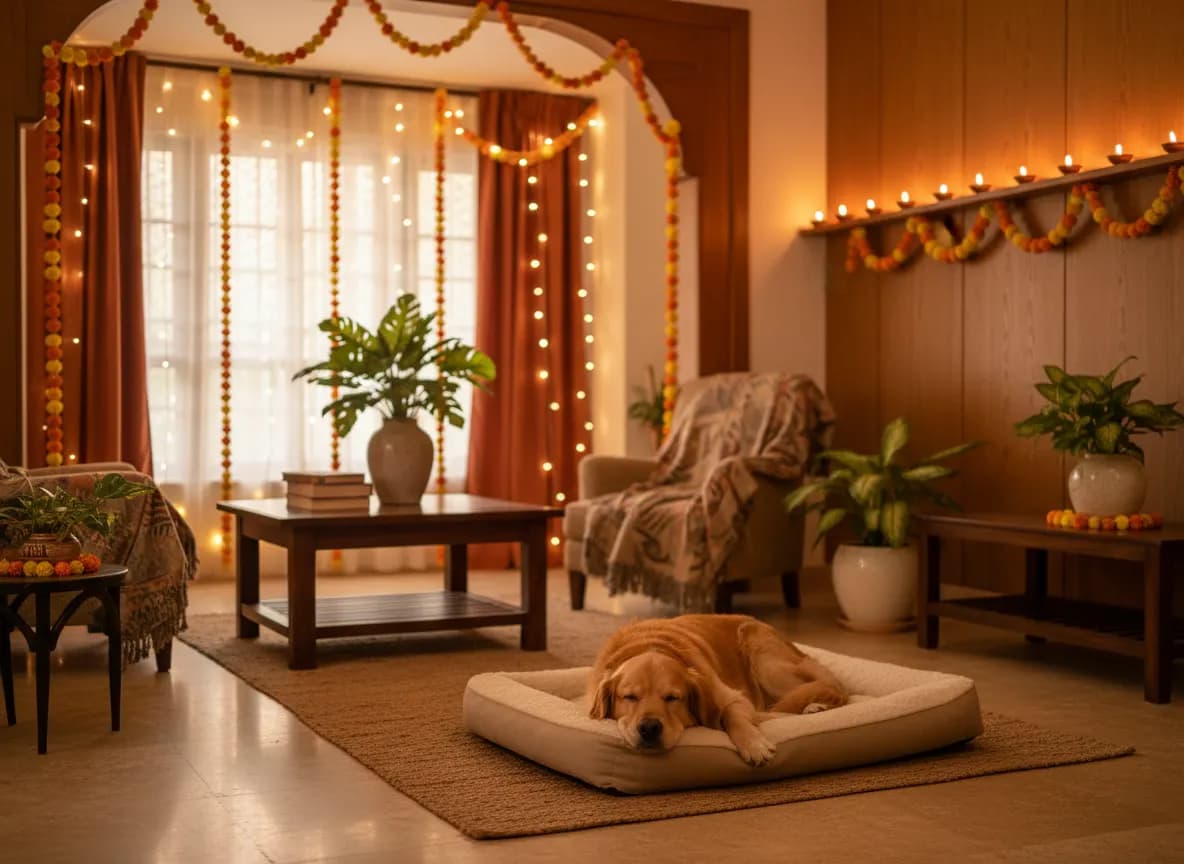
- Raise the bed off cold floors and add a thick blanket; keep it away from draughts and doors.
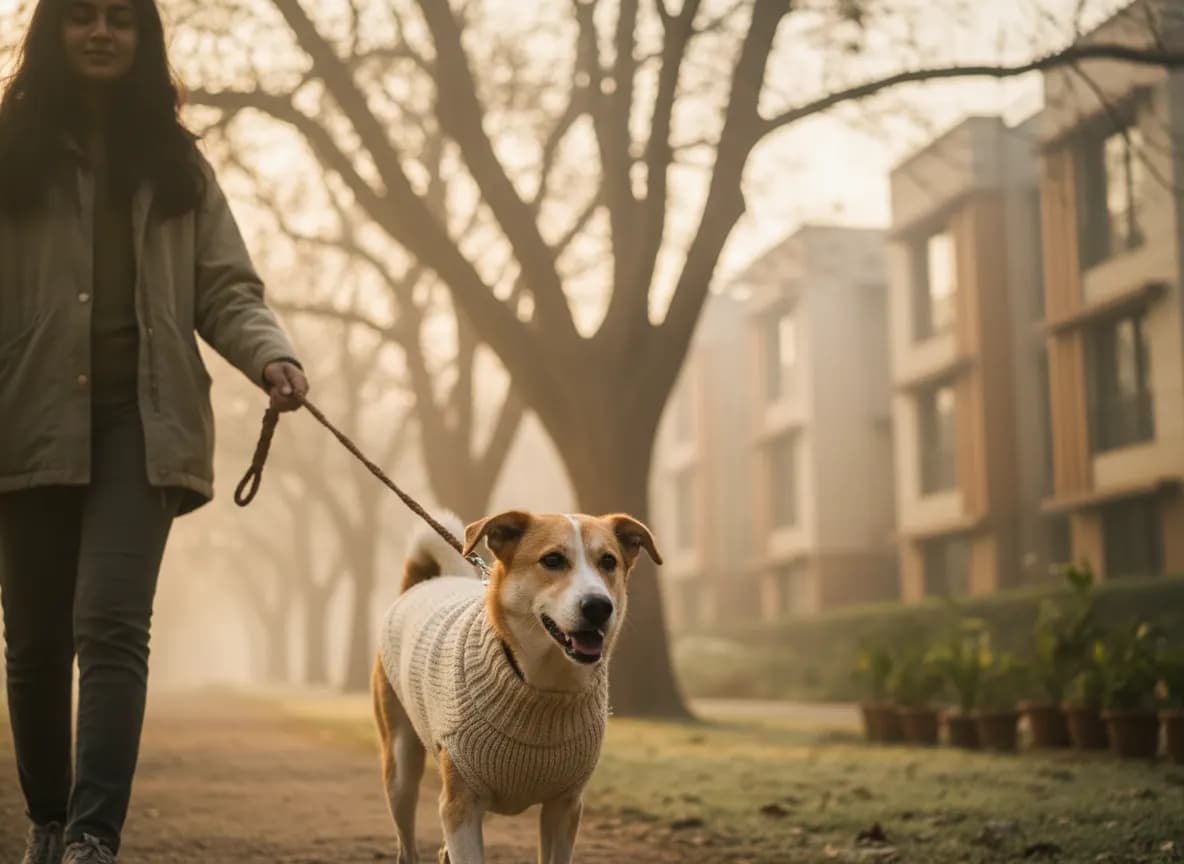
- A dog sweater or coat helps short-coated, small, young and older dogs on cold walks. Make sure it fits well, doesn’t restrict movement, and is removed indoors so your dog doesn’t overheat. Double-coated breeds usually don’t need one.
- Never leave a dog in a cold car, on a balcony or tied outside overnight.
Heater safety
- Keep heaters and blowers at a safe distance from beds and blankets, and use guards where possible.
- Never leave a dog alone in a room with a heater on.
- Never use coal, wood or angithi heaters in a closed room – they can release carbon monoxide, which is dangerous for pets and people alike.
Walking in smog and fog

Winter smog is one of the biggest challenges for city dogs in North India.
- Check the air quality before going out, and shorten walks on poor-air days – a quick toilet walk and play indoors instead.
- Avoid the smoggiest times. Air is often at its worst late at night and in the early morning; walk when it has improved and there’s some sun.
- Keep windows closed on heavy-smog days and run an air purifier if you have one.
- Take extra care with flat-faced breeds, puppies, older dogs and dogs with breathing or heart problems.
- See your vet for coughing, wheezing, laboured breathing or red, watery eyes.
In fog, use a reflective collar or harness or a small clip-on light, keep your dog on a lead near roads, and stay on familiar routes.
Bathing in winter
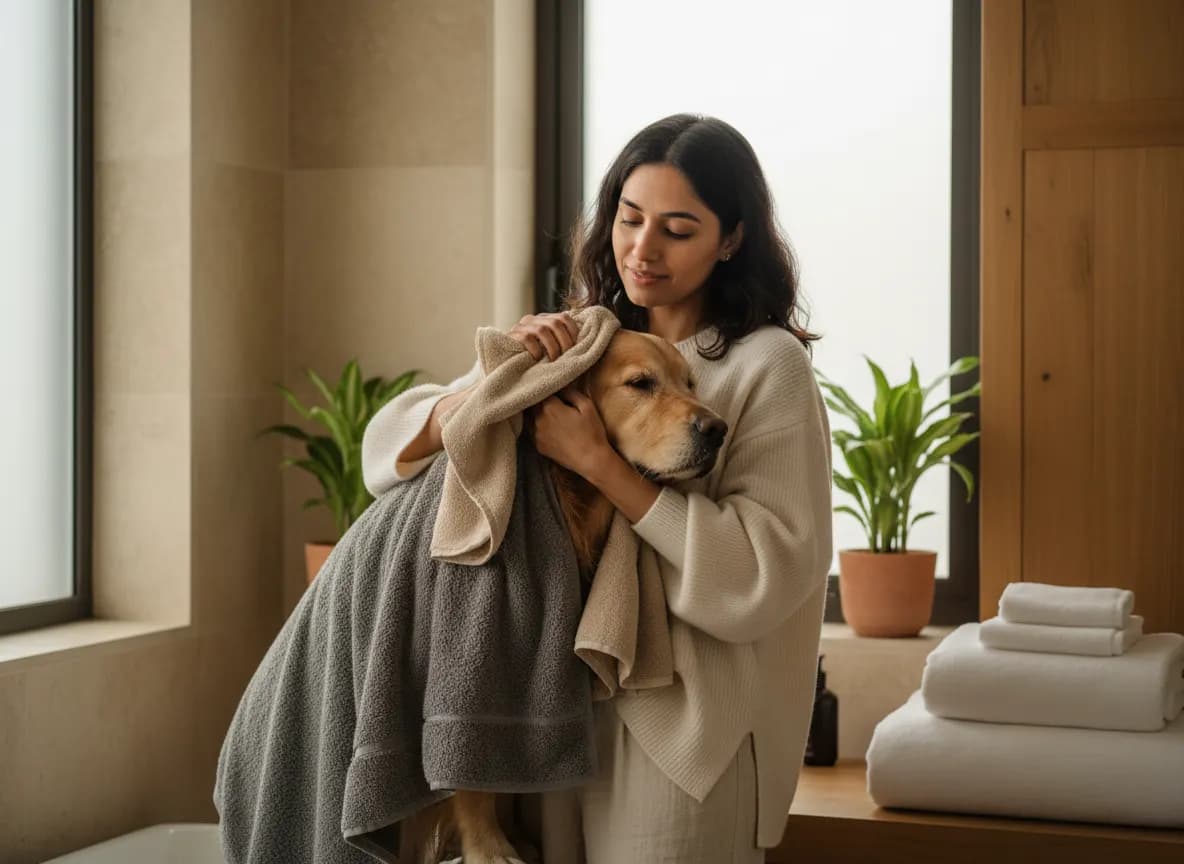
Dogs don’t need more baths in winter – often fewer. But when the coat genuinely needs it:
- Bathe indoors in a warm room, with lukewarm water.
- Use a gentle, sulphate-free, pH-balanced shampoo such as Furrytail’s Gentle Daily Shampoo, whose guar conditioner, camellia oil and vitamin E help the coat dry soft.
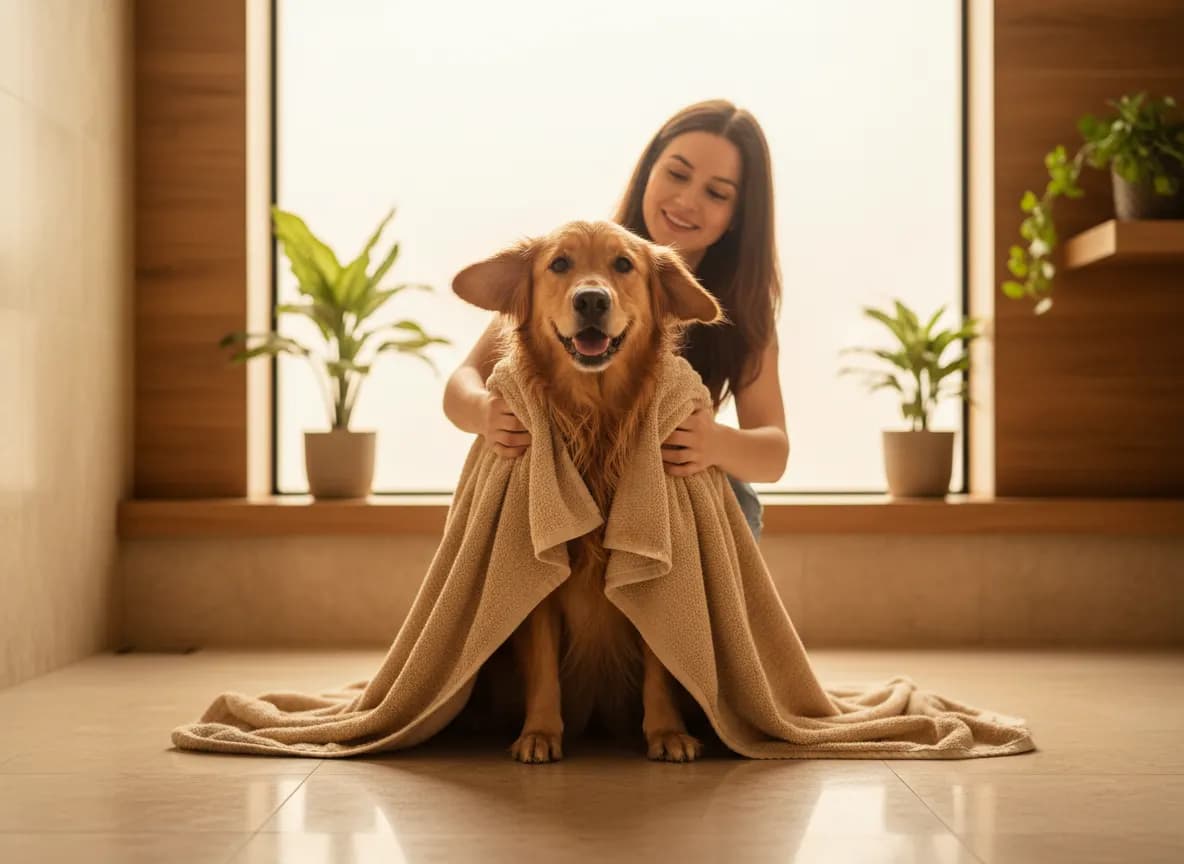
- Dry completely, right down to the skin – a damp coat chills a dog quickly. Use towels, then a pet dryer on a cool or low setting.
- Bathe earlier in the day, and don’t walk your dog until the coat is fully dry.
Between baths, the waterless Dry Foam Shampoo freshens the coat without any water at all. See dry bath vs. wet bath and how to bathe a dog at home.
Dry skin and coat
Cold air outside and heaters inside both dry out skin.
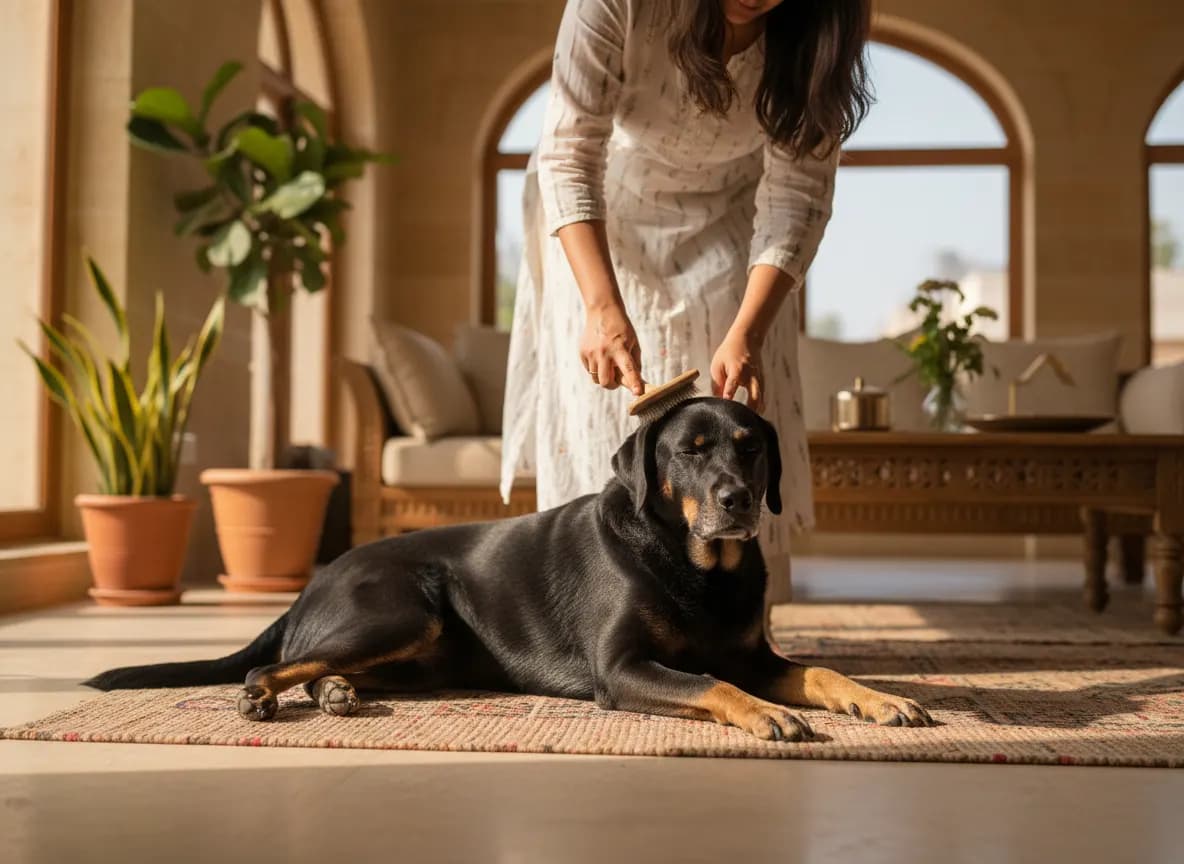
- Brush regularly – it spreads the coat’s natural oils and lifts flakes and dead hair.
- Don’t over-bathe, and avoid harsh cleansers.
- Keep your dog well hydrated; dogs often drink less in winter, so keep water fresh and at room temperature.
- Don’t apply human lotions or oils – dogs lick them off.
- If flaking, itching or redness persists, see your vet – dry skin can also have other causes. See dog hair fall vs normal shedding.
Paws in winter
- Wipe and check the paws after every walk – winter streets carry dust and pollution residue, and pads can dry and crack. A no-rinse Paw Cleaner at the door does it quickly.
- Dry between the toes so damp fur doesn’t chill.
- Keep the fur between the pads trimmed.
- See your vet for cracked, bleeding or sore pads. More in the paw problem.
Food and activity
Shorter walks mean less exercise. Keep up indoor play – fetch in a corridor, tug, puzzle feeders – and don’t overfeed to compensate for the cold unless your vet advises it.
Cats and community animals
- Indoor cats look for warm spots – keep them away from heaters.
- Community cats often shelter under car bonnets for warmth. Tap the bonnet before starting your car in winter.
- If you can, leave water and a sheltered, dry corner for community dogs and cats, and contact a local rescue for an animal in distress.
Winter care checklist
| When | What |
|---|---|
| Daily | Check air quality; walk when it’s better; warm bed off the floor |
| Every walk | Sweater for short-coated or small dogs; reflective gear in fog; wipe and check paws |
| Indoors | Heaters guarded and supervised; no coal or wood heaters in closed rooms |
| Weekly | Brush to spread natural oils; check skin and pads |
| When the coat needs it | Warm room, lukewarm water, dry completely; dry bath in between |
| Watch for | Shivering, coughing, wheezing, cracked pads, persistent dry skin |