“Dry bath” sounds like a compromise – the thing you do when a real bath isn’t possible. It’s more useful to think of it as a separate tool. A wet bath and a dry bath solve different problems, and a good grooming routine uses each for what it’s actually good at.
So the better question isn’t which is better? It’s: what does your dog’s coat need today?
What a wet bath does

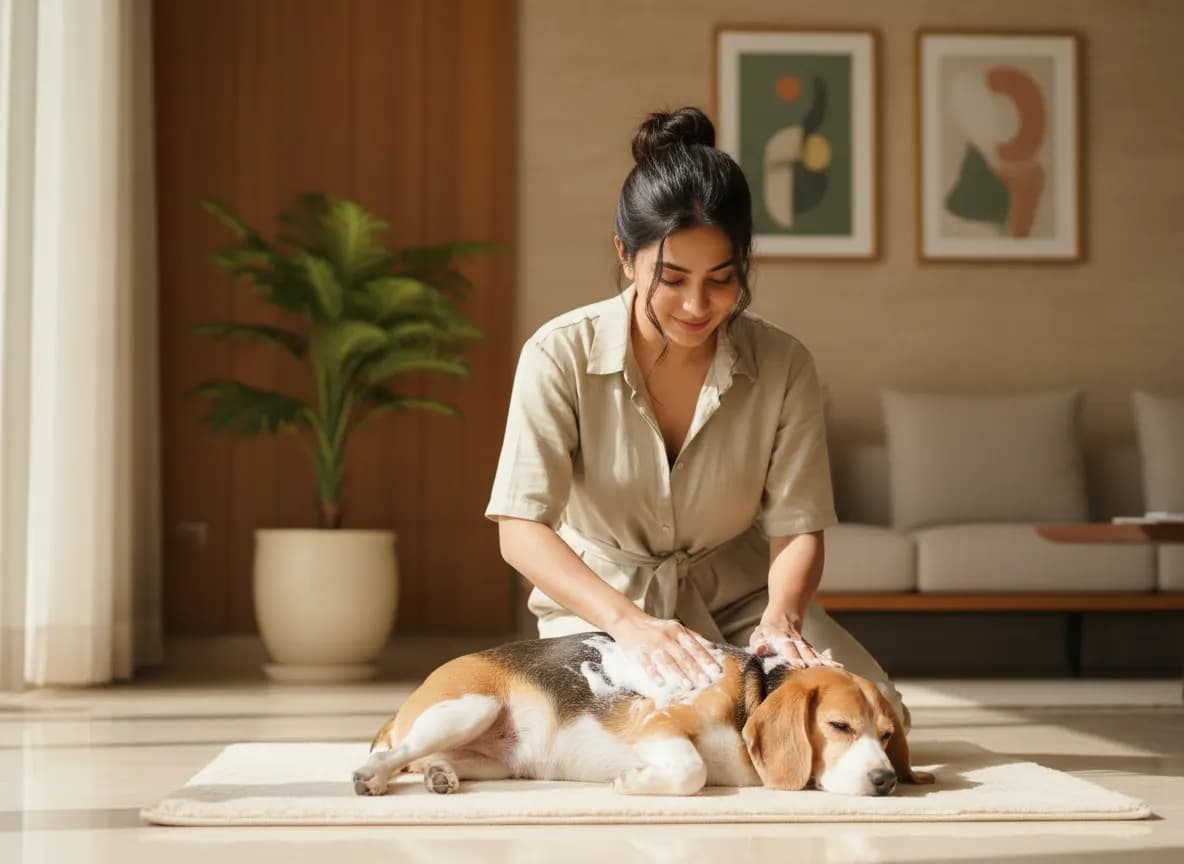
A full bath with water and shampoo is the only thing that properly cleans a genuinely dirty coat. It lifts mud, dust and built-up oil from the hair and the skin, and rinses it all away.
That’s why a wet bath is the right call when:
- the coat is visibly dirty – mud, dust, something your dog rolled in;
- the coat feels greasy right down to the skin;
- your dog has been swimming or caught in heavy rain on dirty streets;
- your vet has recommended a specific bathing routine.
The trade-off is that a wet bath takes time, water and – most importantly – drying. A coat that’s left damp can smell worse than before (here’s why).
What a dry bath does
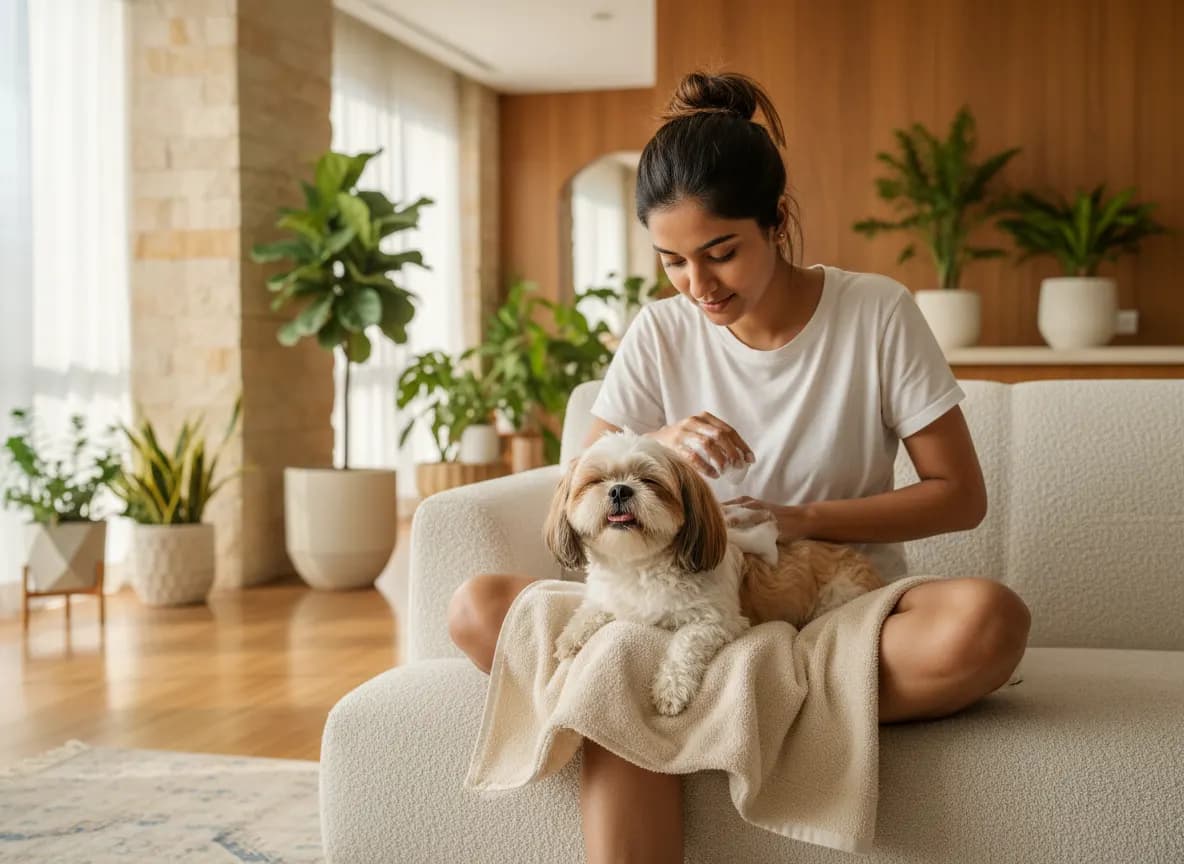
A dry bath – a waterless or no-rinse shampoo – works on the surface of the coat. It absorbs excess oil, freshens a stale smell and leaves the coat feeling clean, without a tub, running water or a long drying session.
That makes it the right call when:
- the coat is clean but a little oily or stale between bath days;
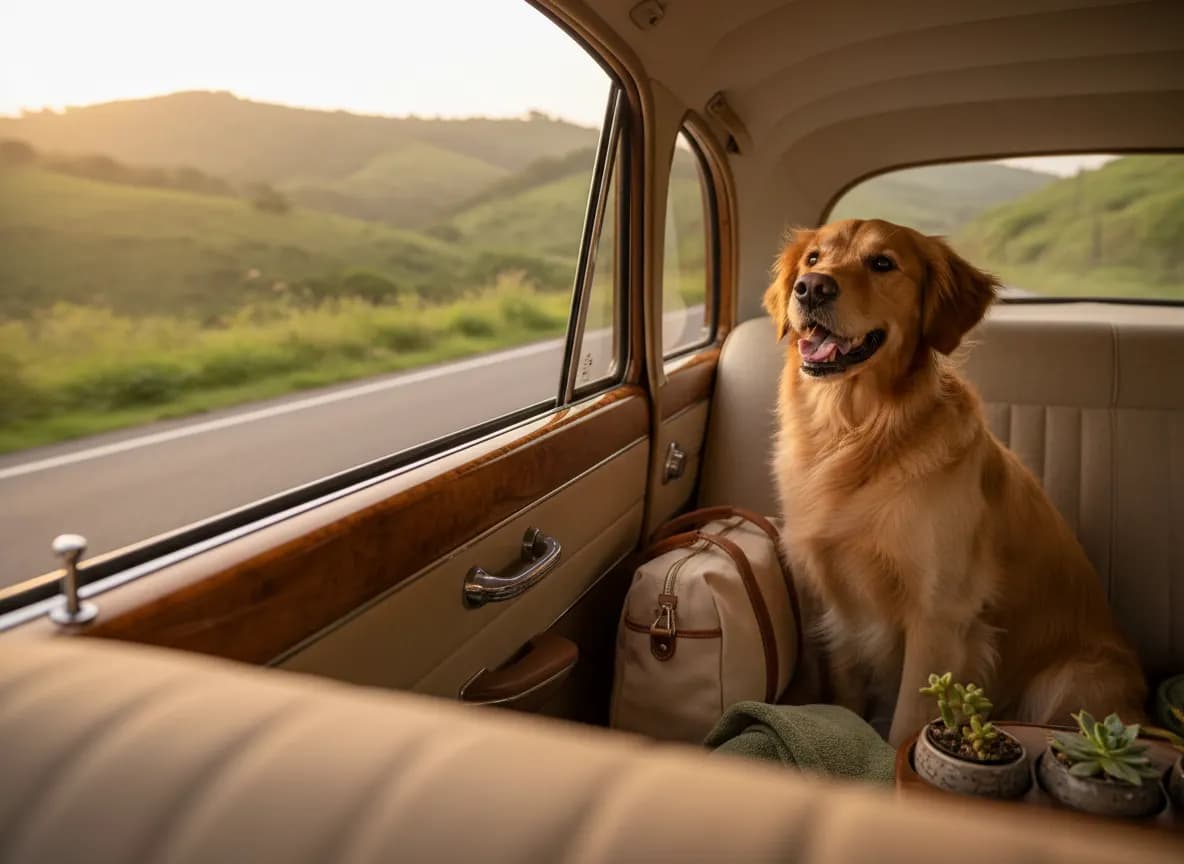
- a full bath isn’t practical – travel, a busy week, a cold evening;
- it’s monsoon and a wet coat would take hours to dry;
- your pet hates water – common with cats;
- you only need to spot-clean one area.
What a dry bath can’t do
This is where honesty matters. A dry bath doesn’t:
- remove heavy mud or a genuinely dirty coat;
- replace a proper bath forever;
- treat itching, flaking or a skin problem;
- fix a smell that’s coming from the ears, skin or bedding.
If you find yourself reaching for dry shampoo every day to cover a smell, that’s a sign to find the source– not to spray more.
Dry bath vs. wet bath at a glance
| Situation | Better choice |
|---|---|
| Muddy after a walk | Wet bath (or paws only, if only the paws are muddy) |
| Coat oily or a bit stale, otherwise clean | Dry bath |
| Monsoon week, coat won’t dry | Dry bath between baths; dry thoroughly after any wet bath |
| Travelling or no time | Dry bath |
| Cat that hates water | Dry bath made for cats |
| Rolled in something | Wet bath |
| Itching, redness or a persistent smell | Neither – see your vet |
How to give your dog a dry bath

Furrytail’s Dry Foam Shampoo is a no-rinse, leave-on safe foam for dogs and cats, made for the days between baths:
- Shake well.
- Hold it 15 cm from the coat and apply 4–6 sprays from neck to tail.
- Massage it through gently with your hands or a soft brush.
- Allow 60–90 seconds to dry. No rinsing, no towelling.
It absorbs surface oils, neutralises odour and leaves a light conditioning finish – with hinoki cypress and fresh bamboo, the scent of a Japanese bathhouse. To see how it compares with other waterless foams and sprays, read the best dry shampoo for dogs in India.
How to keep your dog clean between baths
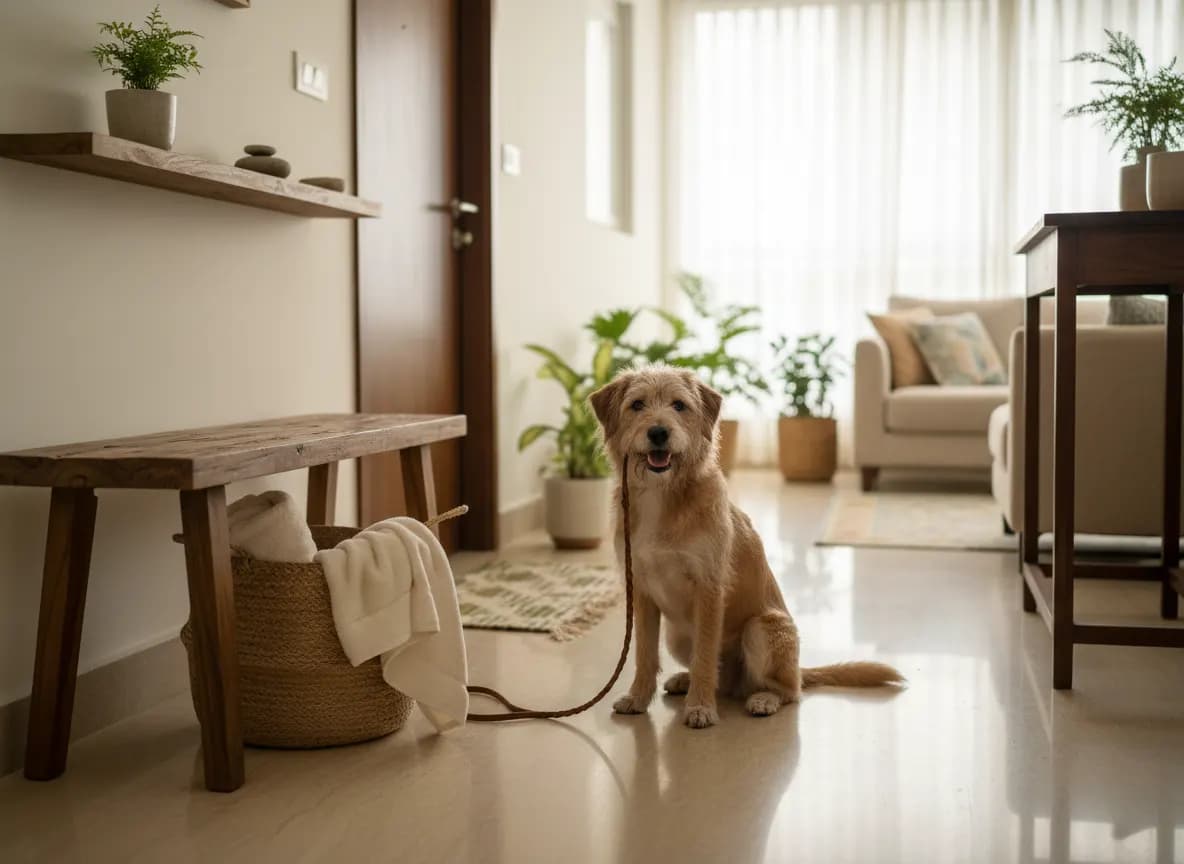
Most “my dog needs a bath” moments are really one part of the dog that needs attention. Match the clean-up to the mess:
- Paws after every walk – a no-rinse Paw Cleaner at the door. (More on the paw problem.)
- Coat feels stale or oily – a dry bath with the Dry Foam Shampoo.
- A light fragrance top-up – Refreshing Mist, a leave-on coat mist for dogs.
- Wet from rain – towel and dry thoroughly, right down to the skin.
- Brush regularly – it lifts dust and loose hair before they become a bath.
Then, when the coat genuinely needs it, give a proper wet bath with a gentle daily shampoo – as often as the coat actually needs, not on a fixed calendar.
The takeaway
A wet bath cleans. A dry bath refreshes. Neither is a cure-all, and neither is a lesser option – they’re different tools.
The best routine uses water when the coat is genuinely dirty, a dry bath when it simply needs freshening, and good drying every time water is involved.