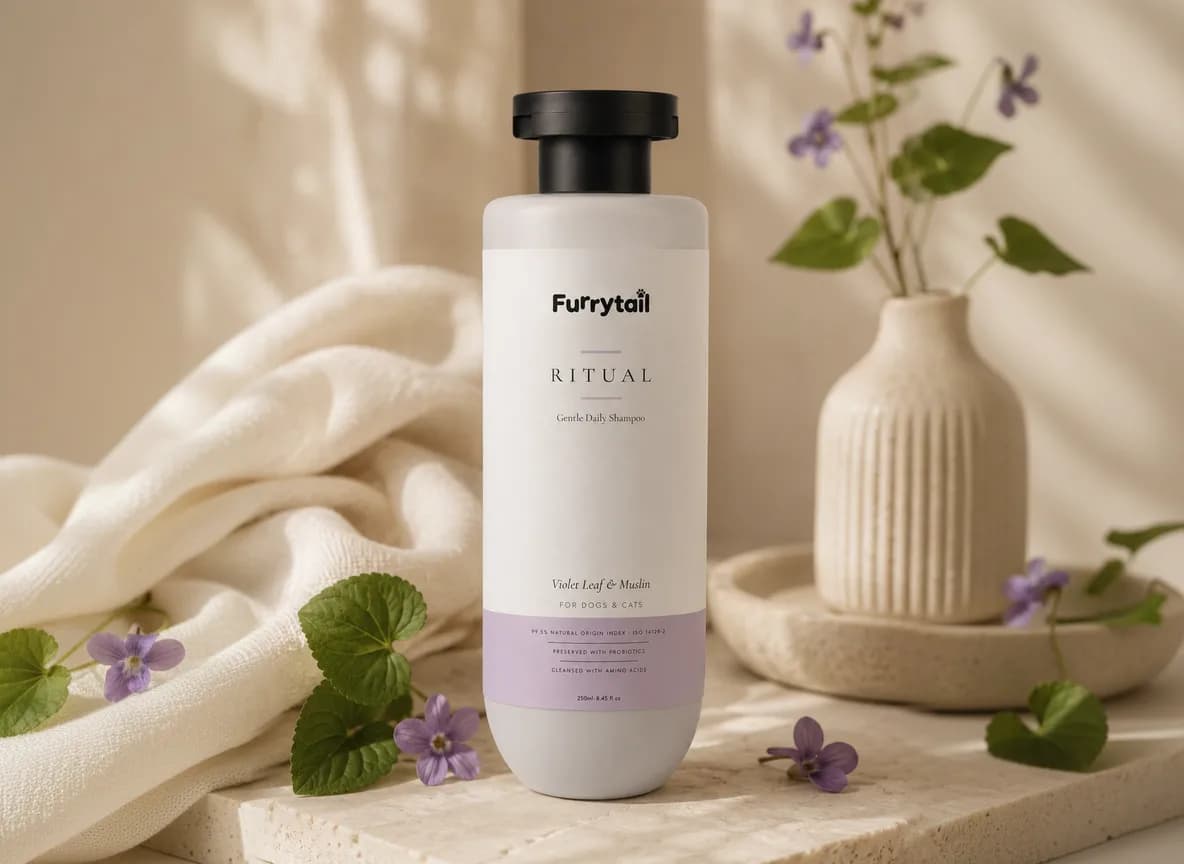
There is something reassuring about the word probiotic.
We have learned to associate it with balance, good bacteria and a healthier microbiome. It appears on yoghurt, supplements, functional foods and increasingly on pet-care products.
Now it is appearing on shampoo bottles.
But there is a useful question hiding behind the word:
What exactly is the probiotic doing?
That question matters because “probiotic” does not describe one universal ingredient or one universal benefit. In veterinary nutrition, probiotics generally refer to live microorganisms administered in adequate amounts to provide a health benefit. Research in dogs and cats has explored their relationship with the gut microbiome, gastrointestinal health and, more recently, skin. But the evidence remains strain-, dose- and condition-specific.
A shampoo raises an entirely different formulation question.
First, what is a probiotic?
The simplest definition is also the most useful.
A probiotic is a live microorganism that, when administered in an adequate amount, provides a health benefit to the host. That definition matters because not every fermented ingredient, bacterial extract or “microbiome” product automatically qualifies as a probiotic.
And not all probiotics are interchangeable.
A particular bacterial strain can behave differently from another. The dose matters. The route of administration matters. The condition being addressed matters.
Research into dogs and cats has found potential benefits from some probiotic preparations, particularly around gastrointestinal health, but reviews also highlight substantial uncertainty around which strains work, at what dose and for which animals or conditions.
So when you see the word probiotic, the next question should be:
Which one, doing what, and how?
The gut microbiome is not the skin microbiome

This distinction is easy to miss.
Most of the probiotic conversation in pet health has historically centred on the gut. Dogs and cats have complex gastrointestinal microbial communities, and researchers have spent years investigating how diet, disease, antibiotics and probiotic supplementation can influence them.
The skin has its own microbial ecosystem.
That has made topical probiotics an interesting area of research. But “interesting” is not the same as “settled”.
A systematic review of topical probiotics found evidence worth investigating, while also highlighting the need for more research. More recently, a systematic review and meta-analysis of probiotics as an adjunct for canine atopic dermatitis found no statistically significant improvement across the measured disease scores, despite reductions being observed across the included trials.
In other words:
The skin microbiome is real. The possibility of influencing it is real. The clinical claims are still more complicated.
That distinction is worth keeping.
Then there is the preservation question
This is where the conversation becomes particularly interesting for formulation.
A shampoo contains water. Water-containing products need an appropriate strategy for controlling unwanted microbial growth and remaining stable throughout their intended shelf life.
That makes preservation a formulation requirement - not simply an ingredient category to be removed because “preservative-free” sounds better.
Furrytail takes a different route here.
Its Gentle Daily Shampoo uses Leuconostoc/Radish Root Ferment Filtrate, described in the supplied formulation material as a probiotic ferment used as part of the preservation system. The current product label lists the ingredient as Leuconostoc/Radish Root Ferment Filtrate (Leucidal Liquid).
This is an important distinction.
The ingredient is being used as part of the formula’s preservation architecture.
That is not the same claim as saying that washing a dog with the shampoo delivers a therapeutic dose of live probiotics to the skin.
The bottle deserves a more precise reading than that.
Fermentation is not a synonym for live bacteria
Fermented ingredients have become increasingly familiar in personal care.
But “fermented”, “probiotic”, “postbiotic” and “microbiome-friendly” are not interchangeable terms.
A fermentation-derived ingredient can contain metabolites, components or filtrates produced through fermentation. A product can also use microorganisms as part of a manufacturing or preservation process without functioning like an oral probiotic supplement.
That distinction is particularly important because some probiotic products are designed around living organisms, while others use non-living microbial components or fermentation-derived materials.
The science is developing quickly, but terminology should not move faster than evidence.
For a reader, the useful habit is simple:
Read the ingredient. Then read the function. Then read the claim.
If those three things line up, the label starts to make sense.
So what does the Furrytail “probiotic” mean?
For Furrytail, it is primarily a formulation decision.
The Gentle Daily Shampoo preservation system uses Leuconostoc/Radish Root Ferment Filtrate rather than the synthetic preservatives excluded from the current formula. The label also identifies the shampoo as suitable for dogs and cats.
The important point is not that conventional preservatives are inherently bad.
It is that preservation systems can be designed differently.
Furrytail’s formulation philosophy is to choose the preservation approach deliberately rather than defaulting to conventional synthetic preservatives. The brand’s own formulation material describes the probiotic culture as part of that preservation strategy.
That is a narrower - and more defensible - proposition than saying the shampoo “restores the microbiome”.
We would not make that leap.
There is no need to.
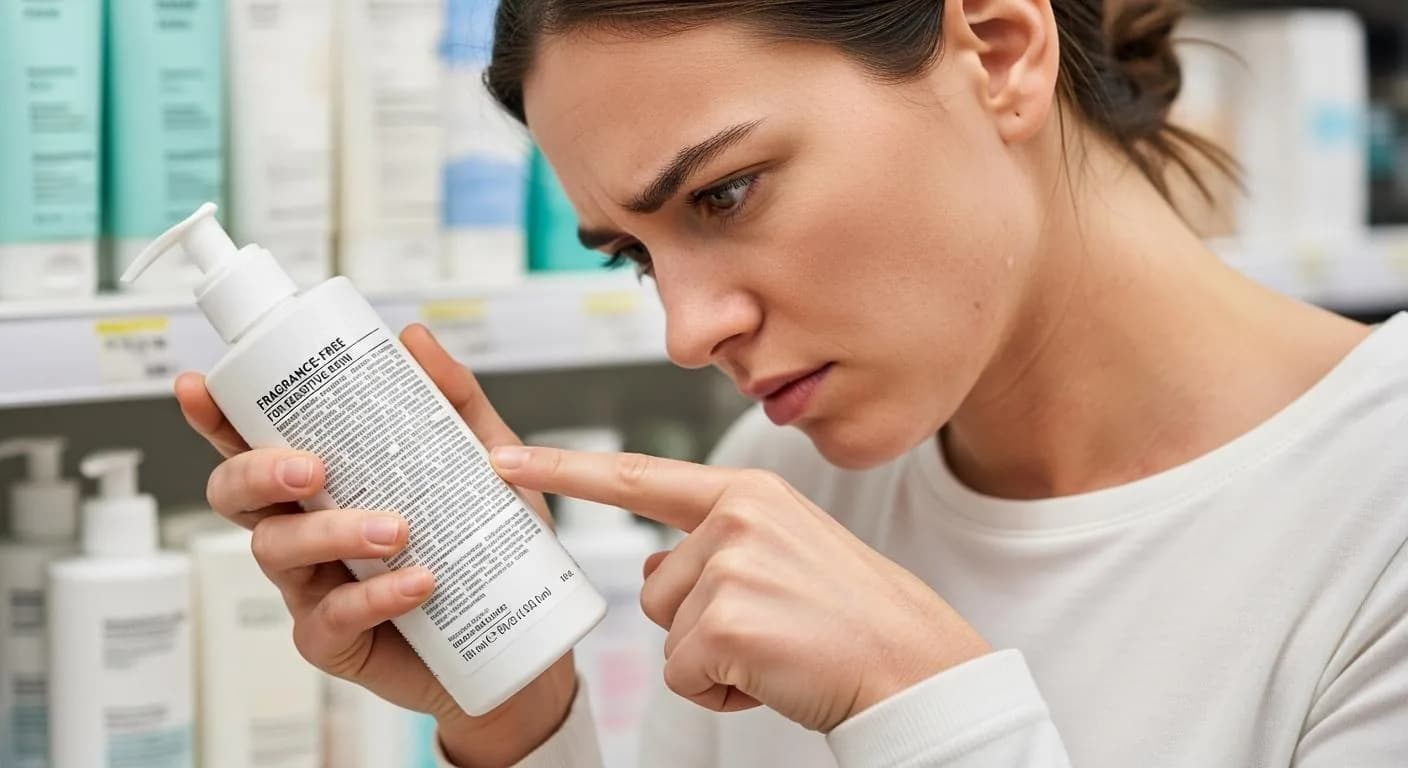
What should you ask when you see “probiotic” on a pet product?
Start with five questions.
- Is it actually a live microorganism?
If so, which strain? - What is the intended benefit?
Gut health, skin health, preservation or something else? - Is there evidence for that specific use?
Evidence for an oral probiotic does not automatically establish evidence for a shampoo. - What is the delivery system?
Something swallowed, left on the skin or rinsed away presents very different biological questions. - Is the claim appropriate for the species?
Dogs and cats should not automatically be treated as interchangeable.
This last point is particularly important in grooming. Our approach to formulation explicitly considers species eligibility, surfactant type and concentration, fragrance sensitivities and pH management before a formula is finalised.
The interesting part is what we don’t know yet
There is a tendency in modern pet care to turn every new scientific idea into a finished marketing claim.
Microbiome science is especially vulnerable to this.
We know microbial communities matter. We know they interact with their host. We know diet, disease, medication and environment can influence them. We also know probiotics can have effects in some circumstances.
But the next step - therefore this particular shampoo restores your pet’s microbiome - requires evidence.
The current research does not justify treating every probiotic-labelled product as equivalent. Veterinary reviews continue to call for better-defined strains, outcomes, dosing and clinical studies.
That uncertainty is not a weakness in the science.
It is simply where the science is.
A better way to read the word
Perhaps the most useful thing about “probiotic” is not the promise attached to it.
It is the question it makes us ask.
Four questions for any probiotic claim
- What organism? - named strain, or a fermentation-derived material?
- What function? - therapeutic benefit, or part of the preservation system?
- What evidence? - for this route, this species, this condition?
- What formulation? - left on the skin, or rinsed away?
In Furrytail’s case, the answer is unusually specific: Leuconostoc/Radish Root Ferment Filtrate is part of the preservation system in the Gentle Daily Shampoo.
That does not need to become a grander claim.
Good formulation rarely needs one.
The better habit is to turn the bottle around, read the INCI list and ask what each ingredient is actually there to do.
Every ingredient has a name and a reason.

That is where the probiotic question becomes a formulation question.