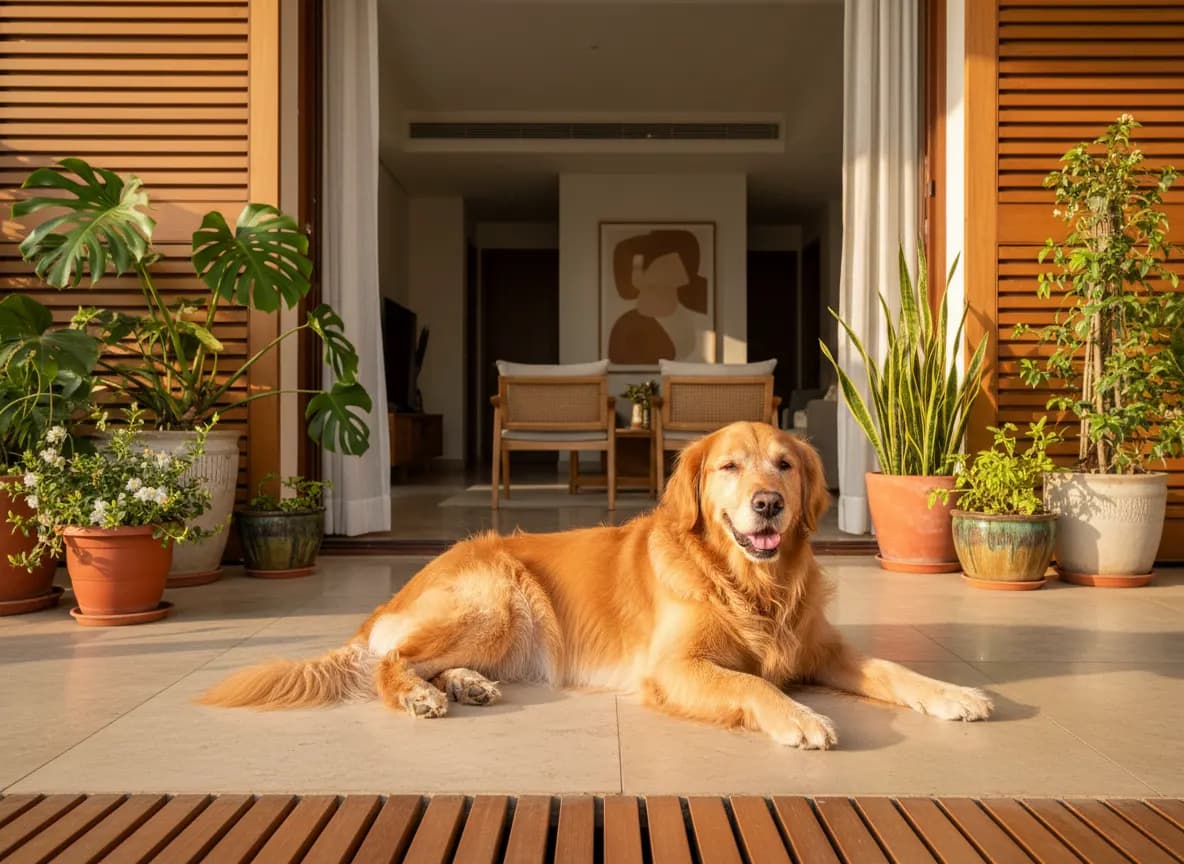
The Golden Retriever is one of India’s most-loved family dogs – and one of the fluffiest. Underneath that easy-going nature is a coat that sheds steadily, mats in a few predictable places and holds water like a sponge.
None of it is difficult. It just rewards a routine.
Understanding the Golden coat
Goldens have a double coat: a dense, soft undercoat for insulation and a longer, water-resistant outer coat on top, with feathering on the chest, legs, belly and tail.
That design matters in India. The undercoat traps air, which helps insulate the dog from heat as well as cold – as long as the loose undercoat is brushed out so air can move through it. A matted, neglected coat traps heat and moisture instead.
Brushing: the heart of the routine
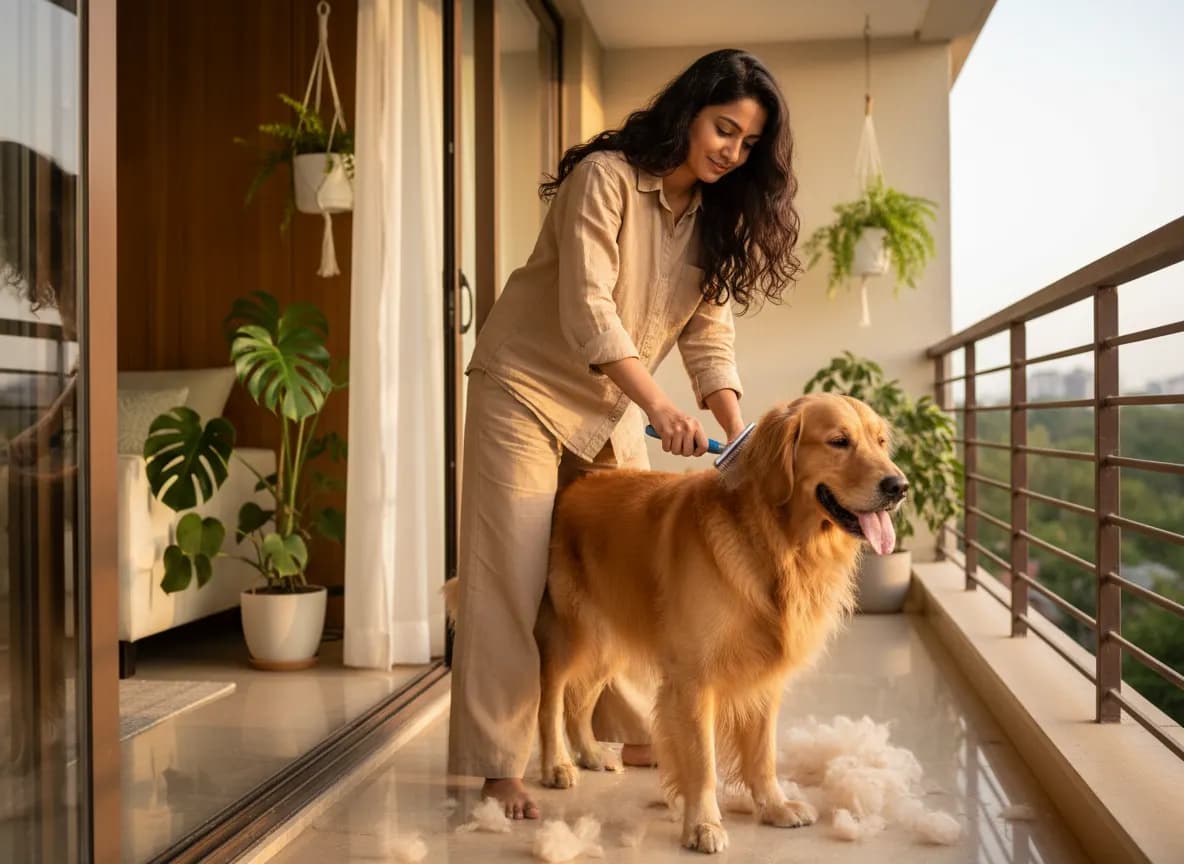
- Two or three times a week most of the year; daily during heavy shedding.
- Use an undercoat rake or slicker brush to lift loose undercoat, then a wide-toothed comb through the feathering.
- Pay attention to the mat hotspots: behind the ears, the “trousers” on the back legs, under the collar and the armpits.
- Brush before a bath, never after – water tightens tangles.
Goldens shed all year, with heavier “coat blows” a couple of times a year. A sudden heavy shed with a healthy coat and skin is normal; patchy hair loss, sores or itching is not – see hair fall vs normal shedding.
Should you shave a Golden Retriever in summer?
It’s tempting when the city hits 40°C, but shaving a double-coated breed is generally not recommended. The coat helps regulate temperature and protects the skin from sun, and a shaved double coat may grow back unevenly.
A better summer approach: brush out the loose undercoat regularly, keep the dog in shade and out of midday heat, and ask a groomer for a tidy trim of the feet, ears and feathering rather than a shave. More in summer dog care in India.
Ears
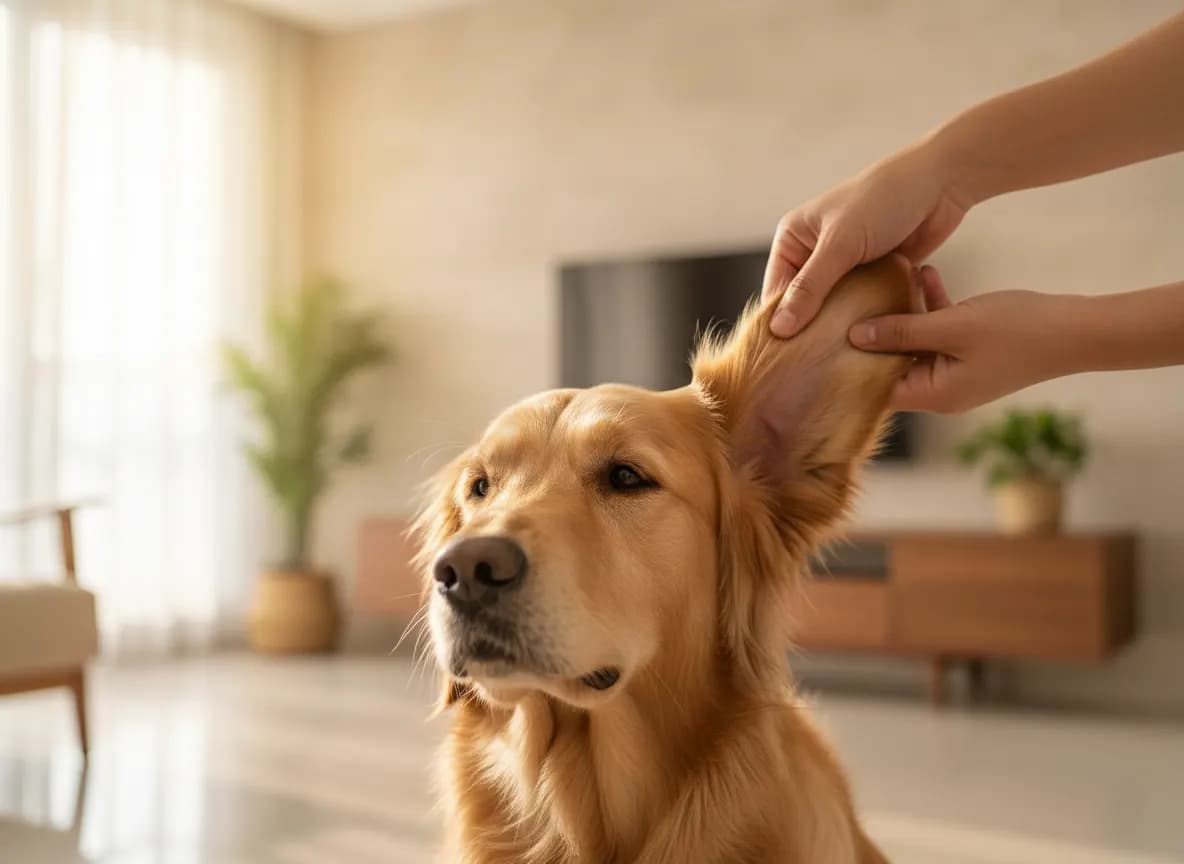
Golden ears are soft, heavy and floppy, which means less airflow and more moisture – especially after swimming, baths and monsoon walks.
- Check weekly for redness, smell or debris.
- Wipe the visible outer ear with a soft, dry cloth after every bath or swim.
- Don’t push cotton buds into the ear canal.
- Head-shaking, scratching or a persistent smell is a reason to see your vet.
Paws
The fur between a Golden’s toes grows long and collects mud, grass seeds and grit. Keep it neatly trimmed, check between the pads, and clean the paws after every walk with a no-rinse Paw Cleaner. (More on paws.)
Bathing a Golden Retriever
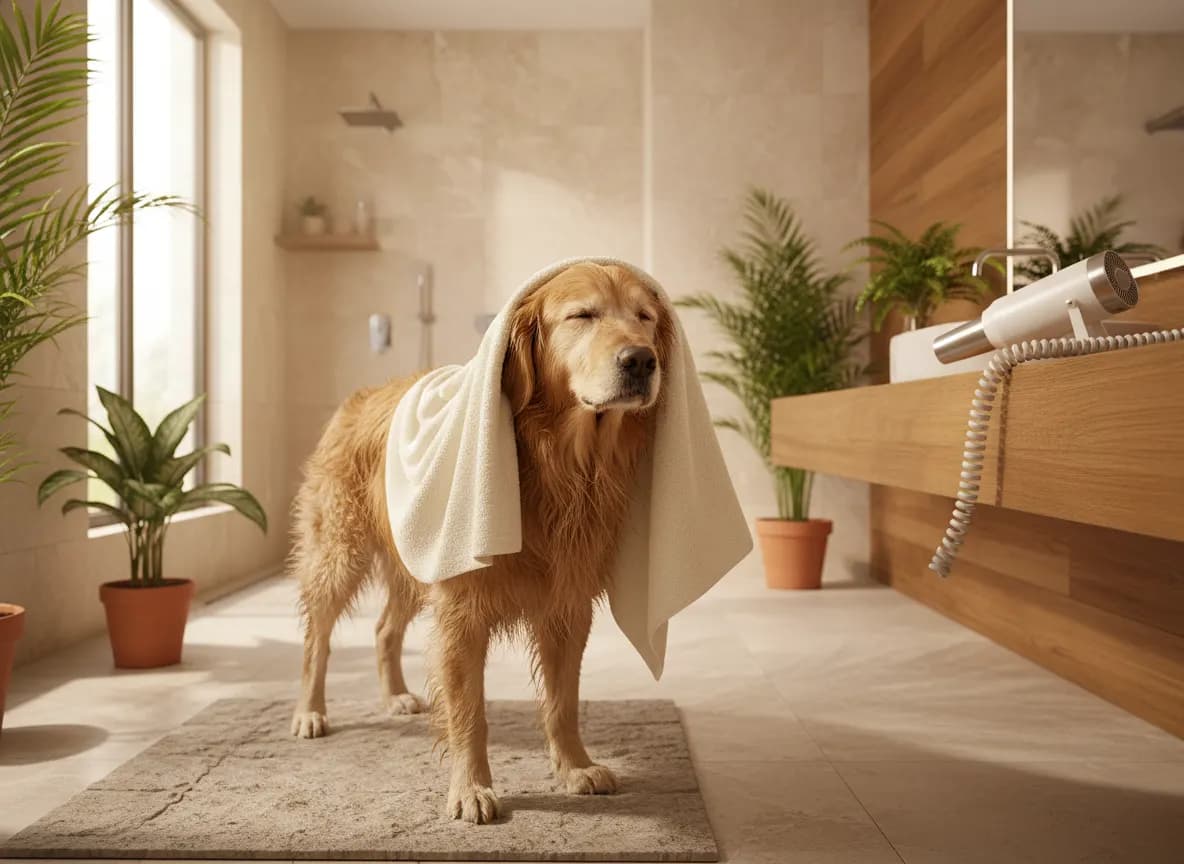
Follow the full bath ritual, with the Golden-specific emphasis on two steps:
- Wet right down to the skin. The outer coat repels water; it can take several minutes to saturate a Golden properly.
- Dry right down to the skin. This is where Golden coats go wrong. Press out water with towels, then use a cool or low pet dryer while brushing. A Golden that’s left damp under the coat is the classic cause of a musty smell after a bath.
Bathe when the coat genuinely needs it – not on a fixed calendar. Between baths, a dry bath keeps the coat fresh without the long drying session.
What’s the best shampoo for a Golden Retriever?
Look for a shampoo that’s made for dogs, mild and sulphate-free so it doesn’t strip the coat’s natural oils, pH-balanced for pets, and conditioning enough to help the feathering stay soft and tangle-free.
Furrytail’s Gentle Daily Shampoo is a sensitive-skin, pH-balanced formulation cleansed with amino acid-derived surfactants, with a guar conditioner, camellia oil and vitamin E – so a long coat dries softer without a separate conditioner. We compared ten options in the best shampoo for Golden Retriever in India.
Ticks love Goldens
That dense coat is easy for ticks to hide in, especially around the ears, neck and between the toes. Run your hands through the coat after walks in grass, and use a plant-based tick and flea spray before walks in tick-active areas. See ticks, fleas and the Indian dog.
A simple Golden Retriever routine
| How often | What |
|---|---|
| After every walk | Clean and dry the paws; quick tick check |
| 2–3 times a week (daily when shedding) | Undercoat rake, then comb through the feathering |
| Weekly | Check and wipe the outer ears; check mat hotspots |
| Between baths | Dry foam for a stale or oily coat |
| When the coat needs it | Full bath, rinse thoroughly, dry to the skin |
| Every 6–8 weeks | Tidy trim of feet, ears and feathering |
When to see a vet
Persistent itching, red or moist patches of skin, hair loss in patches, ear scratching or head-shaking, or a smell that keeps coming back all need a vet rather than more grooming.