Cats spend a remarkable part of their day grooming. Their rough tongues work like a comb, and most healthy, short-haired cats rarely – if ever – need a bath.
So, can you bathe a cat? Yes. The better question is when does your cat actually need one– and how to do it without stress for either of you.
When a cat might need a bath
- Long-haired cats, such as Persians, whose coats can get greasy or matted.
- Older, overweight or less mobile cats who can’t reach every part of their body to groom.
- A cat that has got into something – oil, something sticky, or something that shouldn’t be licked off.
- When your vet recommends it for a specific reason.
For most other cats, regular brushing does more good than bathing.
Brushing comes first
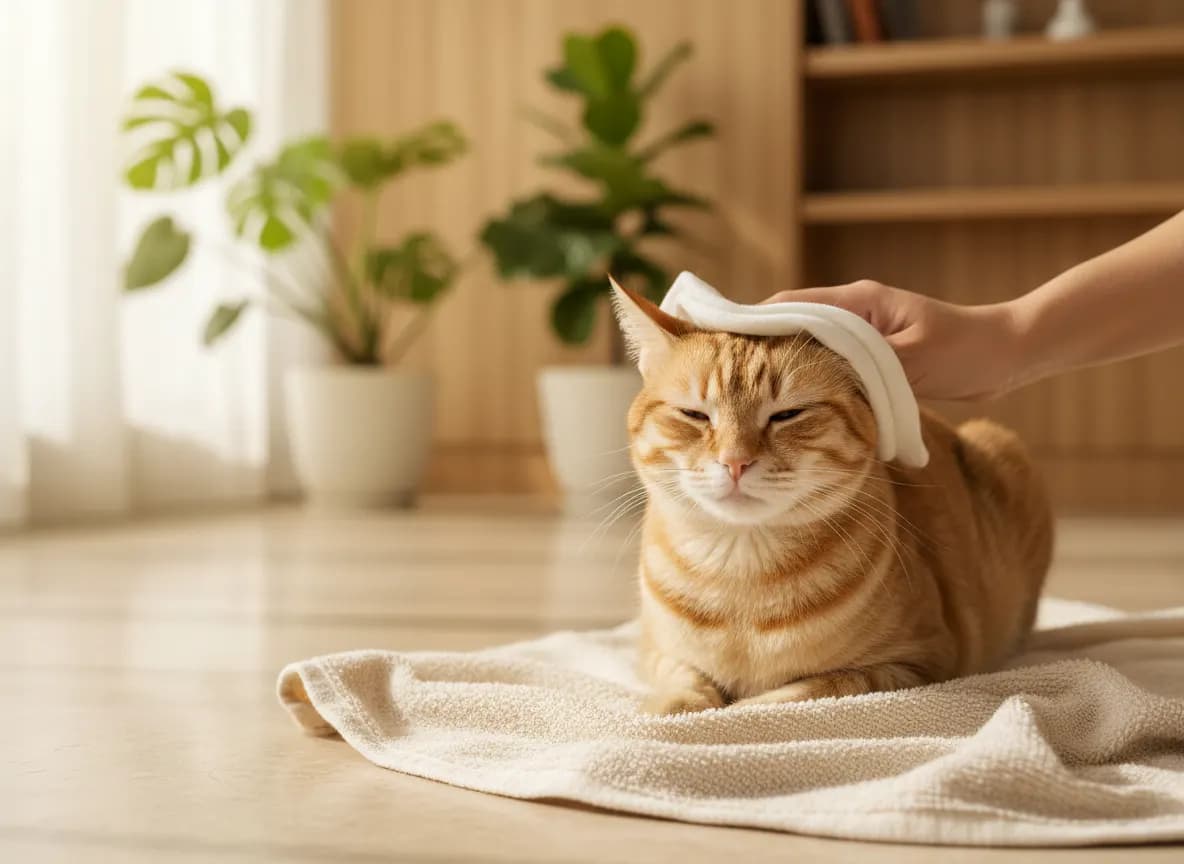
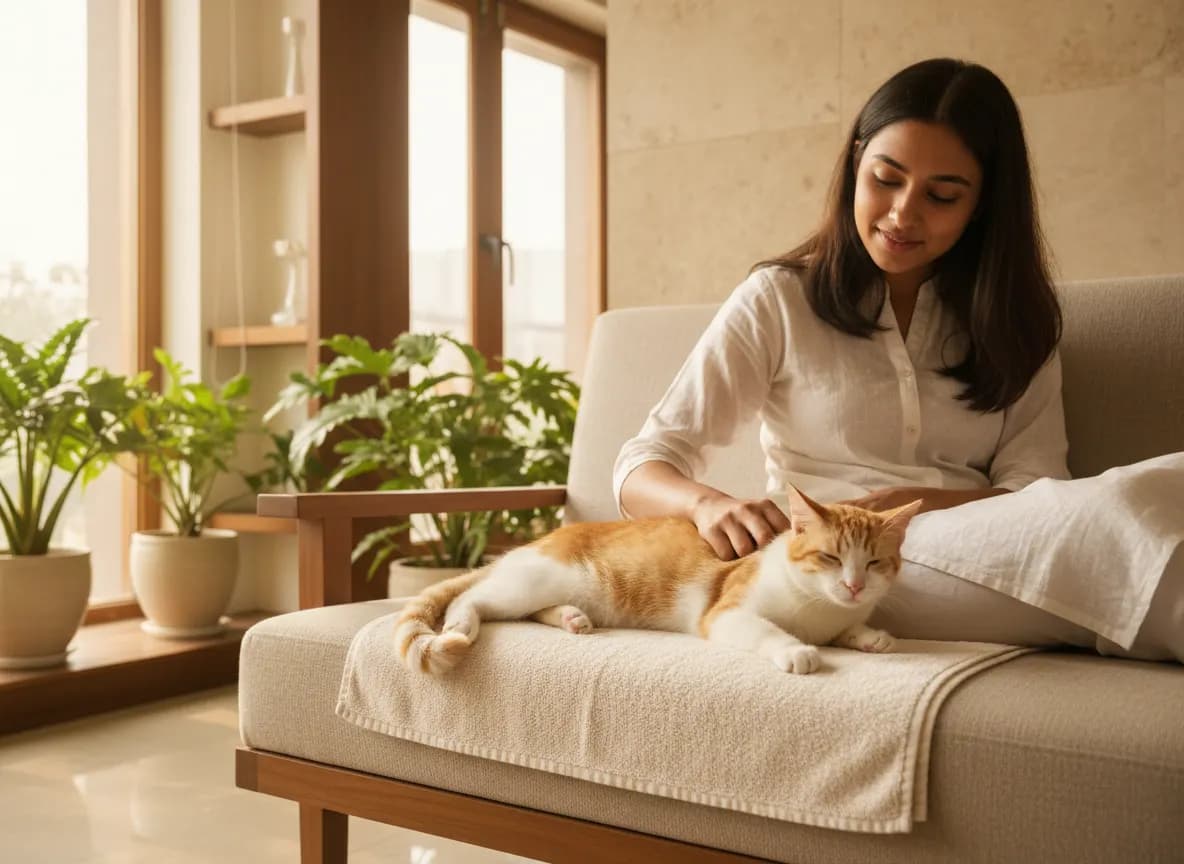
- Short-haired cats: brush once or twice a week with a soft brush or grooming glove.
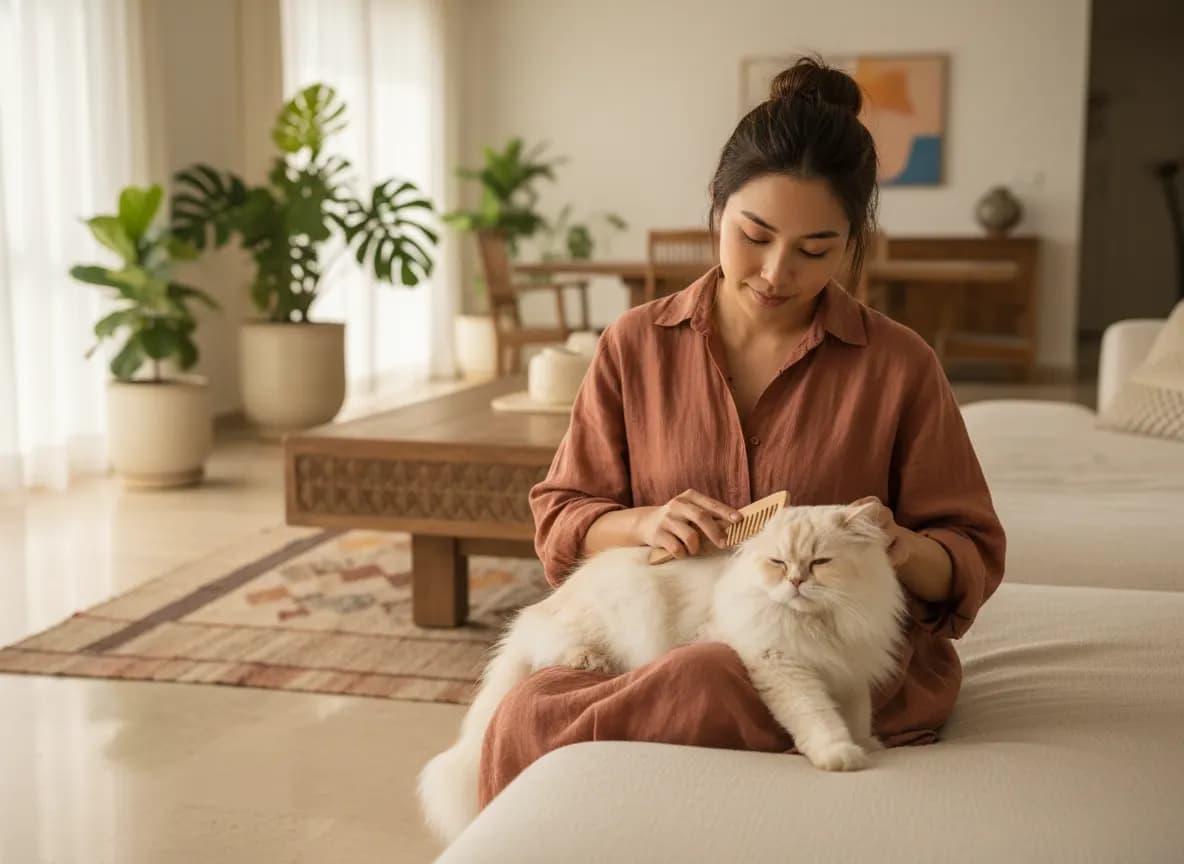
- Long-haired cats: brush and comb daily to prevent mats, especially behind the ears, under the legs and on the belly.
- Brushing removes loose hair, which means fewer hairballs, and lets you spot skin changes, fleas or lumps early.
Grooming a Persian or long-haired cat
Persians have a long, fine double coat and a flat face, so they need more help than most cats:
- Comb daily with a wide-toothed metal comb, working down to the skin. Leave tight mats to a groomer or vet – don’t cut them out yourself near the skin.
- Wipe around the eyes gently with a soft, damp cloth; Persian eyes often water.
- Keep the rear end clean – a tidy “sanitary trim” from a groomer helps.
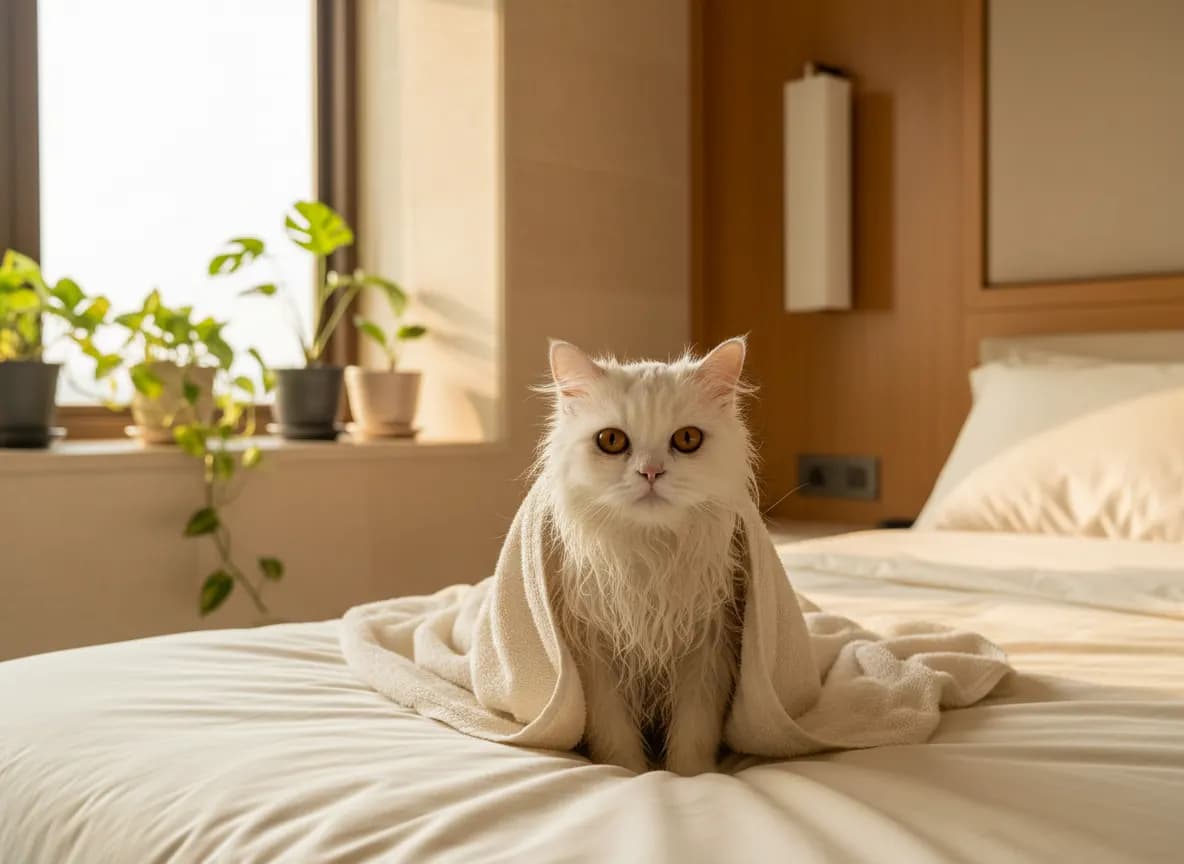
- Bathe occasionally if the coat becomes greasy, followed by very thorough drying.
How to bathe a cat calmly
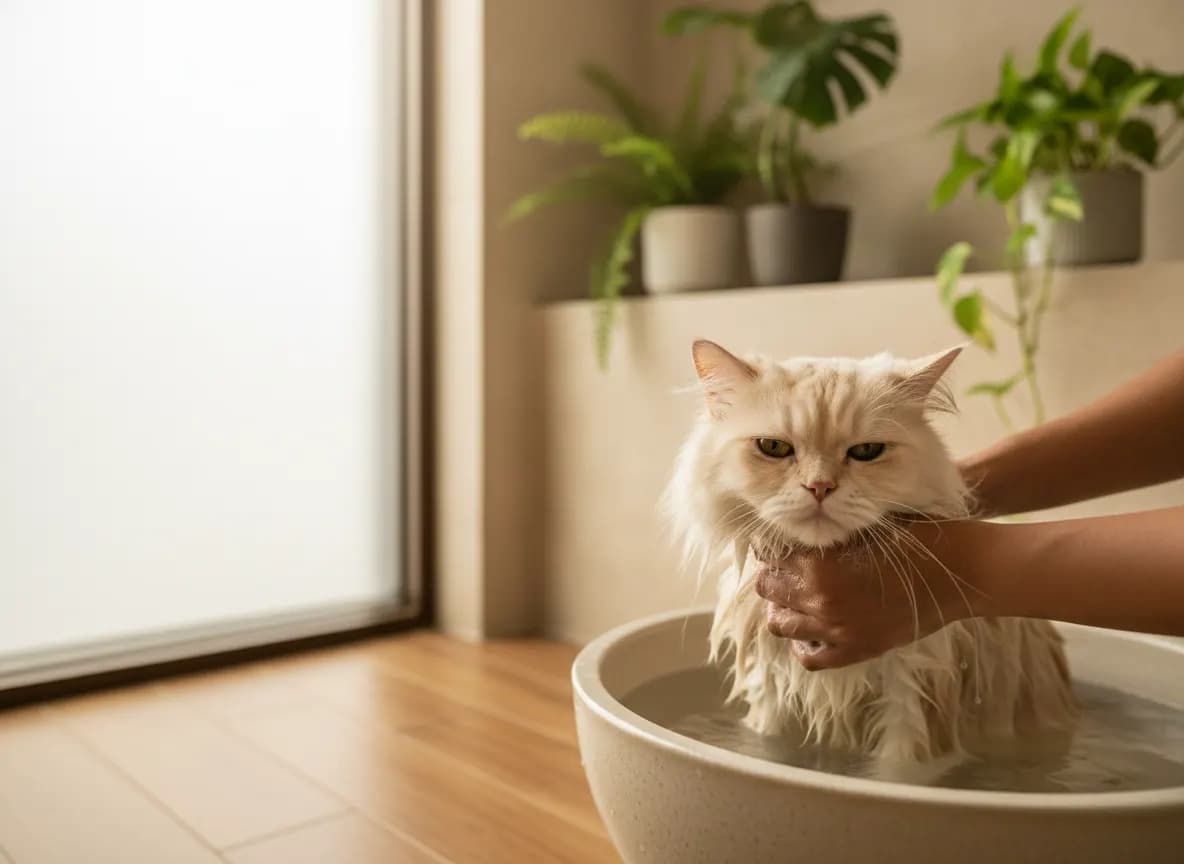
- Brush first. Remove tangles and loose hair before any water.
- Prepare everything – towels, a cat shampoo, a jug, a non-slip mat – before you bring your cat in.
- Use a shallow basin or sink with a few centimetres of lukewarm water. Never a full tub.
- Wet the body gently with a jug or cup, keeping water away from the face, eyes and ears.
- Use a small amount of a cat-safe shampoo and lather lightly.
- Rinse thoroughly – cats lick off whatever is left on the coat.
- Wipe the face with a damp cloth instead of shampoo.
- Towel-dry and keep your cat warm until the coat is completely dry.
Keep it short, stay calm and speak softly. If your cat is very distressed, stop – a waterless clean is better than a frightening bath.
Which shampoo is safe for cats?
Only a shampoo that is formulated for cats – not human shampoo, and not a dog shampoo unless it’s made for cats too. Because cats lick their coats clean, what’s in the bottle matters even more. (How to read the ingredient list.)
Furrytail’s Gentle Daily Shampoo is made for dogs and cats: a sensitive-skin, pH-balanced formulation cleansed with amino acid-derived surfactants and preserved with probiotics. Lather slowly, take extra care around the face, and rinse until the water runs clean.
For a wider look at what’s on the shelf, from white-coat shampoos to Persian formulas and waterless foams, see the best cat shampoo in India, and for cats who won't go near water, the best dry shampoo for cats. Never use a dog flea or tick product on a cat: see can I use dog shampoo on my cat.
Cleaning a cat without a bath

For cats who hate water – which is most cats – a waterless dry shampoo is often the kinder option. Furrytail’s Dry Foam Shampoo is made for dogs and cats and is a no-rinse, leave-on safe formula:
- Shake well and apply a little foam to the coat, avoiding the eyes.
- Massage it through gently with your hands or a soft brush.
- Let it dry – no rinsing, no towelling.
For small spots, a soft, damp cloth is often all you need. More in dry bath vs. wet bath.
When grooming isn’t the answer
A cat who stops grooming, grooms one area obsessively, or has a greasy, matted or patchy coat may be unwell, in pain or stressed. Hair loss, scabs, itching or a change in grooming habits are reasons to see your vet.