Cat dandruff and greasy fur are usually signs that a cat isn’t grooming properly, often because it is overweight, older, arthritic or unwell, or because of dry air, diet, parasites or a skin condition. Regular brushing and gentle grooming help, but a sudden change in your cat’s coat is a reason to see your vet, because it often signals something underneath.
Why cat coats go flaky, greasy or matted
| What you see | Common causes |
|---|---|
| White flakes, especially on the back | Under-grooming, dry indoor air (AC or heaters), diet low in fatty acids, mites, skin conditions |
| Greasy, clumped fur on the lower back or tail | Can’t reach to groom (weight, age, arthritis), excess oil at the tail base (“stud tail”) |
| Greasy chin with black dots | Feline chin acne |
| Mats on the back, belly or behind the legs | Long hair that isn’t brushed, an older or overweight cat, a cat in pain |
| A generally dirty, unkempt look | A cat that has stopped grooming; often illness, pain or dental disease |
The under-grooming problem
Cats spend hours a day grooming. When they stop, it’s usually because they can’t: a cat carrying extra weight can’t reach its lower back, an older cat with arthritis finds twisting painful, and a cat with dental pain may stop using its tongue to groom. The result is dandruff and grease, almost always on the back and base of the tail. That’s why “cat dandruff on back” and “greasy fur on back” are such common searches.
Dry air and diet
Air-conditioning in summer and heaters in winter dry the skin. A diet low in essential fatty acids can make the coat dull and flaky. Ask your vet before changing food or adding supplements.
Parasites and skin conditions
Fleas, mites (including Cheyletiella, sometimes called “walking dandruff”) and fungal infections such as ringworm can cause flaking, itching and hair loss. Allergies and other skin conditions can too. These need a vet’s diagnosis.
Dandruff or flea dirt?
Comb some of the flakes onto a damp white tissue or paper towel.
- Dandruff stays white.
- Flea dirt turns reddish-brown as it dissolves, because it’s digested blood. That means fleas: see your vet for a cat-safe treatment, and never use a dog flea product on a cat. See can I use dog shampoo on my cat.
How to help at home
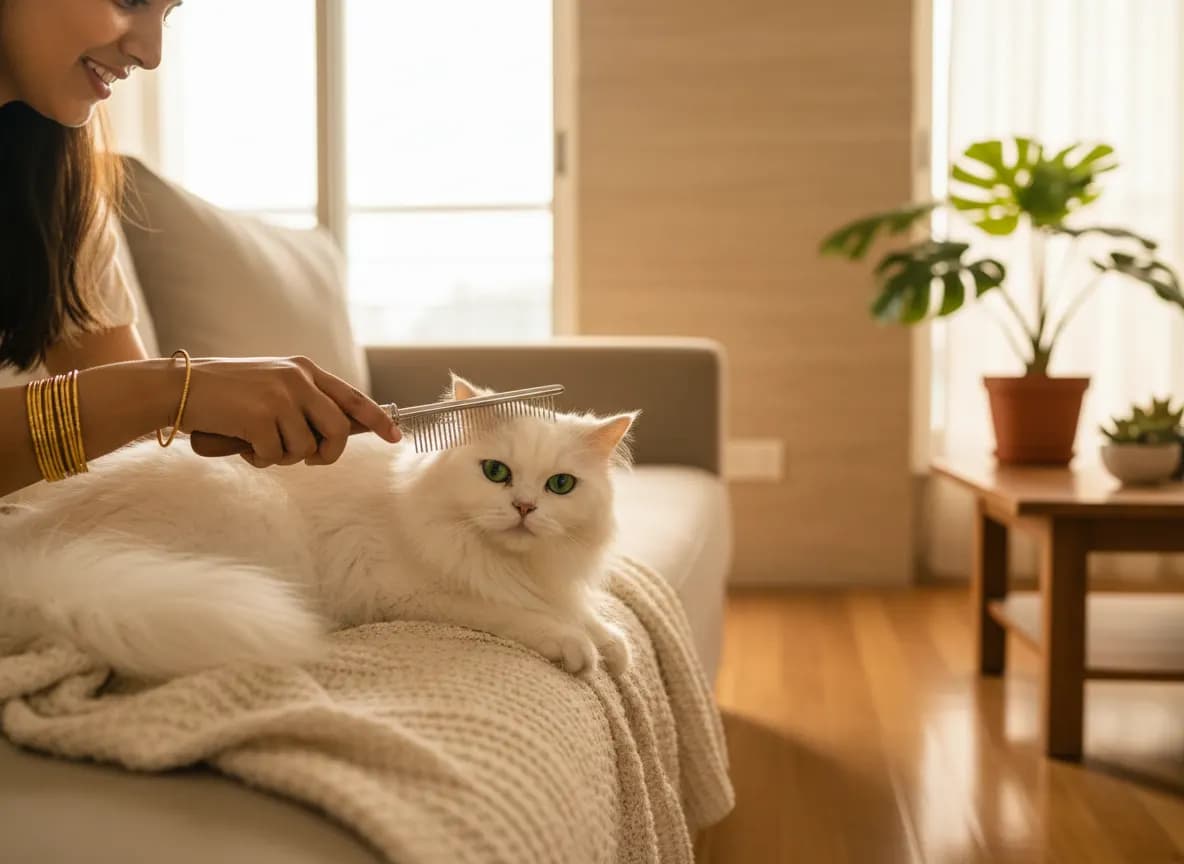
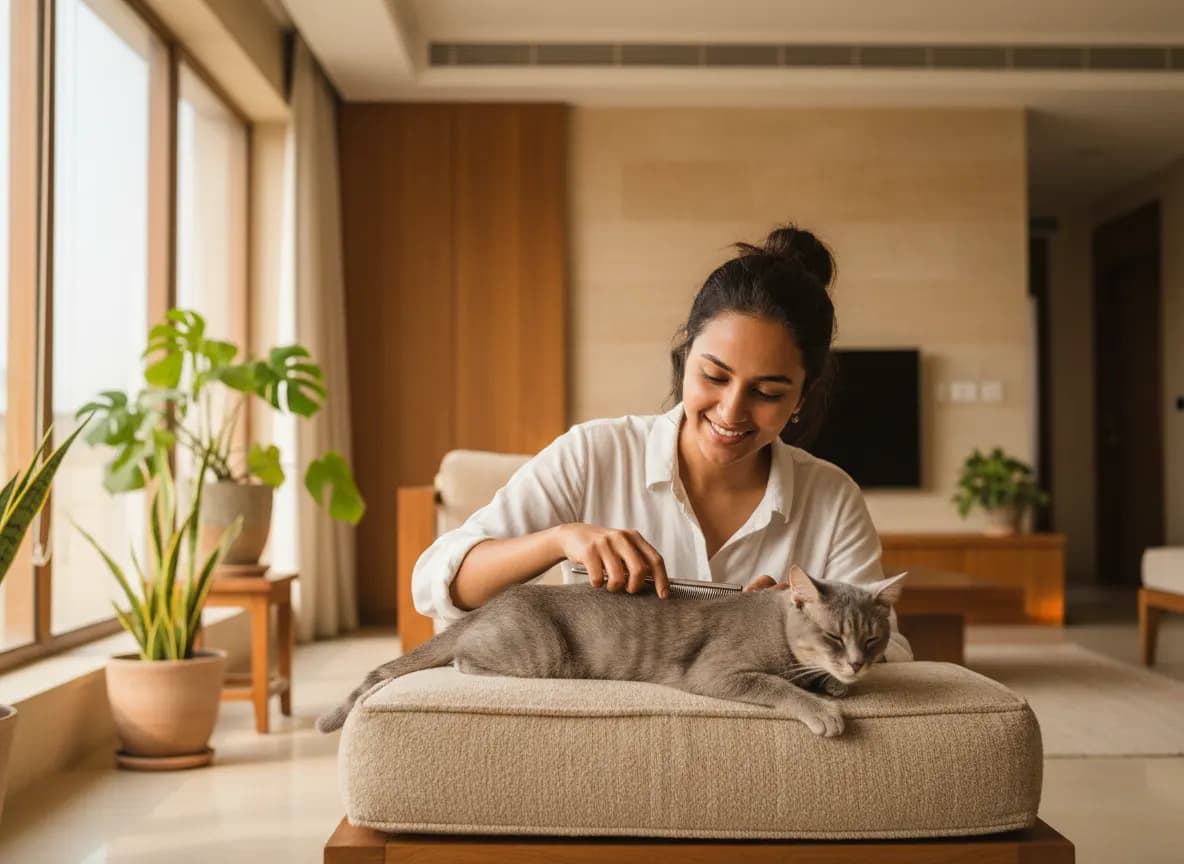
- Brush or comb regularly. It spreads natural oils, lifts flakes and prevents mats. Short-haired cats a few times a week, long-haired cats daily. Use a fine-toothed metal comb for flakes and a wide-toothed comb for long coats.
- Help with the hard-to-reach spots. Gently comb the lower back and tail base for cats who can’t reach.
- Clean greasy patches with a waterless foam made for cats. Furrytail Dry Foam Shampoo is a no-rinse foam for cats and dogs that absorbs surface oils, with no synthetic fragrance. Massage a little in, let it dry and comb through. See our best dry shampoo for cats review.
- Bathe occasionally if needed, with a gentle shampoo made for cats. Furrytail Gentle Daily Shampoo is made for cats and dogs: amino acid cleansers, pH-balanced, a sensitive-skin formulation with no synthetic fragrance. Rinse thoroughly. Our guide can you bathe a cat? shows how.
- Keep your cat hydrated with fresh water, and consider a humidifier in very dry rooms.
- Help your cat stay a healthy weight, with your vet’s guidance. Weight loss often fixes under-grooming on its own.

How to deal with matted fur safely
- Small mats: hold the fur at the base, close to the skin, so you don’t pull, and gently tease the mat apart with your fingers or a wide-toothed comb, working from the outside in.
- Large or tight mats, or mats close to the skin: don’t cut them out with scissors. Cat skin is thin and stretches into the mat, so it is very easy to cut. A groomer or vet can clip them safely.
- Mats around the bottom in long-haired cats: ask about a hygiene trim.
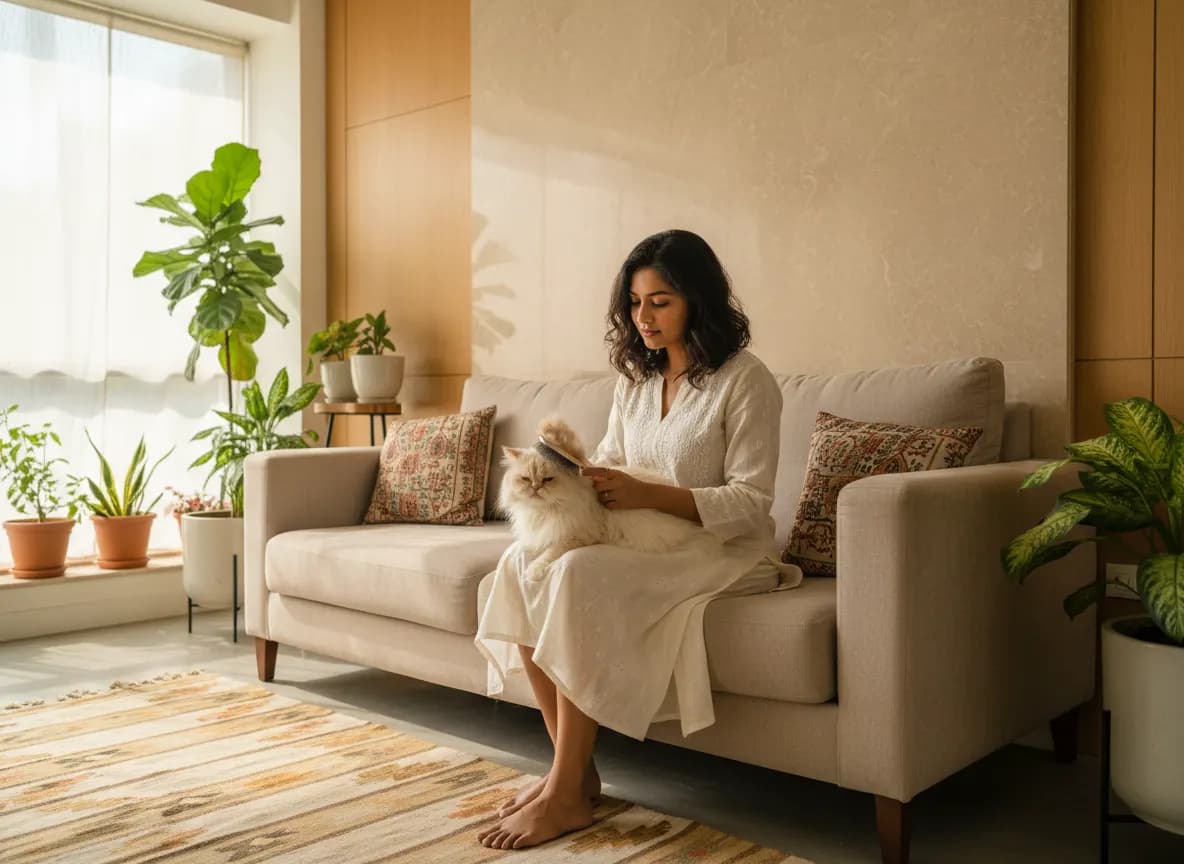
- Prevent mats with daily combing for long-haired cats like Persians. See our Persian cat grooming guide.
When to see a vet
- the coat changes suddenly, or your cat stops grooming
- itching, scratching, scabs or hair loss
- red, inflamed or broken skin
- flea dirt or a suspicion of mites
- a cat that is losing or gaining weight, drinking more or seems unwell
- dandruff that doesn’t improve after a few weeks of brushing