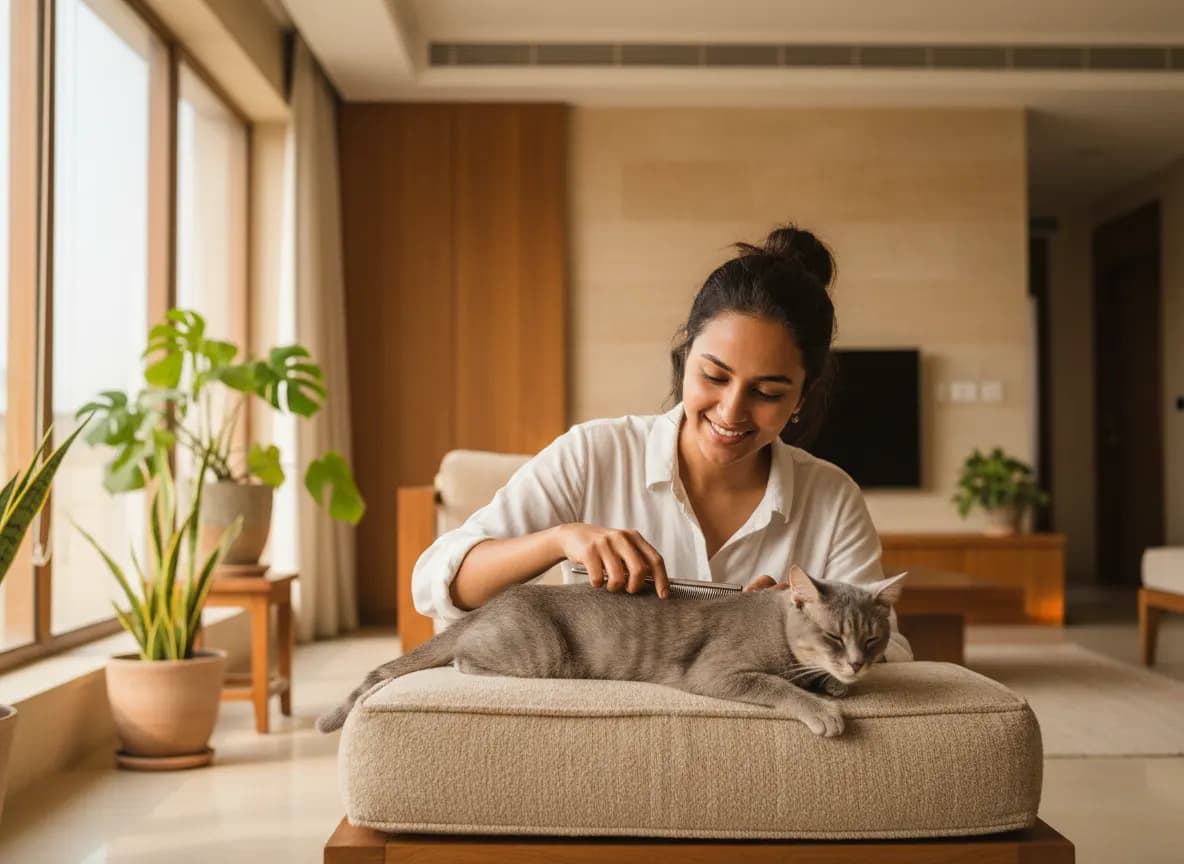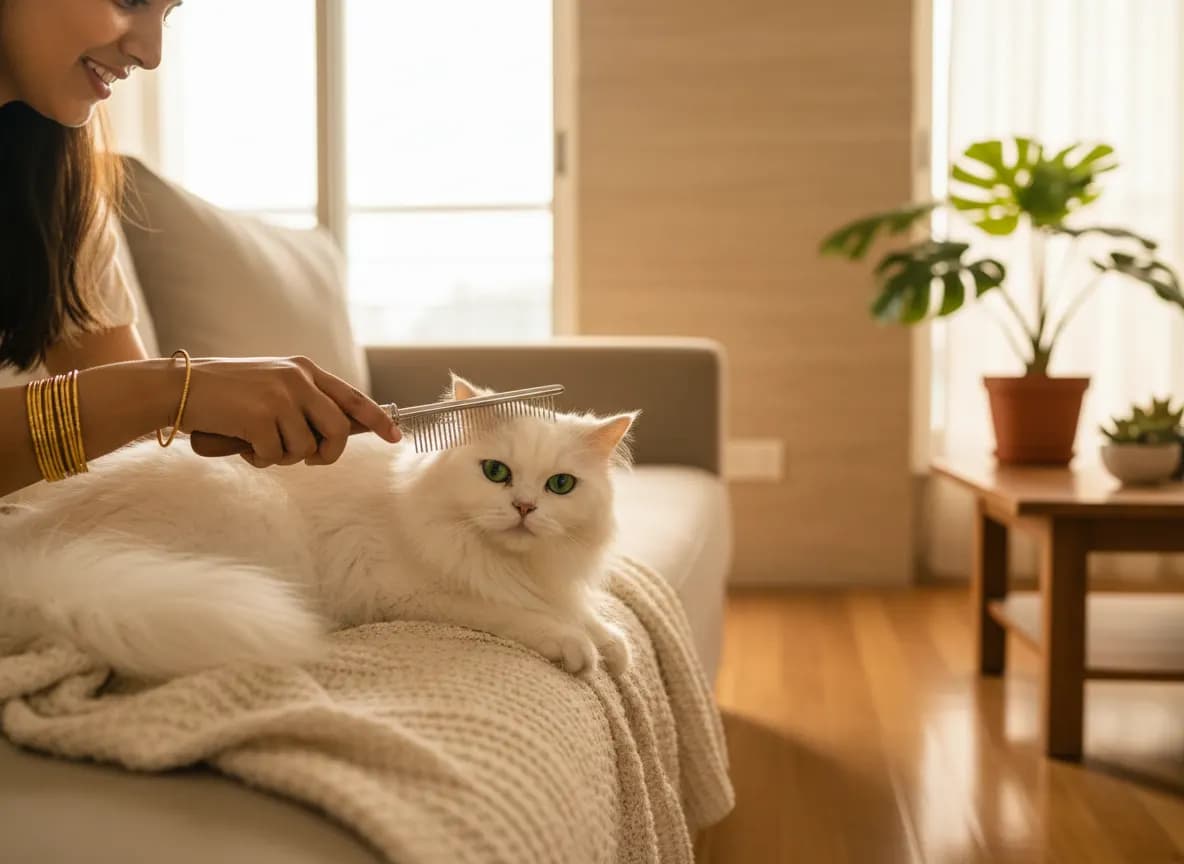
Most “cat hair fall” is normal shedding: cats lose old hair all the time, more in spring and summer, and indoor cats in India often shed all year. Shedding is even, across the whole coat. Hair loss that leaves bald patches, thin areas, broken hairs, scabs or red skin, or comes with over-grooming or itching, isn’t normal shedding, and needs a vet. No shampoo stops normal shedding, but regular brushing makes a big difference.
Normal shedding vs hair loss
| Normal shedding | Hair loss that needs a vet | |
|---|---|---|
| Where | Evenly across the coat | Patches, thin areas, one spot |
| Skin underneath | Healthy, no redness | Red, scaly, scabby or broken |
| Behaviour | Normal grooming | Over-grooming, licking, scratching |
| Timing | Seasonal or steady | Sudden or getting worse |
| Coat | Full, healthy | Broken hairs, bald spots |
Why do cats shed so much in India?
- Seasons. Cats shed more as days get longer and warmer, often heavily in spring and summer.
- Indoor living. Artificial light and air-conditioning blur the seasons, so many indoor cats in Indian cities shed steadily all year.
- Heat and humidity. A thick coat in Indian summers often sheds more.
- Breed. Long-haired cats like Persians shed more visibly, and their loose hair mats if it isn’t combed out. See our Persian cat grooming guide.
- Stress. A move, a new pet or a vet visit can cause a sudden temporary shed.
Common causes of abnormal hair loss
- Over-grooming from stress, boredom, pain or allergies. Cats often lick the belly, inner thighs and legs bald.
- Fleas and flea allergy, often with hair loss near the base of the tail. Use only a cat-safe flea treatment from your vet; never a dog flea product. See can I use dog shampoo on my cat.
- Ringworm, a fungal infection that causes round patches of hair loss and can spread to people. See a vet promptly.
- Allergies to food or the environment.
- Hormonal and other medical conditions, especially in older cats.
- Poor nutrition, which shows up as a dull, thin coat.
What helps at home
- Brush regularly. It is the single best thing you can do. Brushing removes loose hair before it lands on your sofa or ends up as hairballs. Short-haired cats a few times a week, long-haired cats daily, more in shedding season.
- Use the right tool. A soft rubber brush or grooming glove for short coats; a slicker brush and wide-toothed comb for long coats.
- Feed a complete, balanced cat food and ask your vet before adding supplements.
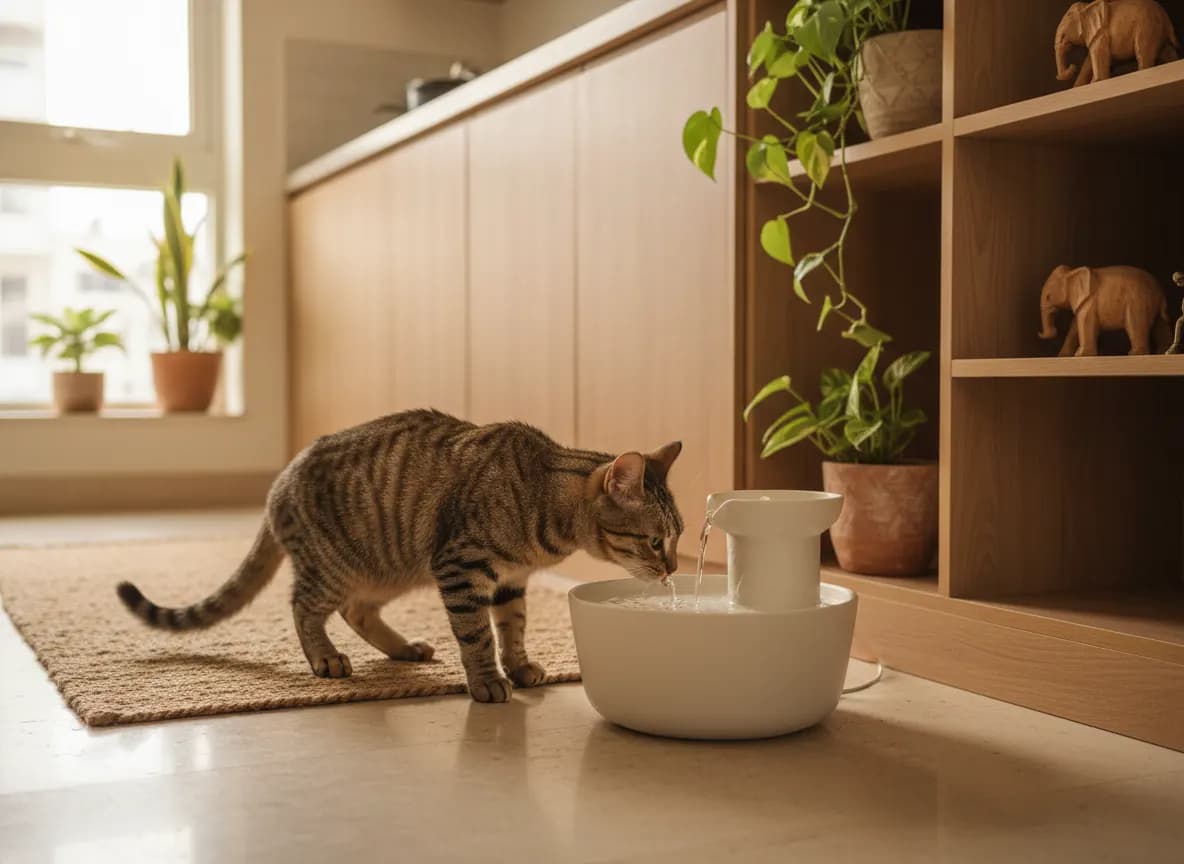
- Keep your cat hydrated. A water fountain encourages many cats to drink more.
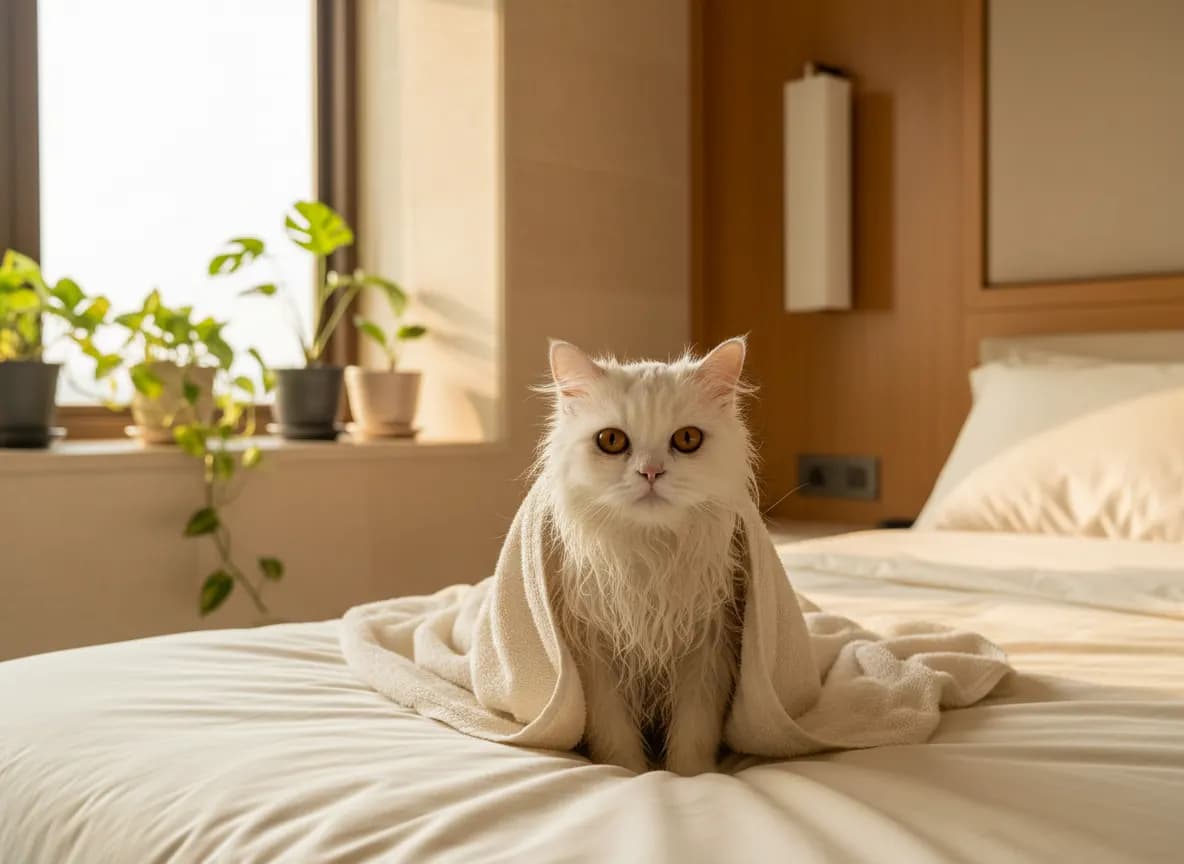
- Bathe only when needed, with a gentle shampoo made for cats. A bath can loosen dead undercoat, which then brushes out. Furrytail Gentle Daily Shampoo is made for cats and dogs: amino acid cleansers, pH-balanced, a sensitive-skin formulation with no synthetic fragrance. Our guide can you bathe a cat? explains how.
- Reduce stress with routine, hiding places and play.
Can a shampoo stop cat hair fall?
No shampoo stops normal shedding, whatever the label promises. Shedding is how a healthy coat renews itself. A gentle shampoo keeps the coat and skin clean and can help loosen dead hair before brushing, but if your cat is losing hair in patches, the cause needs a vet’s diagnosis, not a stronger shampoo. Our best cat shampoo review compares gentle options.
Persian cat hair fall
Persians have long, dense coats that shed constantly and mat quickly. Loose hair that isn’t combed out tangles into mats close to the skin. Comb every day, pay attention behind the ears, under the legs and around the bottom, and ask a groomer about a hygiene trim. Bald patches or itching still need a vet.
When to see a vet
- bald patches or thinning areas
- red, scaly, scabby or broken skin
- over-grooming, licking or scratching
- round patches of hair loss (possible ringworm)
- hair loss with weight change, more drinking or a change in behaviour
- sudden heavy hair loss