Pomeranians are tiny dogs with enormous coats. That signature puffball look comes from a dense double coat that stands away from the body – beautiful, and prone to matting from the inside if it is only brushed on the surface.
Here is how to keep a Pom’s coat healthy at home.
Understanding the Pomeranian coat
Poms have a double coat: a long, straight outer coat and a thick, soft, fluffy undercoat that holds the outer coat up. They shed moderately all year and more heavily once or twice a year. Puppies go through the “puppy uglies” – a scruffy stage, usually somewhere between four and ten months, as the puppy coat is replaced by the adult one.
Line brushing: the Pom technique
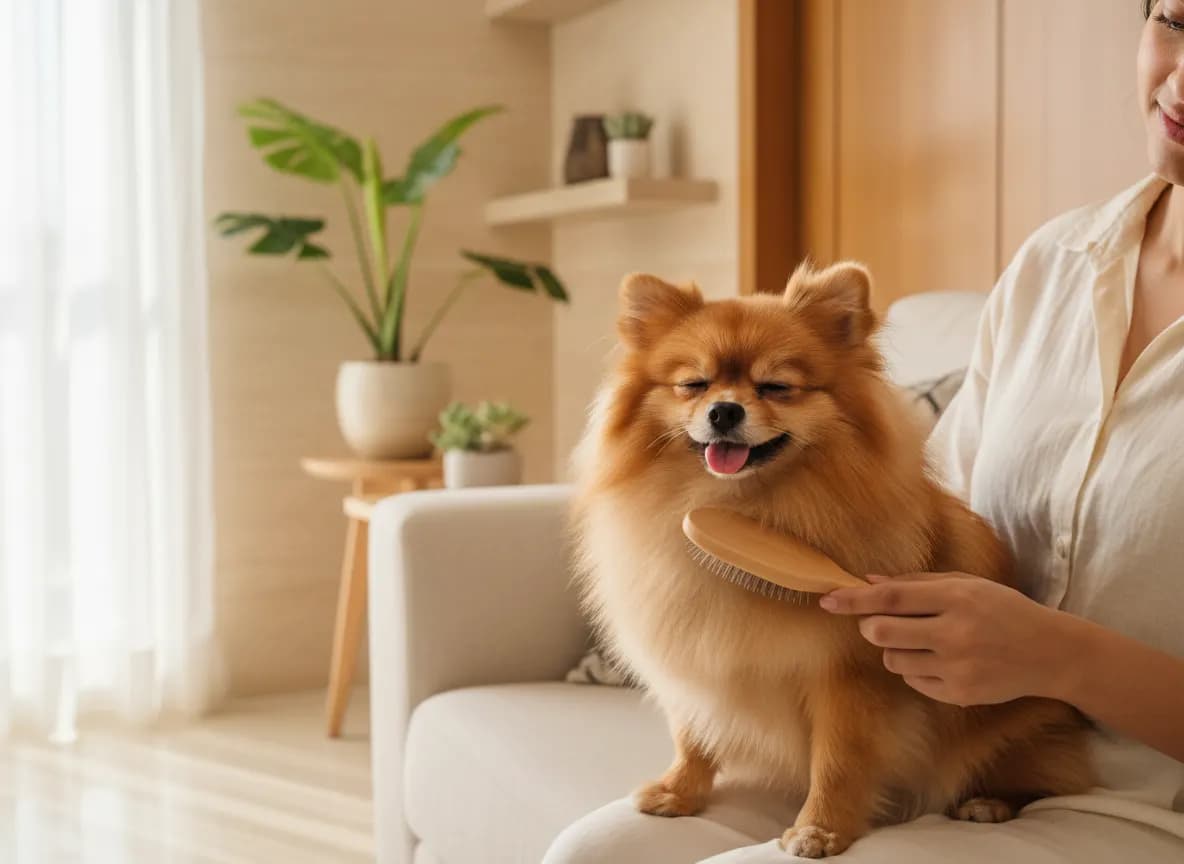
Surface brushing leaves mats hidden underneath. Line brushing reaches the skin:
- Lightly mist the coat with water – never brush a completely dry coat, which causes breakage.
- With one hand, hold the coat up and part a line down to the skin.
- Brush the hair below the line down and out, from the skin outward, with a pin brush or slicker.
- Move the line up a little at a time, working around the body.
- Finish with a metal comb. If it glides through to the skin everywhere, you are done.
Do this three or four times a week, and daily during a shed. Watch the friction spots: behind the ears, under the collar, the armpits and the “trousers” on the back legs.
Never shave a Pomeranian
Shaving a Pom’s double coat can damage how it regrows; some coats grow back patchy or not at all. The coat also protects against sun and heat. A groomer can tidy the feet, ears and rear for hygiene, but leave the coat its length.
How often should you bathe a Pomeranian?
Every three to four weeks is plenty for most Poms. Always brush out completely first – water tightens mats. Use a mild, sulphate-free, pH-balanced dog shampoo; small dogs live close to your face, so a soft scent like our Gentle Daily Shampoo – Violet Leaf & Muslin suits them. Work the lather down to the skin, keep it away from the eyes, and rinse thoroughly: shampoo left in a dense undercoat can irritate the skin.
Between baths, the waterless Dry Foam Shampoo refreshes a stale coat in a minute.
Drying a Pom properly
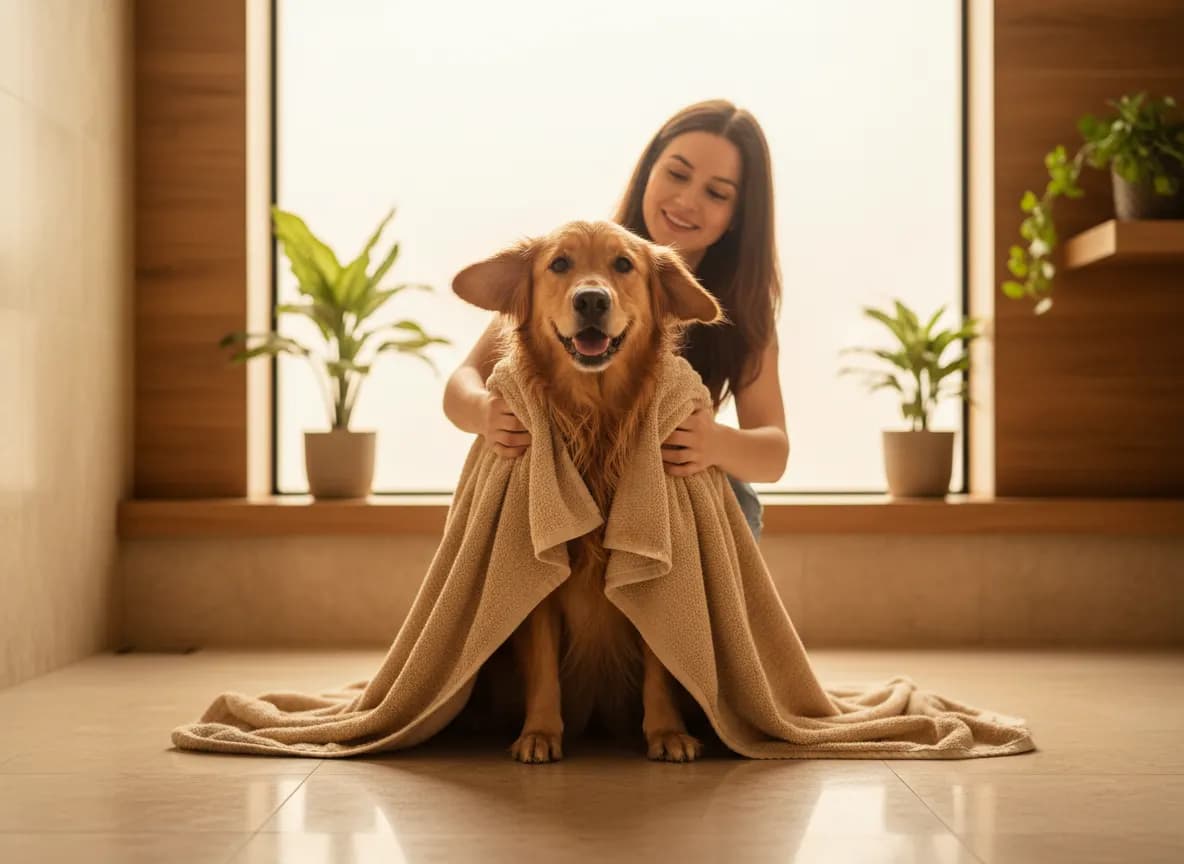
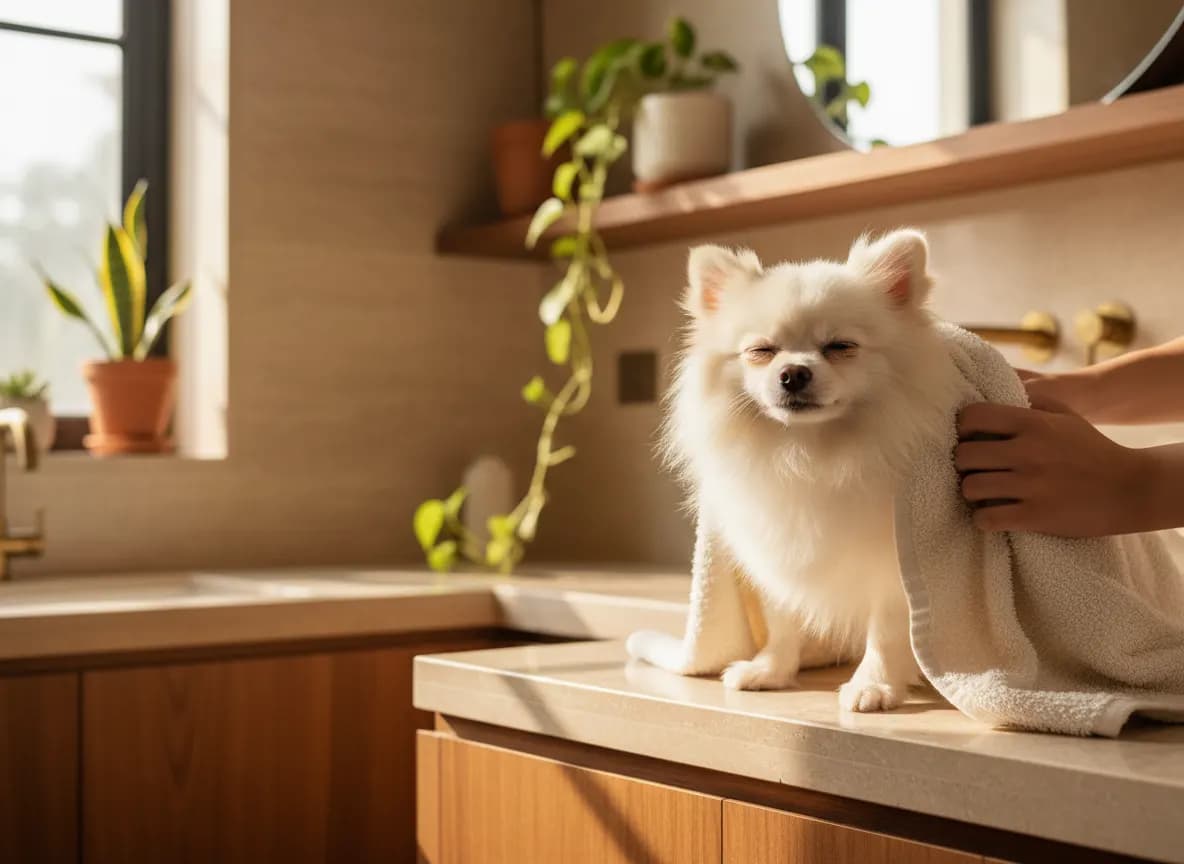
A Pomeranian’s undercoat holds water, and a damp coat left to air-dry can mat and smell. Squeeze water out with a towel, then blow-dry on a cool or low setting while brushing outward from the skin. This is also what gives a Pom its volume. Small dogs chill quickly, so keep the room warm and the session calm. See how to dry a dog after a bath.
Eyes, teeth, ears and paws
- Eyes: wipe tear stains gently with a soft, damp cloth.
- Teeth: small breeds are prone to dental problems; ask your vet about a brushing routine.
- Ears: check weekly and wipe the visible outer ear only. See how to clean your dog’s ears.
- Paws: trim the fur between the pads and clean paws after walks with a no-rinse Paw Cleaner.
A simple Pomeranian routine
| How often | What |
|---|---|
| After every walk | Clean paws |
| 3–4 times a week (daily when shedding) | Line brush to the skin, then comb |
| Weekly | Ears, eyes, nails |
| Between baths | Dry foam for a stale coat |
| Every 3–4 weeks | Bath after a full brush-out; blow-dry while brushing |
When to see a vet
Thinning or bald patches (beyond the puppy coat change), flaky or red skin, scratching or a smell that returns soon after a bath all need a vet.